

Call us: +86-137-2353-4866
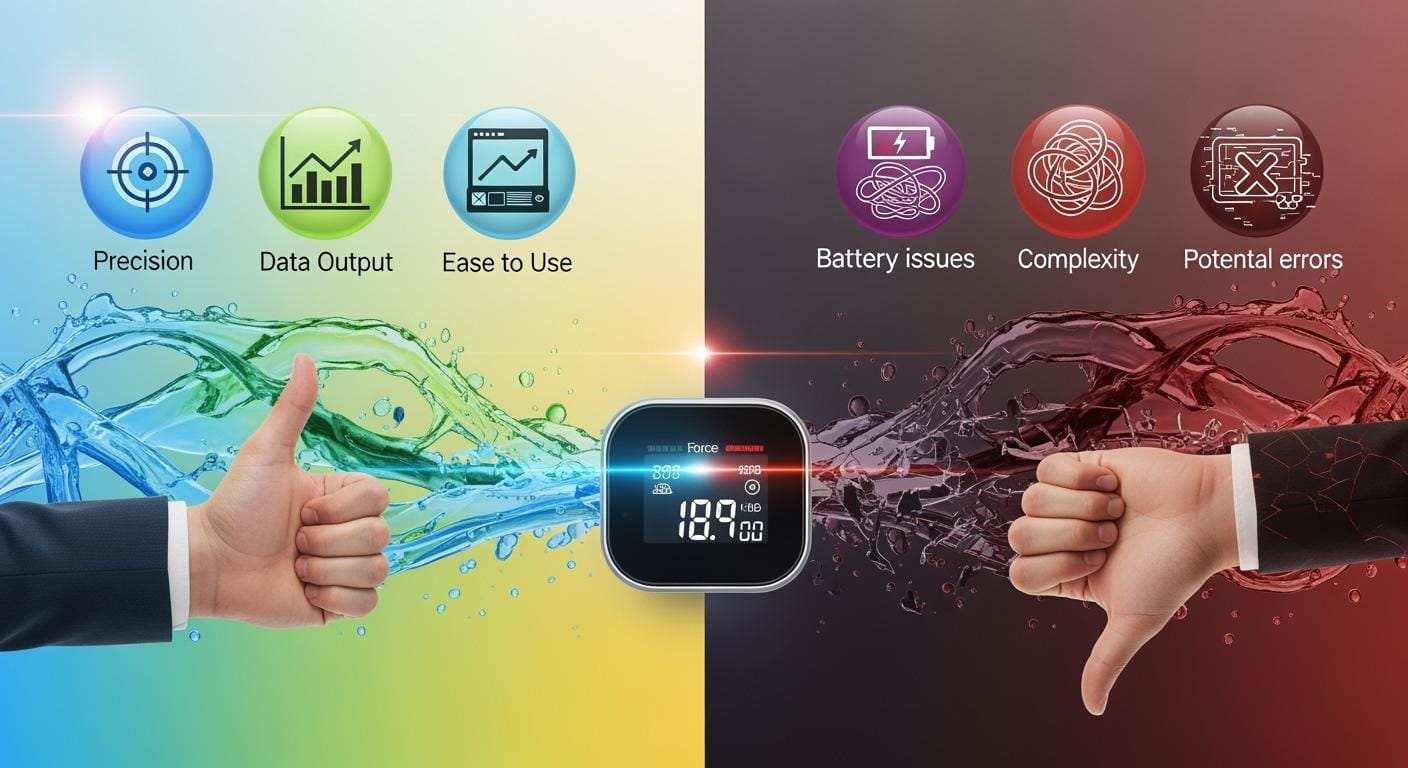

You have to make big choices when picking a tool to measure force. A digital force gauge gives you very accurate and clear results. But you may also face some problems. Think about working in a lab or factory. You need to measure force or pressure fast and correctly. Digital force gauges are now used in many jobs. They have special features and give exact data. You can see them used for things like:
- Doing tensile tests in materials science
- Measuring torque in car assembly
- Making sure rules are followed in industries
New tools, like the force sensing resistor, make force sensing even more useful in tough jobs.
Table of Contents
Key Takeaways
Digital force gauges are very accurate and precise. They are great for jobs that need exact measurements. These gauges have digital screens that are easy to read. This helps people make fewer mistakes and saves time during tests. Many digital models can save data. This lets users keep and study measurements over time. Digital gauges can change between different units. This makes them useful for many different jobs. You need to check and adjust digital force gauges often. It is best to do this at least once a year. Digital gauges need batteries or charging. Make sure you have power so tests are not stopped. Digital gauges usually cost more at first. But their special features can give better value over time. Mechanical gauges are easier and tougher in rough places. They are a good pick for simple jobs.
Digital Force Gauge Overview
What Is a Digital Force Gauge
A digital force gauge is a tool that measures force or pressure. You can find these in labs, factories, and hospitals. Digital pressure gauges give you fast and exact numbers. The numbers show up on a screen, so you do not have to guess. These gauges use sensors to turn force into an electronic signal. The signal becomes a number you can read.
SOUSHINE’s Force Sensing Resistors (FSRs) are a new kind of digital force sensing tool. FSRs change their electrical resistance when you press on them. This helps you measure force very accurately. You can use FSRs in cars, robots, and medical devices. They also work in electronics you use every day. FSRs are flexible and strong, so they work in many jobs.
How Digital Force Gauges Work
Digital pressure gauges turn force into an electronic signal. Here is how it works:
| Step | Description |
|---|---|
| 1 | A strain-based load cell is inside the gauge. |
| 2 | Strain gauges stretch or squeeze when you push on them. |
| 3 | This changes the resistance in the circuit. |
| 4 | The gauge turns this change into a voltage signal. |
| 5 | A microprocessor reads the voltage. |
| 6 | The screen shows the force in pounds, kilograms, or newtons. |
Digital pressure gauges have extra features. Some can save old readings in memory. Some have alarms to warn you about high or low pressure. Overload protection keeps the device safe. Some models let you use more than one sensor for bigger force.
SOUSHINE FSRs can sense very small changes in force. They are strong, so you can use them for a long time. They work well even in hard places.
Digital vs Mechanical Gauges
You might wonder how digital pressure gauges are different from mechanical ones. Here is a quick look:
| Feature | Digital Force Gauges | Mechanical Force Gauges |
|---|---|---|
| Measurement Precision | High, with decimal numbers | Lower, less detail |
| Signal Processing | Digital, less noise | Analog, more noise |
| Data Logging | Yes, can save and sample data | No, limited |
| Calibration | Needs regular calibration | Easier calibration |
| Use Case | Good for complex data | Good for simple, quick tests |
Digital pressure gauges have more features and are more accurate. You can save data, change units, and get alerts. Mechanical gauges are simple and good for easy jobs. If you need to measure force in detail or keep track of data, digital pressure gauges are best.
Advantages of Digital Pressure Gauges
Precision and Accuracy
Digital pressure gauges are very precise and accurate. You can trust the numbers you see. These devices use smart sensors and microprocessors. When you test things in a lab or factory, you want results you can trust every time.
Consistent Results
Digital pressure gauges give you steady results. They stay accurate after many uses. In jobs like mechanical engineering and plant building, you measure things again and again. Digital pressure gauges help you do this without losing accuracy. Some models have:
- Accuracy as close as ±0.25% to ±2.5% of the full scale.
- Long-term stability, with changes as low as ±0.2% each year.
- Sampling speed up to 5 times every second.
This means you can trust your measurements, even after months of daily tests.
Reduced Error
Digital pressure gauges help lower mistakes. You do not have to guess the reading from a dial. The device shows you the exact number. This helps you avoid errors, especially when you need to record data for reports or checks. In lab tests, digital pressure gauges are often more accurate than mechanical ones, which usually have a range of 1.0% to 5.0% of the full scale. Digital models keep mistakes small, so your testing stays correct.
Readability and Display
You can read digital pressure gauges fast and easily. The display shows the measurement in clear numbers. This helps you work quicker and with more confidence.
Digital Readout
A digital readout makes your job easier. You see the measurement right away. You do not need to figure out a pointer or scale. This lowers mistakes and saves time. Many digital pressure gauges let you switch between units, so you can pick the one you need.
Backlighting
Some digital pressure gauges have backlighting. This feature helps you see the display in dark places. You do not need extra lights or flashlights. Backlighting makes it easier to test in engine rooms, outdoor sites, or dim labs.
Tip: A clear digital display and backlighting help you avoid reading mistakes, even in tough places.
Versatility and Features
Digital pressure gauges have many features for different jobs. You can use them for more than just basic measuring.
Unit Switching
You can switch between units like psi, bar, kPa, and MPa. This helps you work with teams from other countries or follow world rules. You do not need to do math in your head or use charts. The gauge does it for you.
Data Logging
Advanced digital pressure gauges can save data for you. This means the device keeps each measurement, so you can look at it later. Here are some common data logging features:
| Feature | Description |
|---|---|
| Data Transfer Capabilities | Send saved measurements to a computer or data system. |
| Logging Intervals | Set how often the device saves data, from milliseconds to hours. |
| Software Functionalities | Use tools to manage sessions, set up settings, and study data. |
| Real-time Display | Watch live pressure readings while the device saves data. |
| Triggered Logging | Start or stop saving data based on pressure levels or set times. |
Data logging helps you track changes over time, spot patterns, and make reports for your projects.
Customization
You can change many digital pressure gauges to fit your needs. Some models let you set alarms for high or low pressure. Others let you add extra sensors or change the display. SOUSHINE’s Force Sensing Resistors (FSRs) give you even more choices. You can pick the shape and size that works best for your job. FSRs work well in cars, healthcare, robots, and electronics. Their low power use and strong build make them a smart choice for many types of testing and measuring.
Calibration and Reliability
Easy Calibration
You want your digital pressure gauge to be correct. Calibration helps you check and fix your gauge. This keeps it accurate. You can do calibration with easy steps. Most digital pressure gauges have simple menus for calibration. You just follow the steps on the screen. You do not need special tools or hard skills.
You should calibrate your gauge once every year. If you use your gauge a lot, you may need to calibrate more often. If you work in tough places, calibrate more often too. Regular calibration keeps your measurements right. It helps you avoid mistakes. Mechanical gauges can lose accuracy faster. This happens because of stress and wear. You may need to calibrate mechanical gauges more often.
Tip: Always read your gauge’s manual for the best calibration times.
Here are some key things about calibration:
- Calibrate your gauge at least once a year.
- Calibrate more often if you use it a lot or work in hard places.
- Regular calibration keeps your gauge accurate.
- Mechanical gauges may need more calibration because they can change over time.
SOUSHINE’s Force Sensing Resistors make calibration easy. You get clear steps and quick results. You can trust your gauge in cars, hospitals, robots, and electronics.
Stability
You want your digital pressure gauge to stay reliable. Stability means your gauge gives the same results for a long time. You can check stability by seeing how much the readings change.
Studies show digital pressure gauges may change a lot at first. But they become stable after some time. You can track calibration results for many days. This shows how stable your gauge is. If the readings stay the same, your gauge is reliable.
You can use SOUSHINE FSRs in many places. They work well in cars, healthcare, robots, and electronics. You get strong reliability and low power use. You also get durability and portability. You can use your gauge anywhere you need.
When you pick a digital pressure gauge, look for easy calibration and strong reliability. You will get better results and save time.
Disadvantages of Digital Pressure Gauges
Power Requirements
Digital pressure gauges need power to work. You have to think about batteries and charging before you pick one.
Battery Life
Battery life is different for each model. Some digital pressure gauges, like the CPG1200, last up to 4,000 hours. Others, such as the DPG-011 and DPG-108, work for about 2,000 hours. These models also show when the battery is low. Here is a table that shows battery life for some models:
| Model | Battery Life (hours) | Notes |
|---|---|---|
| CPG1200 | 4,000 | Energy-saving mode |
| DPG-011 | 2,000 | Low battery indicator |
| DPG-108 | 2,000 | Low battery indicator |
You need to plan when to change batteries if you use your gauge a lot. If you forget, your gauge might stop working during important tests.
Charging Needs
Some digital pressure gauges can use a USB cable for power. This is good if you keep the gauge in one place. If you move it around, you should check the battery often. You may need to charge it or have extra batteries ready. In a busy lab or factory, you do not want your gauge to lose power during a test.
Note: Always check the battery or charging level before long tests.
Environmental Sensitivity
Digital pressure gauges have electronic parts inside. These parts can be affected by the environment. You need to know how things like temperature, humidity, dust, and water can hurt your device.
Temperature and Humidity
Very hot or cold places can cause problems for digital pressure gauges. Extreme heat or cold can make the electronics stop working. Humidity lets water get inside and can break the parts. This can give you wrong numbers. Here is a table that shows how different things can affect your gauge:
| Environmental Factor | Effect on Digital Pressure Gauges |
|---|---|
| Temperature | Can cause electronic components to malfunction. |
| Humidity | Moisture can damage electronic parts and cause errors. |
| Vibration | Can loosen parts and cause bad readings. |
| Chemical Exposure | Can harm materials and affect how the gauge works. |
| Altitude | Can change calibration and readings. |
| Dust and Particles | Can clog openings and slow response. |
| Magnetic Fields | Can cause errors in the electronics. |
You should keep your digital pressure gauges in a dry and safe place. If you work where it is very hot, cold, or wet, check your device often.
Dust and Water
Dust and water can also cause problems for digital pressure gauges. Many models use strong materials and have high IP ratings. This means they can block dust and water better than old gauges. Here is a comparison:
| Feature | Digital Pressure Gauges | Mechanical Gauges |
|---|---|---|
| Construction | Durable materials like stainless steel | Moving parts that can wear out |
| Ingress Protection (IP) Rating | High, resists dust and moisture | Lower resistance to dust and moisture |
| Accuracy and Resolution | High | Lower |
| Performance in Harsh Environments | Reliable in humidity and dust | Can have problems in tough conditions |
Even with these protections, you should keep your gauge clean and dry. If you work in a very dusty or wet place, check the IP rating before you buy.
Cost Considerations
You need to think about cost before you pick a digital pressure gauge. They usually cost more than mechanical gauges, but you get more features and better accuracy.
Initial Investment
Digital pressure gauges cost more at first. Prices can go from $150 to $1,500, depending on what you need. Some cheaper models cost about $126.65 CAD. Mechanical gauges usually cost less, but they do not have as many features.
- Digital pressure gauges: $150 to $1,500 (more features and better accuracy)
- Some digital models: as low as $126.65 CAD
- Mechanical gauges: usually cost less
You should decide which features you need before you spend more money.
Maintenance
You may need to replace digital pressure gauges every five years. Many people throw them away because recalibration costs a lot. Mechanical gauges can last just as long, but you might need to replace them if they stop working right. Here is a table that shows the difference:
| Gauge Type | Maintenance Requirement | Replacement Frequency |
|---|---|---|
| Digital Pressure | Often replaced instead of recalibrated | Every 5 years |
| Mechanical Pressure | Usually accurate long enough; replaced if they fail | Every 5 years (if needed) |
You should plan for these costs when you pick a gauge. Digital pressure gauges give you better data, but you need to think about the total cost over time.
Tip: Always check the warranty and support before you buy. This can help you save money if you need repairs or a new gauge.
Digital pressure gauges have many good points, but you should also think about these problems. Think about power, the environment, and cost before you choose the best tool for your tests.
Learning Curve
Digital pressure gauges offer many features. You need to learn how to use them well. The learning curve can feel steep at first. You may face new screens, buttons, and settings. You must understand how to read the display and set up the device. You also need to know how to keep the gauge working right.
Training
You can find training programs that help you use digital pressure gauges. These programs teach you how to set up, calibrate, and maintain your device. Some courses last several days. Others focus on special equipment or brands. Here is a table that shows two common training options:
| Training Program | Description |
|---|---|
| Pressure Calibration Training | A five-day course. You learn about pressure physics, calibration principles, and how to use digital pressure calibrators and piston gauges. You also study metrological terms and daily calibration problems. |
| Veeder-Root Certified Technician Training | This program trains you to install, start up, and service Veeder-Root and Red Jacket equipment. You learn about Automatic Tank Gauge Systems and Enhanced Vapor Recovery Systems. |
You should pick a training program that matches your job. Good training helps you avoid mistakes and keeps your gauge working well.
Troubleshooting
You may run into problems when you use digital pressure gauges. You need to know how to fix these issues. Here are some common challenges:
- You may see inaccurate readings if the sensor has a fault or if you did not calibrate the gauge correctly.
- Temperature changes can affect how the gauge works.
- If you place the gauge wrong, it may not hold pressure readings.
You should check the manual for troubleshooting tips. You can also ask for help from experts or support teams. If you learn how to solve problems, you will use your gauge with more confidence.
Tip: Practice using your gauge in different settings. This helps you spot problems early and fix them fast.
Learning to use digital pressure gauges takes time. You need to train, practice, and troubleshoot. With the right skills, you can get the most from your device.
When to Choose a Digital Force Gauge
High Precision Needs
Pick a digital force gauge if you need very exact results. Some jobs must measure force with great accuracy. Here are times when you need this:
- You check quality in factories.
- You must follow strict safety rules.
- You test how strong or useful parts are.
- You do tests that break things and need the highest force.
A digital force gauge helps you get the right answer each time. This keeps your work safe and correct.
Tip: If your job needs exact numbers, use a digital force gauge for the best results.
Data Logging Applications
Choose a digital force gauge if you need to save and look at lots of data. Many jobs need to keep track of force over time. Digital push-pull force gauges let you store and check data easily. You can see patterns, find problems, and make better choices.
Force Logger Plus software lets you use data from up to four digital force gauges at once. This makes your work faster and more organized. You can make reports and use the data to help your work.
- You can save and study data for each test.
- You can watch for changes and spot trends.
- You can make reports to help your team.
- You can use data to make smart choices and fix problems fast.
If you need to keep records or show your results, a digital force gauge with data logging is the best pick.
Stable Environments
Digital force gauges work best in places that do not change much. You get the best results when the temperature and humidity stay the same. Labs give you these good conditions. In the field, things change more, and this can affect your results.
| Factor | Laboratory Conditions | Field Conditions |
|---|---|---|
| Humidity | Controlled | Variable |
| Temperature | Stable | Fluctuating |
| Vibration | Minimal | Present |
| Corrosive Medium | None | Possible |
You need the right place for good measurements. Too much humidity can hurt the electronics. Big changes in temperature can make your numbers wrong. If you work in a lab or another steady place, you will get the best results from your digital force gauge.
Note: For the most reliable data, use your digital force gauge in a place where things do not change much.
SOUSHINE’s Force Sensing Resistors give you high precision and strong data in these tough jobs.
Advanced Features
Sometimes you need more than just simple force measurement. Many digital force gauges have extra features that help you work better and faster. These features are helpful if your job is hard or you need to collect lots of data.
A high sampling rate is one important feature. Some models, like the Mark 10 Model M7, can check force up to 14,000 times each second. This helps you see even tiny changes in force. If you work with fast parts or need to spot quick changes, a high sampling rate gives you the details you want.
Data memory is another useful feature. Some digital force gauges can save thousands of readings. For example, the Series 5 can keep 1,000 readings, and the Mark 10 Model M7 can hold 5,000 data points. This lets you look at your results later or share them with your team. You do not have to write down every number.
Connectivity options also make your job easier. Many gauges have USB, RS-232, or analog outputs. You can connect your gauge to a computer or other devices. This helps you move data fast and use special software to study it. Some models, like the Series 5, work with MESUR Lite software. Others, like the Chatillon Model DFS, use Nexygen Gauge Software.
Here is a table that shows some advanced features in popular digital force gauge models:
| Feature | Series 5 | Chatillon Model DFS | Mark 10 Model M7 |
|---|---|---|---|
| Sampling Rate | 7,000 Hz | N/A | 14,000 Hz |
| Data Memory | 1,000 readings | N/A | 5,000 data points |
| Accuracy | ±0.1% of full scale | ±0.2% of full scale | N/A |
| Connectivity Options | USB, RS-232, Mitutoyo, Analog | Bi-directional RS232 | N/A |
| Integrated Set Points | Yes | N/A | N/A |
| Ergonomic Design | Yes | N/A | N/A |
| Software | MESUR Lite | Nexygen Gauge Software | N/A |
You may also find features like alarms, set points, and easy-to-hold designs. These help you work longer and keep your measurements safe.
If you want a digital force gauge with more features, look for models that fit your needs. SOUSHINE’s Force Sensing Resistors (FSRs) give you even more choices. You can pick the shape and size that works for your project. FSRs are good for tough jobs like robotics, healthcare, and car testing. They use little power and are strong, so they are smart for advanced jobs.
Tip: Always check which features you need before you buy. Advanced features can save you time and help you get better results.
When Mechanical Gauges Are Better
Simplicity
Sometimes you want a tool that is easy to use. Mechanical gauges are simple and ready to go. You do not have to learn new buttons or settings. Just look at the dial to see your result. These gauges do not need batteries or charging. You can use them anywhere and anytime. Many people like mechanical gauges because they are easy to understand and use.
Here is a table that shows why mechanical gauges are simple:
| Advantage | Description |
|---|---|
| Simplicity | You use them without complex steps or training. |
| No Power Requirement | They work without electricity or batteries. |
| Quick Readability | The dial shows results instantly and clearly. |
Tip: Pick a mechanical gauge if you want a tool anyone can use with little training.
Harsh Conditions
Mechanical gauges work well in tough places. You can use them in very hot or cold spots. They keep working even with dust, vibration, or chemicals around. Digital gauges might stop working if things get too rough. Mechanical gauges have strong parts that last a long time.
This table shows how mechanical gauges handle harsh conditions:
| Gauge Type | Durability in Harsh Environments | Suitable Conditions |
|---|---|---|
| Mechanical (Analog) | High | Extreme temperatures, vibrations, corrosive atmospheres |
| Digital | Moderate | Controlled environments with power sources |
You can trust a mechanical gauge where electronics might not work. Factories, outdoor sites, and chemical plants use these gauges for this reason.
Note: When you need a tool for tough jobs, mechanical gauges are a safe choice.
Budget Constraints
You may need to save money on your project. Mechanical gauges help you do that. They cost less to buy and keep. You do not need to buy batteries or pay for software. You can use the same type of gauge for many jobs, which saves time and money.
Here is a table that explains the cost-saving benefits:
| Benefit | Description |
|---|---|
| Reduced Complexity | You spend less time searching for the right gauge. |
| Improved Reliability | Reliable gauges help you avoid costly problems. |
| Streamlined Inventory Management | You only keep the gauges you need, so you do not waste money on extras. |
Tip: If your budget is tight, mechanical gauges give you the best value for simple and reliable measurements.
Mechanical gauges give you a simple, tough, and cost-saving solution. You can count on them when you need a tool that just works.
Choosing the Right Gauge
Assessing Needs
First, you should know what your job needs. Every job needs a different way to measure force. Ask yourself some questions to help you decide:
- How exact do your results need to be?
- Do you need your numbers to be very steady?
- Are there any rules you must follow?
- What things will you test?
- What does your work need every day?
This table can help you pick the right gauge:
| Criteria | Description |
|---|---|
| Precision | How close your numbers must be for your work. |
| Reliability | How well your gauge works in different places. |
| Compliance with standards | If your job must follow safety or industry rules. |
| Operational requirements | What your work needs based on what you test and how you test it. |
You might work in a lab, a factory, or outside. Some jobs need very exact numbers. Other jobs need a tool that works in hard places. Strain gage sensors give you live data and can handle heat and stress. This helps you get good results in jobs like robotics, energy, and automation.
Tip: Write down what you need before you pick a gauge. This makes it easier to choose the best tool for your job.
Comparing Options
Once you know what you need, look at the types of force gauges. You can pick digital or mechanical gauges. Each one has good and bad points.
- Digital force gauges are very exact and have extra things like saving data and changing units.
- Mechanical gauges are simple and work well in rough places.
- Some digital types, like SOUSHINE’s Force Sensing Resistors (FSRs), can be changed for special jobs.
Make a list of what is most important for your work:
- Do you need to keep data?
- Will you use the gauge in a place that changes or stays the same?
- Is battery life something you care about?
- Do you need to carry the gauge around?
You can use a checklist to compare what you want:
- ✅ Precision
- ✅ Reliability
- ✅ Data logging
- ✅ Durability
- ✅ Ease of use
- ✅ Cost
Note: If you need a gauge for hard jobs, look for things like fast sampling, memory, and ways to connect to other devices.
Evaluating Brands
You want to buy a gauge from a brand you trust. Top brands have different features and ways to help you. Use this table to see what some brands offer:
| Brand | Reliability Features | Customer Support Features |
|---|---|---|
| Shimpo Instruments | Very exact and strong | Great help from the company |
| Imada | Advanced digital features | Training and help with repairs |
| Mark-10 | Easy to hold and use | Technical help available |
| Shimadzu | Good at saving and handling data | Strong customer service |
| Chatillon | Small and digital gauges | Training you can take |
| OMEGA | Very accurate and reliable | Lots of technical support |
| Futek | Special sensors | Can make custom tools for you |
| Ametek | Custom options | Full customer service |
| Hitec Products | Small and light | Fast help when you need it |
| PCE Instruments | Not expensive and easy to use | Basic support |
| Extech Instruments | Small and simple to use | Good help in the field |
SOUSHINE is known for digital force sensing tools you can change to fit your job. You get expert help and choices for your project. If you need help, ask the brand’s tech team. Good support makes your work easier and helps you fix problems fast.
Tip: Pick a brand with good help and strong products. This saves you time and helps you do your best work.
Maintenance and Support
You should think about maintenance and support before picking a force gauge. Taking care of your gauge helps it work well and gives you correct results. Brand support is helpful if you have questions or problems.
Why Maintenance Matters
Check your force gauge often to catch problems early. Clean it after every use to stop dust and dirt from causing mistakes. Keep your gauge in a dry, safe spot. Try not to drop or bump it. If you use a digital gauge, look at the battery level and charge it when needed.
Tip: Make a checklist for daily, weekly, and monthly care. This will help you remember what to do.
Calibration
Calibration keeps your gauge giving correct numbers. Follow the schedule in the manual for calibration. Many digital gauges have easy menus to help you calibrate. Some brands give reminders or guides on the screen. If you use your gauge a lot or in hard places, calibrate it more often. Mechanical gauges need calibration too, but you may need special weights or tools.
Support from Brands
Good support from brands is important. You want a brand that answers your questions quickly. Look for brands that give:
- Easy-to-read manuals and guides
- Videos or tutorials online
- Phone or email help
- Fast repair or replacement
- Calibration services
Here is a table to compare maintenance and support:
| Feature | Digital Force Gauge | Mechanical Force Gauge |
|---|---|---|
| Cleaning Needed | Yes | Yes |
| Calibration Frequency | Yearly or more often | Yearly or as needed |
| Battery Check | Yes | No |
| Software Updates | Sometimes | No |
| Brand Support | Often strong | Varies |
Why Choose SOUSHINE
SOUSHINE gives you high-quality digital force sensing tools. You can change SOUSHINE’s Force Sensing Resistors (FSRs) to fit your project. The SOUSHINE team gives expert help and clear steps. You get help with setup, calibration, and fixing problems. This support helps your gauge last a long time.
Note: Good care and strong support save you time and money. Always pick a brand that stands by its products.
If you take care of your gauge and use brand support, you will get the best results at work.
Advantages and Disadvantages of Digital Pressure Gauges: Quick Reference
If you need to decide fast, use a simple table. Digital pressure gauges have good points and some problems. This guide shows you the main pros and cons. It helps you pick the best tool for your job.
Pros and Cons Table
| 👍 Pros | 👎 Cons |
|---|---|
| High precision and accuracy | Needs batteries or power supply |
| Easy-to-read digital display | Can cost more at first |
| Backlighting for low-light use | Sensitive to temperature and humidity |
| Data logging and storage | May need training to use |
| Unit switching (psi, bar, kPa, etc.) | Can be harder to fix |
| Customizable features | May not work well in harsh conditions |
| Fast and stable readings | Needs regular calibration |
| Easy calibration menus | Some models have shorter lifespan |
| Reliable for repeated measurements | May require more maintenance |
Tip: Look at this table when you compare digital and mechanical gauges. It helps you see which features are important for your work.
How to Use This Table
- Check the pros if you want very accurate results.
- Look at the cons if you work in tough places.
- Digital gauges let you save data and switch units.
- If you want something simple, try a mechanical gauge.
Quick Checklist for Choosing:
- Do you need to record and store data?
- Will you use the gauge in a stable place?
- Do you need to switch between units?
- Is your budget okay with a higher first cost?
- Are you ready to learn new features?
Note: The good and bad points of digital pressure gauges depend on your needs and where you work. Always pick the tool that fits your job for the best results.
This quick guide helps you make a smart choice. You can use it as a checklist or share it with your team or suppliers.
You now know the main strengths and weaknesses of digital force gauges. Digital models give you high accuracy, easy data reading, and advanced features. You may face higher costs and power needs. Use a quick checklist or table to compare your options. Think about your job, work setting, and budget before you choose. For expert advice and custom solutions, reach out to SOUSHINE.
Tip: The right gauge helps you work smarter and get better results.
FAQ
What is a digital force gauge used for?
A digital force gauge measures force or pressure. You can test materials with it. It checks machine parts and helps keep things safe. Many industries use digital force gauges. They give quick and correct results.
How do you calibrate a digital force gauge?
You need to follow your gauge’s manual. Most digital gauges have a menu to help you. You use known weights or forces to set the readings right.
Can you use digital force gauges in harsh environments?
Some digital force gauges work in tough places. You must check their IP rating first. Dust, water, or heat can change how they work. Pick a model made for your job.
What makes SOUSHINE’s FSRs different?
SOUSHINE’s Force Sensing Resistors have high precision. They use little power. You can choose different shapes and sizes. They work in cars, robots, healthcare, and electronics.
Do digital force gauges need batteries?
Yes, most digital force gauges need batteries or power. Check battery life before long tests. Some models let you recharge with a USB cable.
How do you store data from a digital force gauge?
Many digital force gauges have memory inside. You can save readings and move them to a computer. Some models use USB or wireless for easy sharing.
Are digital force gauges hard to use?
You may need some training at first. Most gauges have clear menus and displays. Practice helps you learn unit switching and data logging.
When should you choose a mechanical gauge instead?
Pick a mechanical gauge if you want something simple. Mechanical gauges work well in tough places and cost less. They do not need batteries or much training.