

Call us: +86-137-2353-4866
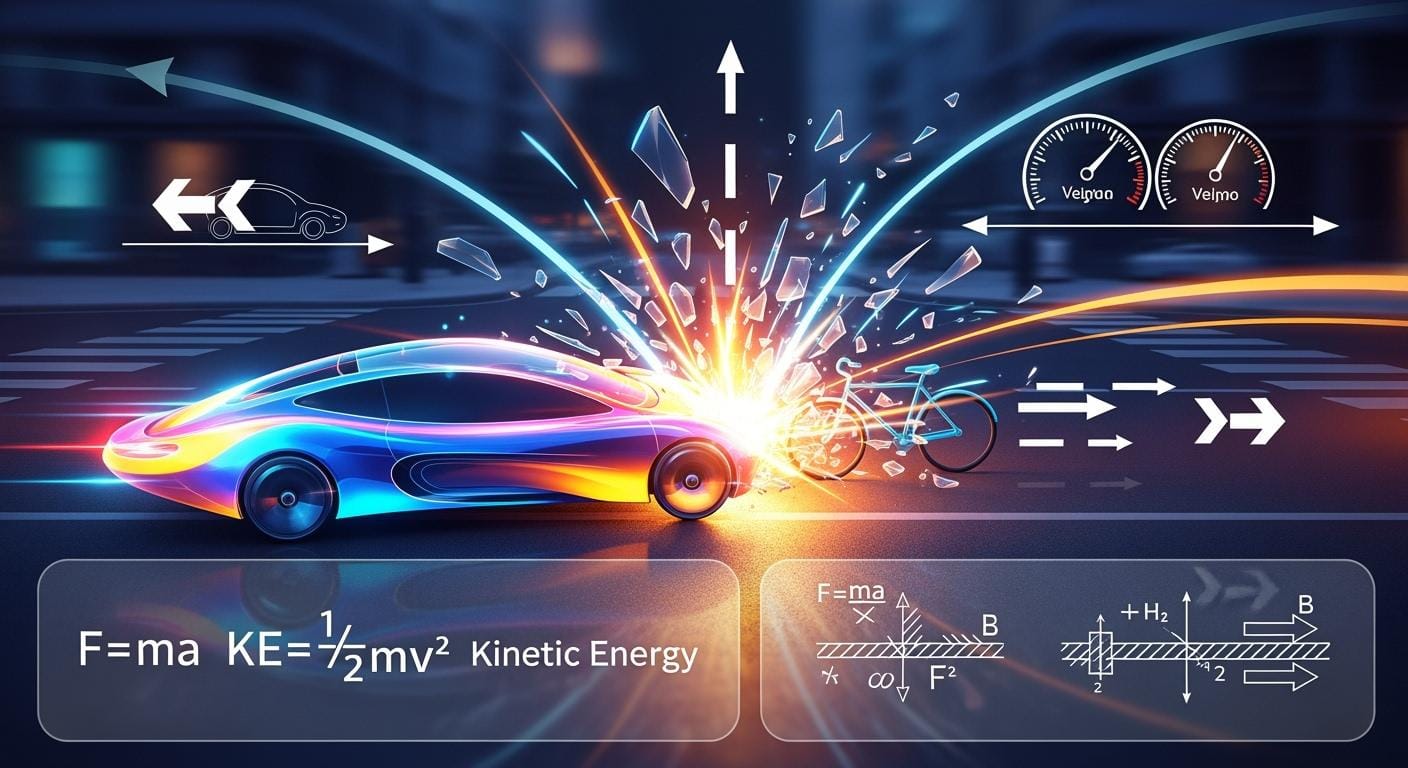

Imagine you slip and fall while running. Or you play a tough soccer game. You might wonder how much force and impact your body feels. You can find these numbers with easy math. You can use tools like a force sensing resistor. Knowing about force and impact helps you stay safe. It helps you make smart choices. For example, experts found kneepads help athletes. Kneepads lower knee injuries by more than half. Special padding protects older adults from hip fractures. The table below shows how learning about force and pressure keeps people safer:
| Key Findings | Details |
|---|---|
| Reduction in Knee Injuries | Kneepads cut knee injuries by 56% for athletes. |
| Impact on Elderly | Hip padding prevents major fractures in falls. |
| Force and Pressure Link | Higher acceleration means higher peak pressure during impacts. |
You can learn these steps one at a time. You do not need to be a scientist.
Table of Contents
Key Takeaways
Knowing about impact force helps you stay safe every day and in sports. Kneepads can cut knee injuries by more than half, so wearing gear is important. Use the formula F = Δp / Δt to find impact force if you know how long the impact lasts. To find average impact force, use F = (1/2)mv² / s with mass and stopping distance. You need to measure mass and speed carefully for good results. If the impact lasts longer, the force is less, so airbags and padding work well. SOUSHINE Force Sensing Resistors give exact numbers for real-time tests. You can also learn about impact force at home with easy tools and materials.
Impact Force Formula
What Is Impact Force?
When two things hit each other, you feel a quick push. This push is called impact force. Scientists say impact force happens when two or more things crash together. The force comes from how their momentum changes. You see impact force in car crashes, sports hits, or when you drop your phone.
Here is a simple chart to help you understand:
| Term | Definition |
|---|---|
| Impact Force | The force when two or more things crash, caused by the change in momentum of the things involved. |
| Factors | The size of the impact force depends on how fast the things move, how heavy they are, and how long the crash lasts. |
Think of impact as what happens when one thing hits another. The force during impact shows how much momentum changes when things touch. Many things, like car wrecks or sports tackles, depend on this force.
In mechanics, impact happens when two things hit and slow down fast. This quick stop makes a big force for a short time. It can cause damage or hurt people. That is why learning about force and impact is important.
Key Formulas Explained
There are two main formulas to find the impact force formula. Each one helps in different cases.
Change in Momentum Over Time
The first formula uses momentum change. Momentum is mass times speed. When something hits, its momentum changes. The formula is:
Impact Force = Change in Momentum / Time
F = Δp / Δt
- F means force (in newtons, N).
- Δp means change in momentum (mass × change in speed).
- Δt means how long the crash lasts (in seconds).
This formula works best if you know how long the crash lasts. For example, you can use it to find the biggest impact force in a car crash if you know how fast the car stops.
Average Force Formula
The second formula uses energy and distance. It helps you find the average impact force if you know how far the thing moves during the crash. The formula is:
Average Impact Force = (1/2 × mass × velocity²) / stopping distance
F = (1/2)mv² / s
- m means mass (in kilograms, kg).
- v means speed (in meters per second, m/s).
- s means stopping distance (in meters, m).
This formula comes from the work-energy rule. When something stops, its moving energy turns into work done by the force. You use this formula to find the average force if you know the stopping distance, like when a car hits a wall and bends.
When to Use Each Formula
Pick the right formula based on what you know:
- Use the change in momentum over time formula if you know how long the crash lasts. This formula helps you find the biggest impact force, which is the highest force during the crash.
- Use the average force formula if you know the stopping distance. This formula gives you the average impact force for the whole crash.
Tip: The parts of the formula—mass, speed, time, and distance—work together. A heavier thing or faster speed means a bigger force. A longer crash time or bigger stopping distance makes the force smaller.
Both formulas show how force, mass, speed, and time connect. Newton’s laws explain this link. If you double the speed, the biggest impact force goes up by four times. If you make the crash last longer, the force gets smaller. You can use these formulas to stay safe and to learn about real crashes.
Measuring Force and Impact

Mass and Velocity
Estimating Mass
You need to know the mass to find impact force. You can check the weight label on things or use a scale. For people, use a bathroom scale. For cars or sports gear, look up the weight online or in manuals. Getting the right mass helps you get good results. If you guess or use the wrong mass, your answer will be wrong.
Measuring Speed
Velocity is also very important. You can measure speed with a radar gun or a speedometer. You can also time how long it takes to go a certain distance. For example, if a soccer ball goes 10 meters in 1 second, its velocity is 10 meters per second. Both mass and velocity change the force during impact. The table below shows why being exact matters:
| Evidence Point | Explanation |
|---|---|
| Mistakes in mass or velocity | Can make the measured impact force very different from the real force. |
| Ways to measure | Using direct tools like dynamic load cells can change how exact your readings are. |
| Setup effects | Different ways to set up load cells can change the force results and how much you can trust them. |
| Why being exact is important | Good impact force numbers help show what the tested thing can handle and help with model testing. |
Impact Time and Distance
Why Time Matters
Impact time is how long the crash lasts. A short impact time means a bigger force. A longer impact time spreads out the force and makes it smaller. Airbags and padding help because they make the impact time longer and lower the force on you. The type of crash also changes the risk. Look at the chart below to see how different crashes change injury risk:
| Impact Type | Speed (km/h) | Injury Risk (%) |
|---|---|---|
| Head On | 28 | 1 |
| Side | 51 | 51 |
| Front | 64 | 64 |
| Rear | 67 | 67 |
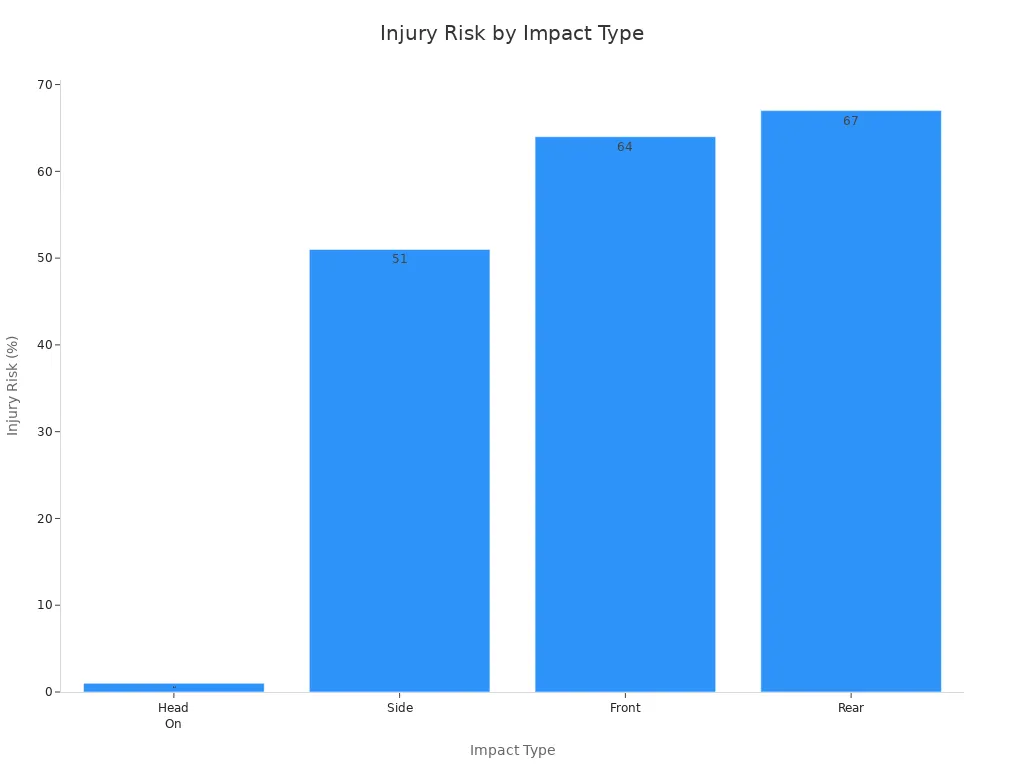
Delta-V is the change in speed during a crash. A bigger change in speed means a higher chance of getting hurt. Measuring impact time and distance helps you know how risky a crash is.
Estimating Impact Duration
You can use a stopwatch or a high-speed camera to measure impact time. In labs, people use special sensors or stroboscopes. For distance, you can measure how far something bends or moves in a crash. These numbers help you pick the right formula for impact force.
Practical Measurement Tools
Using SOUSHINE FSRs
SOUSHINE’s Force Sensing Resistors are a new way to measure impact force. These sensors are thin, bendy, and easy to use. You can put them in helmets, shoes, or car seats. They give good readings and last a long time. SOUSHINE FSRs are better because they are very exact, strong, and easy to use. The table below compares SOUSHINE FSRs to other types:
| Feature | SOUSHINE’s FSRs | Competitors’ FSRs |
|---|---|---|
| Accuracy | Superior | Varies |
| Durability | High | Moderate |
| Customization | Extensive | Limited |
| Low Power Consumption | Yes | Varies |
| Ease of Integration | Simple | Complex |
Smartphone Apps and DIY Tools
You can also use phone apps or make your own tools to measure impact force. Many apps use your phone’s sensors to track speed and force. DIY tools let you make your own setups for tests. These ways are easy and can give lots of details, but sometimes the data is not as exact. The table below shows some good and bad points:
| Advantages | Limitations |
|---|---|
| Gives good and detailed info | Sometimes the data is not very clear |
| You can change it for your own needs | Some people may not be able to use it |
| Open-source lets you copy it | Closed apps do not let you change much |
Tip: For the best results, use both new sensors like SOUSHINE FSRs and simple tools like stopwatches. This helps you get the most exact data when you measure force and impact.
Step-by-Step Calculation
Collecting Data
Tools and Methods
You need the right data before you can calculate impact force. Start by gathering these key measurements:
- Mass: Use a scale to find the weight of the object or person involved. For vehicles, check the manual or look up the model online.
- Speed: Measure how fast the object moves just before the collision. Use a speedometer, radar gun, or a smartphone app.
- Stopping Distance or Time: Find out how far the object travels while stopping, or how long the impact lasts. Use a tape measure for distance or a stopwatch for time.
- Sensors: Use SOUSHINE Force Sensing Resistors for precise force readings. These sensors help you get real-time data during tests.
Tip: Write down all your measurements. Double-check each value to make sure you have accurate numbers.
Plugging in the Numbers
Now you can use your data to find the impact force. Let’s walk through two real-life examples.
Example: Car Crash
Suppose you want to know the average impact force in a car crash. Follow these steps:
- Find the car’s mass. Let’s say the car weighs 3,300 pounds. Divide by 2.205 to convert to kilograms:
- 3,300 lb ÷ 2.205 ≈ 1,497 kg
- Measure the speed before the crash. The car moves at 50 km/h. Convert to meters per second:
- 50 km/h ÷ 3.6 ≈ 13.9 m/s
- Measure the stopping distance. The car comes to a stop over 0.8 meters.
- Use the average impact force formula:
F = (1/2) × mass × velocity² ÷ stopping distance - Plug in the numbers:
- F = (0.5) × 1,497 kg × (13.9 m/s)² ÷ 0.8 m
- F = 0.5 × 1,497 × 193.21 ÷ 0.8
- F = 748.5 × 193.21 ÷ 0.8
- F = 144,697.7 ÷ 0.8
- F ≈ 180,872 N
The average impact force in this car crash is about 180,872 newtons. This number shows how much force the car and its passengers experience during the collision.
Example: Sports Collision
Imagine you want to find the impact force when two soccer players collide.
- Find the mass of one player. The player weighs 70 kg.
- Measure the speed before the collision. The player runs at 6 m/s.
- Estimate the stopping time. The collision lasts 0.2 seconds.
- Use the change in momentum over time formula:
F = mass × change in velocity ÷ impact time - Plug in the numbers:
- F = 70 kg × 6 m/s ÷ 0.2 s
- F = 420 ÷ 0.2
- F = 2,100 N
The impact force during this sports collision is about 2,100 newtons. This force acts on both players for a very short time.
Note: These examples show how you can use simple math and real measurements to find impact force in different situations.
Double-Checking Results
You should always check your answers to make sure they make sense. Try these methods:
- Compare with experiments: Use SOUSHINE FSRs or other sensors to measure the actual force during a test. If your calculated force matches the sensor reading, your math is correct.
- Use simulations: Many engineers use computer models to predict impact force. Studies show that these models often match real-world tests very closely.
- Check your data: Make sure you used the right units and accurate measurements. Small mistakes in mass or speed can change your answer a lot.
- Look at the force waveform: For very fast impacts, use high-speed sensors to record the force over time. This helps you see the peak force and compare it to your calculation.
Tip: Using both sensors and calculations gives you the best picture of force and impact. You can spot errors and improve your results.
By following these steps, you can figure out the impact force in real-life crashes or collisions. You will understand how force and impact work in everyday events, from car accidents to sports hits.
Real-Life Examples

Car Accident
You might see a car accident on the news or in your neighborhood. Imagine you ride in a car that suddenly stops after hitting a wall. The car weighs about 1,500 kilograms and moves at 14 meters per second. The car comes to a stop in less than a meter. You can use the average impact force formula to find out how much force acts on the car and its passengers. The force can reach over 180,000 newtons. This huge force explains why seat belts and airbags matter so much. They help spread out the force over a longer time and distance, lowering the risk of injury. When you understand the numbers, you see why safety features save lives during a collision.
Sports Impact
Sports often involve quick movements and sudden stops. Picture two soccer players running toward each other. Each player weighs about 70 kilograms and runs at 6 meters per second. When they collide, the impact force can reach over 2,000 newtons. This force acts on both players for a very short time. Helmets, pads, and proper training help reduce injuries by spreading out the force and increasing the time of contact. You can use the same formulas to check the impact from a collision in football, hockey, or even martial arts. Knowing these numbers helps coaches and players make safer choices on the field.
Everyday Objects
You face impact force in daily life, not just in big crashes or sports. Dropping your phone or a tool can create surprising results. Here are some real-world examples:
- A 20-pound object moving at 55 miles per hour can hit with a force of about 1,000 pounds.
- A hammer that weighs 2 kilograms and falls from 5 meters can create an impact force greater than one ton.
- Even small items like pens or nails can cause damage if they fall from high places.
You can see that even light objects become dangerous when they move fast or fall from a height. Always stay aware of your surroundings and handle objects with care. Simple actions, like using a case for your phone or storing tools safely, can prevent accidents.
Tip: Try measuring the force of a dropped object at home using a SOUSHINE Force Sensing Resistor. You will see how quickly the numbers add up, even for small items.
Tools for Measuring Impact
SOUSHINE Force Sensing Resistors
You can measure impact force with SOUSHINE Force Sensing Resistors. These sensors give you data right away. They work in many places, like car seats or sports gear. You can use them in medical devices too. SOUSHINE FSRs are strong and last a long time. You can choose different shapes and sizes for your needs. The sensors use very little energy. This means you can put them in portable devices. They are easy to install, even in older systems.
Here is a table that shows what SOUSHINE FSRs can do:
| Feature | Description |
|---|---|
| High accuracy | More exact than most other sensors. |
| Durability | Lasts a long time, even with lots of use. |
| Customization | Comes in many shapes and sizes for different uses. |
| Low power use | Uses little energy, good for portable things. |
| Easy to add | Simple to put into new or old products. |
| Sensitivity | Shows clear changes when force is applied. |
| Response Time | Reacts very fast, good for real-time tests. |
| Operating Range | Works in temperatures from -30°C to +70°C. |
| Repeatability | Gives steady results over time. |
| Construction | Made with two thin layers, one for resistance and one for the circuit. |
You can trust SOUSHINE FSRs for steady results. They react quickly to impacts. This helps in crash tests or sports.
Smartphone Sensors
You can use your smartphone to measure impact force. Most phones have accelerometers inside. These sensors track how fast your phone moves or stops. When you drop your phone, the sensor records the acceleration. Some apps use this to guess the impact force.
- Smartphone sensors give quick and easy impact data.
- You do not need extra tools.
- These sensors sometimes show higher force than special platforms.
- The accuracy can change. Sometimes, results match professional sensors. Other times, the numbers are too high.
You can use smartphone sensors for simple tests. If you want better results, use SOUSHINE FSRs.
Video Analysis
Video analysis lets you study impacts with slow-motion videos. You can watch how things move and hit each other. Coaches and engineers use video to check falls or sports hits. You can use computer simulations with video to guess the forces.
Here is a table that shows what is good and bad about video analysis:
| Strengths | Weaknesses |
|---|---|
| Shows real-world fall movement and speed | Mistakes can happen when handling data by hand |
| Works with computer models to guess forces | Video quality and camera angle can affect results |
| Helps you learn about injury risk and ways to prevent it | Hard to model soft tissue exactly |
| Lets you test injury prevention ideas |
Video analysis helps you see how impacts happen. It also helps you learn how to stop injuries. Remember, video quality and how you handle data can change your results.
DIY Methods
You can measure impact force at home or in a classroom using simple materials. DIY methods help you learn about physics without expensive equipment. You build your own tools and see how force works in real life.
One popular way uses everyday items like PVC tubes, rubber bands, and weights. You create a basic impact force meter by following these steps:
- Gather materials. You need PVC tubes, rubber bands, and weights for calibration.
- Cut the tubes. Make them easy to handle. For example, use a 20-centimeter tube for the narrow part.
- Make holes in the tubes. Use a drill or melt holes for the rubber bands.
- Thread the rubber bands through the holes. This lets the bands stretch when force is applied.
- Calibrate your meter. Hang known weights on the bands. Mark the scale so you know how much force each stretch means.
You can test the meter by dropping objects onto it. The rubber bands stretch when the object hits. You read the scale to see the force. This hands-on method helps you understand how force changes with different weights and speeds.
Tip: Always use known weights to check your scale. This keeps your results accurate.
DIY methods work well for science projects and classroom experiments. You see how impact force changes when you use different materials or drop objects from different heights. You can compare your results with calculations from the formulas you learned earlier.
Here is a table that shows the strengths and limits of DIY impact force meters:
| Feature | DIY Meter | Professional Sensor (FSR) |
|---|---|---|
| Cost | Very low | Higher |
| Materials | Easy to find | Specialized |
| Accuracy | Good for learning | High |
| Setup | Simple | Requires technical skill |
| Data Type | Visual scale | Digital output |
| Use Case | Home, school | Lab, industry |
You can build a DIY meter in less than an hour. You learn by doing. You see how force works and how different setups change your results. You do not need special skills. You only need curiosity and a few supplies.
DIY methods give you a fun way to explore science. You can test ideas, measure impacts, and compare your findings with professional tools like SOUSHINE Force Sensing Resistors. You discover how simple changes affect force. You build confidence in your ability to measure and understand impact in everyday life.
Tips and Common Challenges
Estimating Time Accurately
Getting the right numbers for the time period of collision can be tricky. You need to know how long two things stay in contact during a crash. If you guess wrong, your force calculation will be off. Here are some ways you can estimate this time more accurately:
- Try using Monte Carlo Analysis. This method lets you run many different scenarios by changing the starting conditions. You can see how the time changes if the speed or distance changes.
- Measure the distance an object travels before impact. For example, you can check how far a car moves from a stop sign to the crash point.
- Use high-speed cameras or sensors to record the exact moment of contact and when the objects separate.
- Remember, even if one car follows the speed limit, a crash can still happen more than half the time. Running different scenarios helps you see the range of possible outcomes.
Tip: The more data you collect, the better your estimate for the time duration of the impact.
Handling Uncertainties
You will face some uncertainty when you measure force and impact. Many things can affect your results. You can lower these uncertainties by following good practices:
- Learn about measurement uncertainty. Knowing what causes errors helps you avoid them.
- Use the right measuring tools and make sure they are set up correctly. For example, use load cells that handle force in the right direction.
- Check your tools for things like resolution and noise. If your sensor picks up extra signals, your results may change.
- Keep your equipment in good shape. Regular calibration and maintenance help control problems like hysteresis and creep.
- Remember, every small error in your input numbers adds up. Try to keep each step as accurate as possible.
Improving Accuracy
You can make your results better by following some best practices.
Double-Check Units
Always check your units before you finish your calculations. Many mistakes happen when you mix up kilograms and pounds or seconds and milliseconds. Make a habit of writing down the units for every number you use. If you keep your units straight, your answers will make more sense.
Use Multiple Methods
Try more than one way to measure or calculate force. Here are some steps you can follow:
- Use Measurement System Analysis to find out where errors might come from.
- Set reference ranges for your tests. This helps you see if your results fit what you expect.
- Take several measurements. If you get the same answer more than once, you can trust your results more.
- Train yourself or others to use the tools the right way. Sometimes, machines can help reduce mistakes.
- Test in a place where you can control things like temperature and light. This keeps outside factors from changing your results.
Note: Using more than one method helps you spot mistakes and gives you more confidence in your answers.
By following these tips, you can handle common challenges and get better results when you measure force and impact in real-life situations.
Quick-Reference Checklist
Step-by-Step Summary
You can figure out force and impact in real-life crashes by following these steps:
- Gather Your Data
- Find the mass of the object or person. Use a scale or look up the weight.
- Measure the speed just before the impact. Use a speedometer, radar gun, or smartphone app.
- Record the stopping distance or the time of impact. Use a tape measure, stopwatch, or high-speed camera.
- Use a SOUSHINE Force Sensing Resistor for direct force readings if possible.
- Choose the Right Formula
- Use
F = Δp / Δtif you know the impact time. - Use
F = (1/2)mv² / sif you know the stopping distance.
- Use
- Plug in Your Numbers
- Write down your values with the correct units.
- Calculate the force step by step.
- Check Your Results
- Compare your answer with sensor data or real-world examples.
- Double-check your units and numbers.
Tip: Always write down each step. This helps you spot mistakes and learn faster.
Common Pitfalls
You might run into some common problems when measuring force and impact. Watch out for these:
- Mixing up units (like pounds and kilograms or seconds and milliseconds).
- Guessing the mass or speed instead of measuring.
- Forgetting to measure the stopping distance or impact time.
- Using the wrong formula for your data.
- Not checking your tools for accuracy.
- Ignoring small errors that add up in your final answer.
| Mistake | How to Avoid It |
|---|---|
| Wrong units | Always label your numbers |
| Bad measurements | Use the best tools you can find |
| Skipping double-checks | Review your work every time |
Alert: Even small mistakes can change your results a lot. Take your time and check your work.
Where to Get Help
You can find help and more information in many places:
- Online Tutorials: Search for videos or guides on impact force calculations.
- Science Teachers: Ask your teacher for help with tricky steps.
- SOUSHINE Support: Contact SOUSHINE for advice on using Force Sensing Resistors.
- Apps and Tools: Download measurement apps or use online calculators.
- Community Forums: Join science or engineering forums to ask questions and share results.
Note: You do not have to solve everything alone. Many people and resources can help you learn and improve your skills.
You can find impact force in any crash by using easy steps. First, collect your data. Next, pick the best formula for your numbers. Then, check your answer to make sure it is right. Use the checklist to help you with each step. Try using real measurements to get better at this. SOUSHINE Force Sensing Resistors and other tools help you get good results. When you learn about force and impact, you can make safer choices. You will also notice science in things you do every day.
FAQ
What is impact force?
Impact force is the push or pull you feel when two things crash together. You can measure it using simple formulas. The force depends on mass, speed, and how long the crash lasts.
How do I measure impact force at home?
You can use a SOUSHINE Force Sensing Resistor, a smartphone app, or a DIY setup. Write down the mass, speed, and stopping time or distance. Plug these numbers into the right formula.
Why does stopping time matter in a crash?
Longer stopping time spreads out the force. This makes the impact less dangerous. Airbags and padding help by increasing the time it takes to stop.
Can I use my phone to measure force?
Yes! Many smartphones have sensors that track movement. You can use special apps to record speed and estimate impact force. Results may not be as exact as with professional sensors.
What is the difference between average and peak force?
Average force spreads over the whole crash. Peak force is the highest force at one moment. You use different formulas for each. Knowing both helps you understand the risk of injury.
How accurate are SOUSHINE FSRs?
SOUSHINE FSRs give you precise, real-time force readings. They work in many settings, like cars or sports gear. You can trust their results for most real-life tests.
What should I do if my results seem wrong?
Check your units and measurements. Make sure you used the right formula. Try measuring again or use another method. You can also ask for help from teachers or SOUSHINE support.