

Call us: +86-137-2353-4866
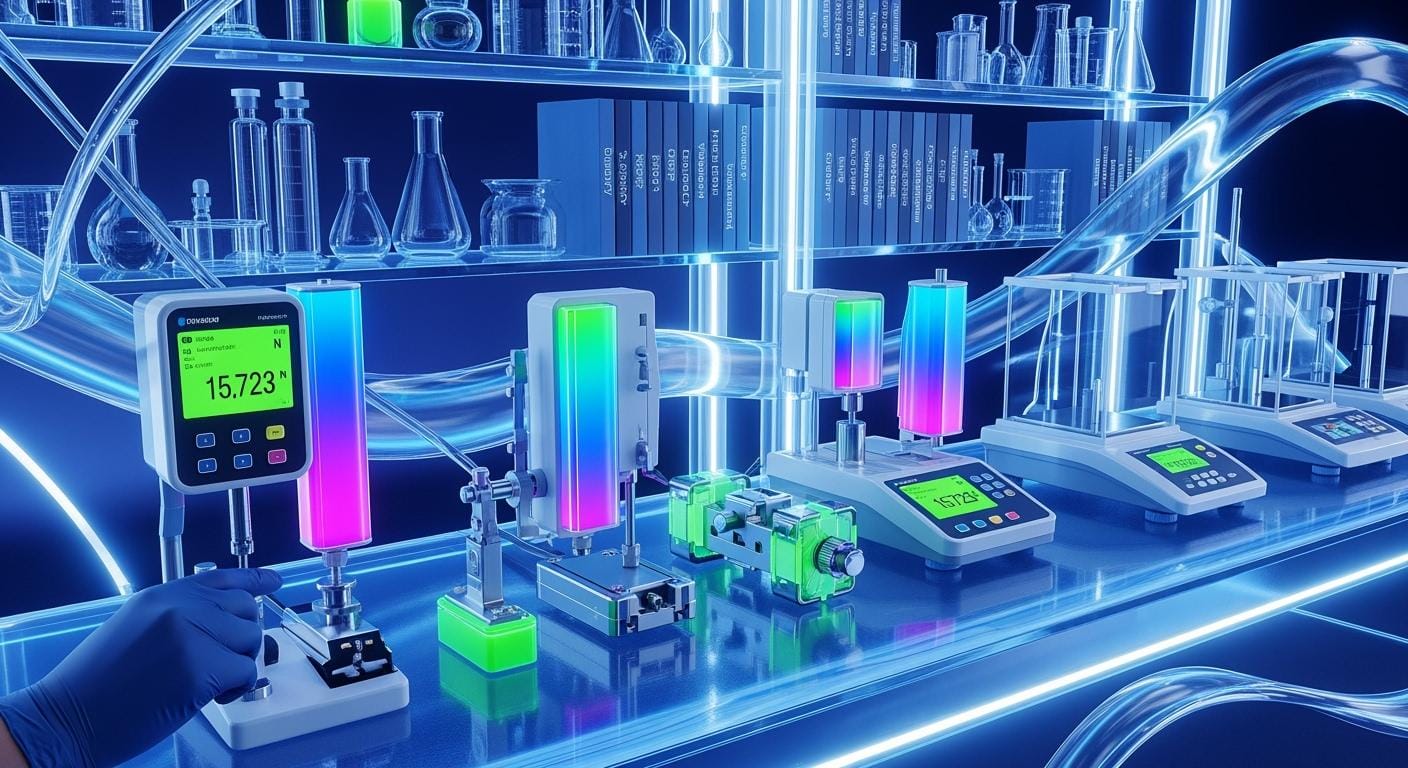

If you want lab precision in 2025, you have great choices for a force measuring device. Top picks are SOUSHINE’s force sensing resistor, Shimadzu digital force testers, Ametek high-range force gauges, and HBM PW25 force transducers. Labs today need tools that give accuracy, reliability, and flexibility. You can see trends like smaller size, wireless technology, and smart sensors everywhere. Many labs also want traceability and sustainability in their equipment. These changes help you get better force sensing results and make your work easier.
Table of Contents
Key Takeaways
- Pick the best force measuring device to help your lab work better and get correct results.
- SOUSHINE Force Sensing Resistors are flexible and use little power for many uses.
- Shimadzu Digital Force Tester gives steady results and lets you save data easily when testing materials.
- Ametek High-Range Force Gauge works well with heavy things and helps you get correct results in hard lab places.
- HBM PW25 Force Transducer gives exact measurements, even when the temperature changes.
- You can look at wireless choices like TE Connectivity Smart Sensor for live data and easy connection.
- You need to check and fix your devices often to keep them working right and giving correct results.
- Learn about new things like smart sensors and ways to help the planet so you can pick the best tools for your lab.
Best Force Measuring Devices of 2025
Top Picks for Lab Precision
Picking the right force measuring device helps your lab work better. These are the best choices for 2025. Each device has special features and works really well.
SOUSHINE Force Sensing Resistors (FSRs)
SOUSHINE FSRs give you both flexibility and accuracy. These sensors measure force and pressure very well. You can change their shape and size for your project. They use little power, so they save energy. Their strong build helps them last a long time in labs. You can use them in robotics, healthcare, and cars.
Shimadzu Digital Force Tester
Shimadzu’s digital force tester gives you results you can trust. You can test many kinds of materials. The digital screen is easy to read. You can save your data for later. This device is good for labs that need fast and accurate tests.
Ametek High-Range Force Gauge
Ametek’s force gauge can handle heavy loads easily. You can use it for tough tests. It is very accurate and measures a wide range. The strong design makes it good for busy labs.
HBM PW25 Force Transducer
The HBM PW25 is known for its accuracy. You get steady readings, even if the temperature changes. It uses advanced strain gauge technology. This device is great for labs that need very exact tests.
U10M High Precision Sensor
The U10M sensor gives you accurate and repeatable results. You can use it for careful measurements. Its small size helps it fit in tight spaces. You can trust it for research and quality checks.
TE Connectivity Smart Sensor
TE Connectivity’s smart sensor uses wireless technology in your lab. You can see force data right away. The sensor is easy to connect with other lab tools. It is good for labs that want smart upgrades.
Honeywell Advanced Force Gauge
Honeywell’s force gauge works fast and is very reliable. You can use it for simple or hard tests. The device is easy to use and take care of. It is great for labs that need quick and correct results.
Sensata Technologies Load Cell
Sensata’s load cell works well in many situations. You get a wide range and strong build. The device is easy to set up and fits in automated systems.
Tekscan Wireless Force Sensor
Tekscan’s wireless sensor lets you collect force data without wires. You can move it between setups easily. The sensor gives accurate readings and saves data for later. It is perfect for labs that need to change setups often.
Vishay Intertechnology Pressure Sensor
Vishay’s pressure sensor gives exact measurements in different conditions. You can use it for low or high-pressure tests. The sensor is built strong for long use.
Why These Devices Lead in 2025
You want the best tools for your lab work. These devices are top choices because they meet strict lab standards. Here is what makes them special:
| Criteria | Description |
|---|---|
| Accuracy | You get exact measurements every time. |
| Durability | These devices last through lots of use. |
| Versatility | You can use them in many lab jobs. |
| Temperature Compensation | They stay accurate when temperatures change. |
| Ease of Integration | You can add them to your lab systems easily. |
| Strain Gauge Technology | Some use advanced tech for better accuracy. |
| Construction Materials | Strong materials help them last longer. |
| Operational Ranges | You can measure many different forces. |
You find these features in the best force measuring devices for 2025. SOUSHINE FSRs can be shaped and sized for almost any design. Their low power use is good for saving energy. Devices like the HBM PW25 use advanced strain gauge technology, so you get steady and exact results, even if the temperature changes.
Labs need more than just accuracy now. You want devices that last, work in many places, and fit with your lab tools. Many of these devices have wireless features, smart data storage, and easy setup. You can trust them for good results in material testing, healthcare, robotics, or electronics.
When you pick a force measuring device from this list, you get a tool that follows new trends. You get better data, easier setup, and strong performance for a long time.
What Is a Force Measuring Device?
Definition and Principles
You may wonder what a force measuring device does in your lab. This tool helps you find out how much force is on something. It can measure both the strength and direction of a push or pull. Most devices have a part called a transducer, like a load cell or strain gauge. The transducer senses the force. A signal processing unit changes this into numbers you can read.
Here’s a quick look at how these devices work:
| Aspect | Description |
|---|---|
| Definition | A force-measurement device tells you how strong and which way a force or load goes. |
| Components | Most have a force transducer and a signal processing unit. |
| Operating Principle | Spring-based devices use Hooke’s Law to link force and spring stretch. |
| Calculation Method | Force equals spring constant times how much the spring stretches. |
| Types of Devices | There are mechanical devices like Bourdon tubes and digital ones like load cells. |
Some devices use springs and follow Hooke’s Law. Others use electronics for more exact results. No matter which type, you get a clear force measurement.
Key Features for Lab Use
When you choose a force measuring device, you want more than just numbers. It should fit your experiments, last long, and give results you trust. Here are some features to look for:
| Feature | Description |
|---|---|
| Measurement Range | The sensor can measure different force levels. |
| Sensitivity | It can notice small changes in force. |
| Accuracy | The sensor shows the true force applied. |
| Environmental Tolerance | It works in different temperatures, humidity, and tough places. |
| Installation Constraints | Think about where and how you can put the sensor. |
| Overload Protection | It has ways to stop damage from too much force. |
| Repeatability | It gives the same result under the same conditions. |
| Resolution | It can spot tiny changes in force. |
| Integration Options | It works with other systems and is easy to add. |
| Durability | The sensor is tough and lasts in hard places. |
| Response Time | It reacts quickly when force changes. |
Tip: Always check if your device can handle your lab’s environment. Some sensors work better in hot, cold, or wet places.
Importance of Precision
Precision is very important in lab work. If your force measuring device is precise, you can trust your experiments. Here’s why precision matters:
- You get the same results every time you test.
- High precision lets you repeat tests and get the same answer, so you know your results are solid.
- If your device is not precise, your results may change too much and be hard to trust.
- Lab workers need precision and quality control to make sure experiments work.
- Their skills with equipment help keep research correct.
- Being careful removes things that could mess up your data.
- Accuracy and precision show how good your lab tests are.
- These help you see how well your methods work over time.
- Regular checks by skilled staff keep your results trustworthy.
When you focus on precision, your lab’s data gets stronger and more reliable. That’s why picking the right force measuring device is so important for your research.
Types of Force Measuring Devices
In labs, there are many ways to measure force. Each kind of force measuring device has its own good points. Here are three common types: load cells, force gauges, and pressure sensors.
Load Cells
Load cells measure force by changing weight into an electrical signal. Many labs use them because they are very exact.
Lab Applications
You use load cells in lab scales and testing machines. They help with:
- Tensile testing (pulling things apart)
- Compression testing (pushing things together)
- Proof load testing (seeing if something holds a set weight)
- Material testing (checking how strong something is)
Here is how load cells work in different tests:
| Type of Test | What It Does |
|---|---|
| Tensile testing | Measures how much force pulls something apart |
| Compression testing | Checks how much force pushes something together |
| Proof load testing | Tests if a part can hold a set weight |
| Material testing | Finds out how strong a material is |
Pros and Cons
Pros:
- Very accurate
- Works for many tests
- Handles big and small forces
Cons:
- Needs careful setup
- Can change with temperature
Force Gauges
Force gauges measure push or pull by hand or machine. You use them for quick checks or small tests.
Lab Applications
You use force gauges for:
- Quality control (making sure things meet rules)
- Mechanical strength testing (checking how strong things are)
- End of line testing (final checks before shipping)
You can use a force gauge to test springs, buttons, or small parts in electronics.
Pros and Cons
Pros:
- Simple to use
- Easy to carry
- Good for fast tests
Cons:
- Not as exact as load cells
- Has a small range
Pressure Sensors
Pressure sensors measure the force of fluids or gases. You use them to keep experiments safe and make sure tools work right.
Lab Applications
You use pressure sensors to:
- Watch fluid pressure in experiments
- Check gas levels in lab tools
- Make sure systems stay safe
Pressure sensors are important in labs that use liquids or gases.
Pros and Cons
Pros:
- Watches pressure all the time
- Keeps experiments safe
- Works in many labs
Cons:
- Needs to be set right
- Can change with temperature or wet air
Tip: When you pick a force measuring device, think about what you need to measure. Each type works best in different situations.
Force Sensing Resistors (FSRs)
Lab Applications
You will find Force Sensing Resistors (FSRs) in many labs today. These sensors help you measure force and pressure with great flexibility. You can use FSRs in robotics to give robots a sense of touch. In healthcare, FSRs help with patient monitoring and rehab equipment. You might use them in automotive labs to test safety features or in electronics to create touch-sensitive controls. FSRs work well in research projects where you need to measure small changes in force. Their thin and flexible design lets you fit them into tight spaces or even curve them around objects.
Tip: If you need a sensor that fits your project’s shape or size, FSRs are a smart choice. You can cut or customize them for almost any setup.
Pros and Cons
Here’s a quick look at what you get with FSRs:
| Pros | Cons |
|---|---|
| Flexible and thin | Not for very high forces |
| Customizable shapes and sizes | Less accurate than some load cells |
| Low power use | |
| Durable in tough settings | |
| Easy to add to devices |
You can see that FSRs give you lots of options for creative lab work. They use little energy and last a long time, so you don’t have to worry about frequent replacements.
Piezoelectric Sensors
Lab Applications
Piezoelectric sensors help you measure fast changes in force or vibration. You might use them in labs that test materials for shock or impact. These sensors work well in sound and vibration studies. If you need to measure very small or quick forces, piezoelectric sensors give you the data you need. You can also use them in aerospace labs to check for stress or in automotive labs to test engine vibrations.
Pros and Cons
| Pros | Cons |
|---|---|
| Responds to quick changes | Needs special electronics |
| High sensitivity | Not ideal for slow forces |
| Works in harsh conditions | Can be more expensive |
Piezoelectric sensors give you fast and accurate results. You can trust them when you need to catch quick force changes.
Torque Meters
Lab Applications
Torque meters help you measure how much something twists. You use them in labs that test motors, engines, or rotating parts. If you work in robotics, you might use a torque meter to check how much force a joint or arm uses. In automotive labs, torque meters help you test engine parts or bolts. You can also use them in material science to see how much a sample can twist before it breaks.
Note: When you need to measure twisting force, a torque meter is the right force measuring device for the job.
Pros and Cons
| Pros | Cons |
|---|---|
| Measures twisting force | Needs careful calibration |
| Works with rotating parts | Can be bulky |
| Good for motors and engines | Sometimes costs more |
You get clear and reliable results with torque meters. They help you make sure your machines and parts work the way you want.
Dynamometers
Dynamometers might sound like a big word, but you probably use them more often than you think—especially if you work in a lab that tests machines or engines. These devices measure force, torque, or power. You can use them to see how much work a motor or engine does. They help you check if a machine runs smoothly or if it needs fixing.
Lab Applications
You will find dynamometers in many types of labs. Here are some ways you might use them:
- Engine Testing: You can use a dynamometer to measure how much power an engine produces. This helps you see if the engine works well or if it needs repairs.
- Motor Efficiency: Want to know if a motor uses energy well? A dynamometer gives you the answer. You can test electric motors, small machines, or even wind turbines.
- Material Testing: Sometimes you need to pull or twist a material to see how strong it is. A dynamometer helps you measure the force needed to break or bend something.
- Biomechanics: In sports science or healthcare labs, you might use a hand-held dynamometer to measure grip strength or muscle force. This helps doctors and trainers track progress.
- Quality Control: Factories use dynamometers to check if products meet safety rules. You can test tools, springs, or even toys to make sure they work right.
Tip: If you want to measure both force and speed at the same time, a dynamometer is a great choice. You get a full picture of how a machine or part performs.
Pros and Cons
Dynamometers offer many benefits, but you should also know their limits. Here’s a quick look:
| Pros | Cons |
|---|---|
| Measures force, torque, and power | Can be large and heavy |
| Works with engines and motors | Needs regular calibration |
| Gives real-time data | May cost more than simple gauges |
| Helps with safety and quality | Some types need expert setup |
| Useful in many industries | Not always portable |
You get a lot of value from a dynamometer. You can use it for many tests, from engines to muscles. The real-time data helps you spot problems fast. You can also use the results to improve machines or products.
But keep in mind, some dynamometers are big and heavy. You might need help to move or set them up. They also need regular checks to stay accurate. Some models cost more than basic force gauges, but you get more features and better data.
Note: If you need a tool for quick, simple tests, a dynamometer might be more than you need. But if you want deep insights into how things work, it’s a smart investment.
Dynamometers give you the power to test, measure, and improve almost anything that moves or turns. You can trust them for lab work, research, or even sports science. If you want to know how strong, fast, or efficient something is, a dynamometer helps you find the answer.
Applications in Laboratory Settings
Material Testing
You use force measuring devices a lot in labs. These tools help you see how strong or bendy something is. You can test things like plastic, steel, or fabric. Here are some ways you might use them: You can check how much force pulls something apart. You can see when a material starts to stretch or break. Load cells help you get very exact force numbers. You might work with building, medical, or car and rocket parts. Force measuring devices help make sure materials are safe and strong for their jobs.
Tip: Always look at your device before you test. This helps you get the best results.
Biomechanics and Healthcare
In biomechanics and healthcare labs, you need to know how bodies move. Force measuring devices help you get important data. You can use them to track ground reaction forces when people walk or run. This helps with sports and stopping injuries. Doctors and therapists use them to see how much force a patient uses in rehab. Athletes can get real-time data to get better at sports. You can use portable devices, like the KunWei Mobile Force Measurement Instrument, to collect data outside the lab. This makes it easy to study how people move in real life. The right data from your force measuring device helps people heal or train better.
Robotics and Automation
You find force measuring devices in robotics and automation labs. These devices help robots and machines work with care and accuracy. You can measure forces and torques to make sure robots move things gently and as planned. Many industries use these devices, like car making, medicine, farming, and factories. You can make robots and machines work better. You can check and control the force robots use to pick up or move things. You can also improve how things work by checking data right away. Using a force measuring device in robotics helps your robots work smarter and your lab run better.
Consumer Electronics
You use force measuring devices in labs for electronics. These tools help you check if gadgets work well. When you test a phone or game controller, you want buttons and switches to feel right. Force measuring devices help you test this.
- You use digital or mechanical force gauges to see how much force is needed to press a button or open a door.
- These tests show the highest force needed for switches or latches.
- You make sure every product feels the same and works safely.
Force testing does more than check if things work. It helps you find weak parts before people use them. You can test how much force breaks a part or opens packaging. This shows if a product will last or break too soon.
- You measure the most force needed to break a product or the average force to open a package.
- You also check the least force needed to use things like inhalers or buttons, so they are easy for everyone.
- Cyclic testing shows how products hold up after many uses.
Tip: Always keep records of your force tests. These records help you prove your products are safe and work as promised.
Force measuring devices give you data for quality control. You can find problems early and fix them before products go out. This keeps customers happy and safe.
Aerospace and Automotive
You see force measuring devices in aerospace and automotive labs. These industries need strong and safe parts. You use these tools to test airplane wings and car engines.
Here’s a look at how you use force measuring devices in these labs:
| Application Type | Description |
|---|---|
| Wind Tunnel Tests | You measure forces on aircraft parts during aerodynamic tests. |
| Structural Testing | You check if parts stay strong under real-life conditions. |
| Load Measurements | You make sure parts can handle the stress they face in use. |
You also use dynamometers to measure force and torque in engines. These tests show how well an engine works and if it is safe. You use this data to make cars and planes safer and better.
- You test engines to see how much power they make.
- You check if parts can handle stress without breaking.
- You use the results to improve fuel use and safety.
Note: When you use force measuring devices in aerospace and automotive labs, you help make safer vehicles and better technology.
Force measuring devices help you find problems before they get big. You can trust your data to guide changes and make sure every part meets strict rules.
In-Depth Reviews of Leading Force Measuring Devices
SOUSHINE Force Sensing Resistors (FSRs)
Features
SOUSHINE Force Sensing Resistors (FSRs) have many smart features. These sensors measure force by changing resistance all the time. You see real numbers, not just simple signals. You can pick the shape and size you need. The sensors last a long time, even with daily use. They use very little power, so batteries work well. You can add them to your lab setup easily.
Here’s what makes SOUSHINE FSRs special:
| Feature | Description |
|---|---|
| Continuous Resistance Change | Gives you precise force measurement, not just on/off signals. |
| Customizable Shapes/Sizes | Lets you choose the shape and size for your design. |
| Durability and Reliability | Works well for a long time, even in tough labs. |
| Low Power Consumption | Saves energy and works with battery-powered devices. |
| Ease of Integration | Connects easily to your lab systems and electronics. |
Tip: If you want a sensor that fits your needs, SOUSHINE FSRs let you change almost everything.
Use Cases
You can use SOUSHINE FSRs in lots of labs. They help robots feel things by touch. In healthcare, you can track how patients move or help with rehab tools. Sports labs use them to measure grip or pressure. You can add them to electronics for touch buttons. Car labs use FSRs to test safety features and controls. You can use them in research to measure small force changes.
Performance
SOUSHINE FSRs give you steady results every time. You get good readings, even in busy labs. The sensors handle stress and keep working well. You save energy because they use less power than other sensors. You can trust them for long projects. They fit into small spaces and odd shapes, so you don’t need to change your setup. Here’s how they compare to other devices:
| Feature | SOUSHINE FSRs | Other Devices |
|---|---|---|
| Versatility | Works in sports, healthcare, robotics | Varies by model |
| Customization | Many shapes and sizes available | Limited options |
| Energy Efficiency | Uses little power | Uses more power |
| Durability | Lasts long, reliable under stress | Varies by model |
You get a force measuring device that fits your needs and helps you save energy.
Shimadzu Digital Force Tester
Features
Shimadzu Digital Force Tester gives you clear and exact results. You see your data on a digital screen. You can test many materials, like soft plastics or hard metals. The device saves your results, so you can look at them later. You can set up tests fast and change settings for each project.
Use Cases
You use Shimadzu testers in labs that need quick and repeatable tests. Material labs use them to check strength and durability. You can test how much force breaks or stretches a sample. Quality control labs use them to make sure products follow safety rules. You can also use them in research to compare materials.
Performance
Shimadzu testers give you steady and repeatable results. You get high accuracy, even if you test many samples. The digital screen helps you see results right away. You can trust the device for quick checks and deep research. The tester works well for labs that run lots of tests every day.
Ametek High-Range Force Gauge
Features
Ametek High-Range Force Gauge handles heavy loads easily. You get a wide range, so you can test small and big forces. The device is strong, so it works well in tough labs. You can use it with different parts for special tests.
Use Cases
You use Ametek force gauges in labs that test strong materials or big parts. Car labs use them to check engine parts and bolts. Industrial labs use them for proof load testing. You can use them in research to measure how much force a machine or tool can take.
Performance
Ametek force gauges give you exact results, even with heavy loads. You get repeatable readings, so your data is trustworthy. The device works well in busy labs and tough places. You can use it for simple checks and hard tests. The strong design means you don’t have to worry about damage during tough tests.
HBM PW25 Force Transducer
Features
The HBM PW25 Force Transducer gives you very accurate results. It uses advanced strain gauge technology for steady readings. The stainless steel body keeps it safe from water and dust. You can clean it easily, which is good for clean labs. Its small size lets you put it in tight spaces.
Here’s what you get with this device:
| Feature | Benefit |
|---|---|
| Strain Gauge Tech | Gives you exact and repeatable results |
| Stainless Steel Build | Stops rust and lasts a long time |
| IP68 Protection | Works in wet or dusty places |
| Easy to Clean | Great for food, pharma, or biotech labs |
| Compact Size | Fits in small lab setups |
Tip: Pick the PW25 if your lab has tough conditions.
Use Cases
You can use the HBM PW25 in many labs. It works well in food labs that need to stay clean. You can use it in pharmaceutical labs for weighing and dosing. It helps in automation systems to measure force during production. It also fits in quality control labs that need exact force numbers.
- Food and drink labs
- Medicine research labs
- Automated production lines
- Quality control stations
- Biotech experiments
Performance
The HBM PW25 gives you steady and reliable results. You can trust the numbers, even if the temperature changes. The sensor keeps working after washing or in wet places. You see changes fast because it responds quickly. It stays accurate, even after many uses. You can use it for daily work or special projects.
U10M High Precision Sensor
Features
The U10M High Precision Sensor gives you very accurate results in a small size. It uses strong materials and smart electronics. You get a wide range and low error rates. The sensor stays steady, even if the environment changes. Its small size helps it fit in tight spots.
Here are some key features:
- High accuracy for careful tests
- Wide force range for many uses
- Small and light
- Strong build for long use
- Fast response to force changes
You can trust the U10M for exact numbers in small spaces.
Use Cases
You find the U10M in labs that need careful measurements. It works in material science for testing samples. You can use it in robotics to measure grip or touch. Engineers use it in quality control to check parts. It also fits in medical labs for testing devices or prosthetics.
- Material testing
- Robotics and automation
- Medical device research
- Quality checks
- Precision engineering
Performance
The U10M gives you repeatable and accurate results. You see quick feedback when you use force. The sensor keeps its accuracy after many tests. You can use it for small or big forces. The strong build means it does not break easily. You can trust your data every time.
Other Notable Devices
Features
There are more good choices for force measurement in 2025. Devices like the TE Connectivity Smart Sensor, Honeywell Advanced Force Gauge, Sensata Technologies Load Cell, Tekscan Wireless Force Sensor, and Vishay Intertechnology Pressure Sensor each have something special.
| Device Name | Standout Feature |
|---|---|
| TE Connectivity Smart Sensor | Wireless data and easy to connect |
| Honeywell Advanced Force Gauge | Fast, reliable, and easy to use |
| Sensata Technologies Load Cell | Strong and measures a wide range |
| Tekscan Wireless Force Sensor | Portable and has no cables |
| Vishay Intertechnology Pressure Sensor | Accurate in many conditions |
Note: Pick a device that fits your lab, whether you want wireless, strong build, or high accuracy.
Use Cases
You can use these devices in many labs. The TE Connectivity Smart Sensor is good for labs that want wireless data. Honeywell’s gauge is great for quick tests and checks. Sensata’s load cell fits in automated systems. Tekscan’s wireless sensor is good for moving between setups. Vishay’s pressure sensor works in labs that test fluids or gases.
- Wireless data collection
- Fast quality checks
- Automated production lines
- Portable testing setups
- Pressure checks in fluid labs
Performance
These devices give you strong and steady performance. You get accurate data for quick checks or long projects. Wireless models let you move and collect data right away. Strong designs work in tough labs. You can trust these devices to keep up with your lab and give you results you need.
How to Choose the Right Force Measuring Device
Assessing Lab Requirements
Before you pick a force measuring device, you need to look at what your lab really needs. Every lab is different, so you want to match your device to your work. Start by thinking about the types of tests you run and the level of accuracy you expect. You should also check your lab’s environment. Some devices work better in hot, cold, or dusty places. Don’t forget about calibration standards. You want your device to meet the right rules for your industry.
Here’s a table to help you see what matters most:
| Factor Type | Description |
|---|---|
| Calibration Standards | Make sure your device meets the right calibration rules. |
| Uncertainty Contributors | Look at past data, manufacturer specs, and calibration certificates. |
| Environmental Factors | Think about temperature, humidity, and dust in your lab. |
| Common Error Sources | Watch out for alignment, adapter hardness, and temperature changes. |
Tip: Write down your lab’s needs before you shop. This helps you find the best fit.
Comparing Device Specs
Once you know your lab’s needs, you can start comparing different devices. You want to look at more than just the price. Think about how you will use the device every day. Here are some things to check:
- What kind of system do you need? (Handheld or a big test stand)
- What type of force will you measure? (Compression, tension, or torque)
- What is the smallest and largest force you need to measure?
- How accurate does your testing need to be?
- How much memory do you need? Can you move data to a computer?
- What kind of support or service do you want from the company?
- Does the device fit your budget?
You should make a list of your top needs. This makes it easier to compare models and pick the right one.
Budget and Value
You want a device that fits your budget but also gives you good value. Prices for lab devices can vary a lot. Some basic models cost less, but they may not have all the features you need. High-end models cost more, but they work better for tough jobs or advanced labs.
Here’s a quick look at price ranges for 2025:
| Price Segment | Price Range | Description |
|---|---|---|
| Low-End Models | $10,000 to $50,000 | Good for simple jobs and basic setups. |
| Mid-Range Models | $30,000 to $50,000 | Handles more force and works for many types of tests. |
| High-End Models | $70,000 to $250,000+ | Best for advanced labs like aerospace or defense. |
Think about what you get for the price. Sometimes, paying more means you get better support, more features, or a longer-lasting device. Always check if the device meets your needs before you buy.
Note: The best value comes from a device that matches your lab’s work, not just the lowest price.
Calibration and Maintenance
You want your force measuring device to always give correct results. To do this, you need to focus on calibration and maintenance. Good habits help your device last longer and keep your lab data right.
Start by checking calibration often. You should check your device a lot, especially if you use it in tough places. If your lab is hot, cold, or wet, you may need to calibrate more. Always use a reference standard with known accuracy when you check your device. This helps you find any drift or mistakes fast.
Here are some best ways to care for your device:
- Control humidity in your lab. Use dehumidifiers or keep your device in a case to stop water from causing trouble.
- Mount your device tightly. This stops vibration and shock from messing up your readings.
- Keep dust and dirt away. Seal your device when not in use and clean it on a set schedule.
- Store your device in a safe place. Teach everyone in your lab how to handle it gently.
- Calibrate more if your device faces harsh places. On-site calibration can save time and keep your device ready.
You should also watch the area around your device. Check the temperature and humidity. Even small changes can change your results. Make sure only trained people do calibration. Skilled hands help a lot.
Tip: Write down every calibration and maintenance check. A simple logbook or digital file helps you know when your device needs care.
Calibration is not just about numbers. You need to think about things like drift, measurement consistency, and how your device acts after many uses. Regular checks and small fixes keep your device working well.
Integration and Future-Proofing
When you pick a force measuring device, you want it to work with your lab’s systems now and later. Think about how your device connects to computers, data loggers, or other lab tools. Many new devices have wireless or smart features that make setup easy.
Here’s what to look for to keep your lab ready for the future:
- Check if your device uses common data formats. This makes it easier to share results with other tools.
- Look for devices with software updates. These updates can add new features or fix problems.
- Choose sensors that work with both old and new lab systems. This helps you avoid big upgrades later.
- Pick devices with modular designs. You can add new parts or features as your needs change.
- Ask about cloud integration. Some devices let you store and check data online, making teamwork easier.
| Feature | Why It Matters |
|---|---|
| Wireless Connectivity | Easy setup and less cable mess |
| Smart Sensor Options | Real-time data and remote access |
| Modular Design | Upgrade without full replacement |
| Cloud Data Storage | Access results from anywhere |
Note: If you plan for the future now, you save time and money later. Your lab stays flexible and ready for new challenges.
By focusing on integration and future-proofing, you make sure your force measuring device keeps up with your lab’s needs—today and tomorrow.
Maximizing Precision and Reliability
Device Setup Best Practices
You want your lab results to be spot-on every time. Start with a solid setup. Place your device on a stable, flat surface. Make sure nothing wobbles or shakes. If your device has mounting holes, use them. Secure the device tightly so it does not move during tests.
Check the environment around your device. Keep it away from direct sunlight, heaters, or air vents. Temperature swings can mess with your readings. If you use a computer or other electronics nearby, keep cables neat and out of the way. This helps you avoid tripping or pulling on the device by accident.
Before you start, look at the device’s manual. Follow the steps for setup. Some devices need warm-up time. Give them a few minutes to settle. If your device has a display, check that it reads zero before you test. If not, reset it.
Tip: Always double-check your connections. Loose wires or plugs can cause errors you might not notice right away.
Regular Calibration
You want your force measuring device to stay accurate. Regular calibration keeps your results trustworthy. Set a schedule for calibration. Some labs do this every week. Others do it once a month. Pick what works for your lab, but do not skip it.
Use a known weight or force to check your device. Compare the reading to what you expect. If the numbers do not match, adjust the device or call for service. Write down every calibration in a logbook. This helps you track changes over time.
Here is a simple calibration checklist:
- Clean the device before you start.
- Place it on a stable surface.
- Use a certified weight or force.
- Record the reading.
- Adjust if needed.
- Log the results.
Note: If you move your device to a new spot, calibrate it again. Even small moves can change the readings.
Staff Training
You get the best results when everyone knows how to use the equipment. Train your team on setup, use, and care. Show them how to handle the device gently. Teach them to spot problems, like strange noises or odd readings.
Make a quick-start guide for new users. Use pictures and simple steps. Hold short training sessions every few months. Let staff ask questions and share tips. If you get a new device, train everyone before using it.
| Training Topic | Why It Matters |
|---|---|
| Setup Steps | Prevents mistakes |
| Calibration | Keeps results accurate |
| Handling | Avoids damage |
| Troubleshooting | Fixes problems fast |
Tip: Encourage your team to speak up if something seems off. Quick action can save time and keep your data reliable.
Data Management
You collect a lot of data when you use force measuring devices in your lab. Good data management helps you keep your results safe, easy to find, and ready for analysis. If you want your lab to run smoothly, you need a plan for handling all this information.
Start by setting up a simple system for naming and saving your files. Use clear names that show the date, test type, and device. For example, you might use 2025-06-10_TensileTest_SOUSHINEFSR.csv. This way, you can find your files fast when you need them.
Tip: Always back up your data. Use an external hard drive, a cloud service, or both. If your computer breaks, you still have your results.
You should also organize your data folders. Try this easy structure:
- Raw Data: Save the original files from your device here.
- Processed Data: Put files you have cleaned or changed in this folder.
- Reports: Store your charts, graphs, and final results here.
A table can help you track your data:
| File Name | Date | Device Used | Test Type | Notes |
|---|---|---|---|---|
| 2025-06-10_TensileTest_SOUSHINEFSR.csv | 2025-06-10 | SOUSHINE FSR | Tensile Test | Sample A, 25°C |
| 2025-06-12_CompressionTest_HBM.csv | 2025-06-12 | HBM PW25 | Compression | Sample B, 30°C |
You can use spreadsheets or lab management software to keep records like this. Some force measuring devices let you send data straight to your computer or the cloud. If your device has this feature, use it! It saves time and cuts down on mistakes.
Keep your data safe. Only let trained staff handle the files. Set up passwords for computers and cloud accounts. If you work with sensitive projects, talk to your IT team about extra security steps.
Note: Always write down any changes you make to your data. If you fix a mistake or remove a bad reading, add a note. This helps you and others understand your results later.
You should also think about traceability. If someone asks how you got your results, you can show every step. Keep logs of who collected the data, when, and with which device. This builds trust in your work.
Here are some quick tips for better data management:
- Save your work often.
- Use clear, simple file names.
- Back up your data in two places.
- Keep a log of changes and who made them.
- Protect your files with passwords.
If you follow these steps, you make your lab more reliable. You also save time when you need to find or share your results. Good data management keeps your research strong and your lab ready for anything.
You have many great options for lab testing in 2025. SOUSHINE FSRs and other top brands give you accuracy, flexibility, and smart features. When you pick a force measuring device, match its features to your lab’s needs and keep an eye on new trends. Want to get started? Try these steps:
- Talk to manufacturers for advice
- Ask for a demo or sample
- Review your equipment often
Stay curious and keep your lab ready for the future!
FAQ
What is a force measuring device?
A force measuring device helps you find out how much push or pull something has. You use it to get accurate numbers for your tests or projects.
How do I choose the right force measuring device for my lab?
Start by thinking about what you need to measure. Check the force range, accuracy, and size. Ask yourself if you need wireless features or easy data sharing.
Why should I calibrate my force measuring device?
Calibration keeps your device accurate. You get results you can trust. Regular checks help you spot problems early and keep your lab work reliable.
Can I use SOUSHINE FSRs in different shapes or sizes?
Yes! You can pick the shape and size you want. SOUSHINE FSRs fit many projects because you can customize them for your needs.
What are common uses for force measuring devices in labs?
You use them for material testing, robotics, healthcare, and electronics. They help you check strength, safety, and performance in many fields.
How do I keep my device working well?
Keep it clean and store it safely. Calibrate it often. Train your team to handle it with care. Write down every check or fix in a logbook.
Do force measuring devices work with computers?
Most modern devices connect to computers. You can save, share, and analyze your data easily. Some even let you use cloud storage for extra convenience.
What should I do if my device gives odd readings?
First, check the setup and connections. Make sure nothing is loose. Try calibrating the device. If problems stay, contact the manufacturer for help.