

Call us: +86-137-2353-4866
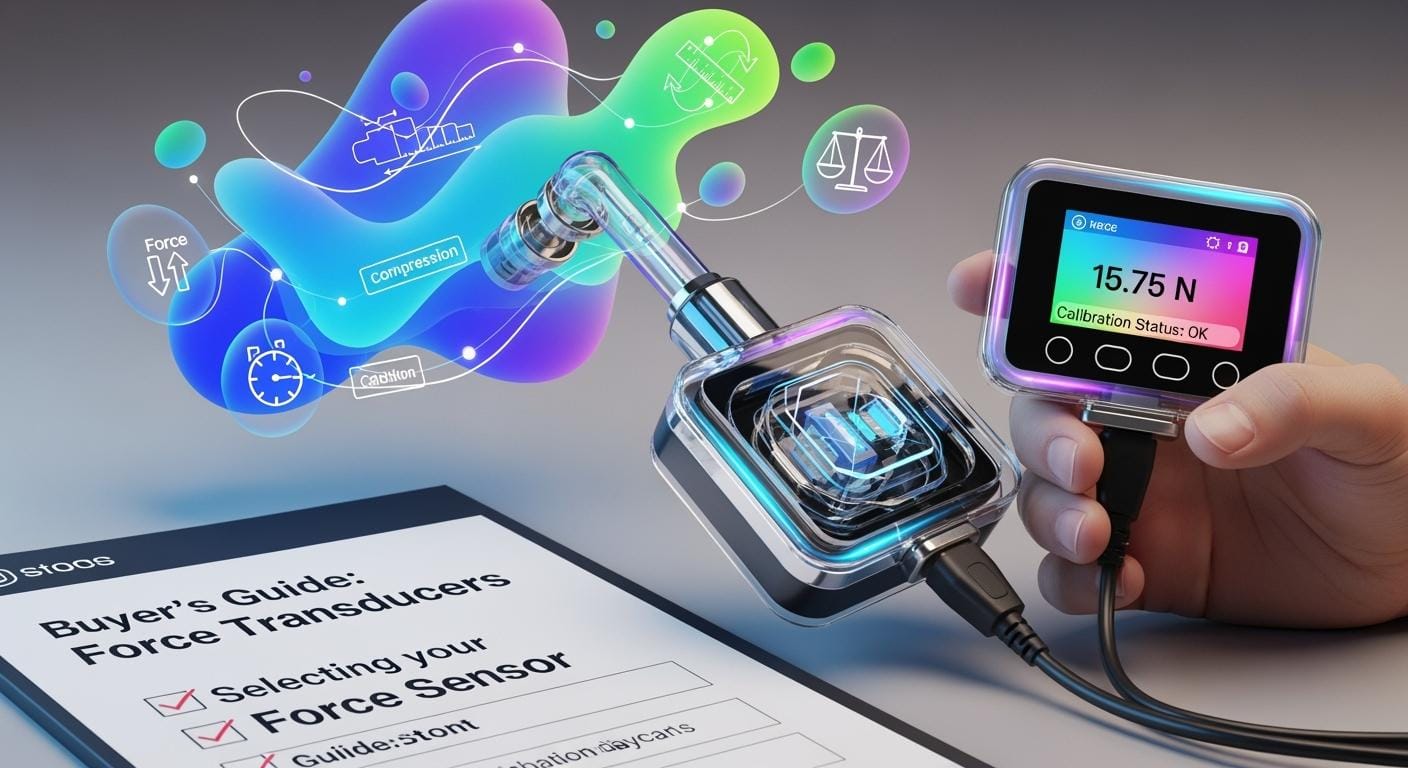

When you pick a force transducer, you should think about some key things. Decide if you need to measure still or moving forces. Look at the measurement range and how exact it is. See if the device works well where you will use it. Make sure it fits your system and does not cost too much. A good choice can last many years. High-quality sensors work well for a long time if you take care of them. This guide will help you learn about force sensing. It will show why a force sensing resistor like SOUSHINE’s can help you.
Table of Contents
Key Takeaways
- Decide if you need to measure static or dynamic force. This choice changes how the sensor works.
- Think about how accurate and precise the sensor is. Good sensors give you correct results for important jobs.
- Make sure the force transducer matches your system and space. It needs to fit well to work right.
- Take care of your sensor and check it often. This helps it last longer and keeps your data correct.
- Pick options like SOUSHINE FSRs if you need to save money. They are flexible and respond fast.
What Is a Force Transducer?
Definition and Principle
A force transducer lets you measure how much force you use on something. People use these devices in science and engineering projects. When you use a force transducer, it changes force into an electrical signal. This helps you collect data and see how things move or react.
Tip: Force sensors can help you watch how things bend, stretch, or get squeezed as it happens.
Force transducers work by changing electrical resistance. Here is what happens:
- The device has strain gauges that change resistance when you push or pull.
- A Wheatstone Bridge circuit checks this change in resistance.
- The sensor’s metal body acts like a spring. When you push or pull, the strain gauge’s resistance changes. This makes a voltage signal you can measure.
You can use this idea for many kinds of measurements. It works for simple weight checks or hard experiments in a physics lab. Some force transducers, like SOUSHINE’s force sensing resistors, use special materials. These can sense pressure and force very well.
Main Applications
You can find force transducers in many areas. These devices help you get good measurement results in different jobs. Here are some common ways to use them:
- Safety testing in cars and machines
- Quality checks in factories
- Testing equipment while it is being used
- Research in labs, like physics lab sensors
- Controlling processes in manufacturing
You might also use force sensors in robots, medical tools, or even in sports or gaming motion sensors. Each job needs a certain kind of measurement. You should pick the right sensor for what you need.
Types of Force Transducers
Load Cell Overview
A load cell is a very common sensor for measuring force. You can use a load cell to check weight or force in many places. People use them in factories and testing machines. A load cell changes force into an electrical signal. This signal shows how much force you use. Load cells are known for being very accurate and stable. Many people trust load cells for important jobs and long-term checks.
| Feature | Load Cells | Other Force Transducers |
|---|---|---|
| Accuracy | High accuracy, low drift | May have higher linearity errors |
| Stability | Excellent for long-term measurements | Varies, often better for dynamic use |
| Application Suitability | Long-term monitoring, mission-critical | Rapid data acquisition, transient forces |
Note: Use a load cell if you need steady and exact measurements for a long time.
Strain Gauge Load Cells
A strain gauge load cell has a special wire or foil inside. This wire changes resistance when you push or pull on it. You can find these load cells in scales, crash tests, and quality checks. Strain gauge load cells have low errors and do not drift much. You can adjust them to work well even if the temperature changes. This makes them a good pick for accurate and steady results.
| Advantage | Strain Gauge Load Cells | Piezoelectric Transducers |
|---|---|---|
| Sensitivity to Temperature | Lower | Higher |
| Linearity | Better | Less predictable |
| Durability | Higher | Lower |
| Cost | Lower | Higher |
Piezoelectric Transducers
Piezoelectric transducers use special crystals inside. These crystals make electricity when you press or squeeze them. You can use these sensors to check fast changes in force. They are good for watching vibrations and impacts. Piezoelectric transducers react quickly to force. They are best for measuring quick or sudden forces.
| Sensor Type | Sensitivity Rating |
|---|---|
| Piezoelectric Sensor | Pico Coulombs per Newton (pC/N) |
| Strain Gauge Sensor | Millivolts per volt (mV/V) |
SOUSHINE Force Sensing Resistors (FSRs)
SOUSHINE Force Sensing Resistors are different from regular load cells. You can use SOUSHINE FSRs in seat belts, brakes, and tire pressure systems. They also work in touch devices. These FSRs are small, bendy, and react fast to force. You can put them in tight or curved spots. SOUSHINE FSRs work well in tough places and are reliable. They also cost less for many uses.
| Feature | SOUSHINE FSRs | Traditional Load Cells |
|---|---|---|
| Flexibility | Highly flexible and adaptable | Rigid and less adaptable |
| Size | Compact and suitable for small spaces | Generally larger and bulkier |
| Response Time | Faster response to force changes | Slower response |
| Cost-effectiveness | More affordable for various applications | Typically more expensive |
Tip: Pick SOUSHINE FSRs if you need a sensor for small spaces or quick force changes.
Other Types
There are other sensors for special jobs. Miniature inline load cells fit in tiny spaces, like in robot surgery. Load button load cells help with medical tests and machines. Flat plate load cells work where there is not much room up and down. Multi-axis sensors can measure force in more than one direction. Capacitive sensors are very sensitive and help control processes. MEMS sensors are very small and fit in smart gadgets or wearables.
You should choose the right force transducer for your job. Each type works best for certain tasks.
Selection Criteria for Force Transducers
Picking the right force transducer is very important. This guide helps you look at the main things to think about. You should consider the force type, how much force you need to measure, how accurate the sensor is, where you will use it, if it fits your system, and how much it costs. Each thing changes how well the sensor works and how easy it is to use.
Force Range and Type
First, decide if you need to measure static or dynamic force. Static force does not change much over time. Dynamic force changes quickly. You should know the biggest and smallest force you want to measure. This helps you choose the best sensor for your job.
Here is a table that shows what to think about when picking force range and type:
| Factor | Description |
|---|---|
| Durability | The sensor should not break easily and must handle hard hits. |
| Environment | Where you use the sensor, like in a factory or hospital, can change how well it works. |
| Form Factor | The sensor’s size and shape matter, especially if you need it to fit in small places. |
| Repeatability | Making sensors the same every time helps products work well. |
| Sensitivity | The sensor should notice different force levels for many uses. |
| Cost | You need to balance how well the sensor works with how much you spend. |
If you use sensors in a physics lab, you need them to work the same way every time and notice small changes. If you use a sensor in a game, it should react fast to force changes. When you pick a load cell, always check if the force range matches what you need.
Accuracy and Precision
It is important for sensors to be accurate. You want your measurements to be close to the real force. Precision means you get the same result every time you measure the same thing. Load cell sensors are usually very accurate and precise. If you need exact numbers, pick sensors with low errors and good repeatability.
Some jobs, like weighing things in factories or doing science tests, need very accurate sensors. You should look at the details for each sensor. Piezoelectric sensors are good for fast force changes. Strain gauge load cells are better for steady force measurements.
Environmental Factors
Where you use your sensor can change how it works. Temperature and humidity can make sensors less accurate or stable. You should pick a sensor that works well in your place.
Here is a table that shows how temperature and humidity can cause problems and what you can do:
| Environmental Factor | Problem | Impacts | Solutions |
|---|---|---|---|
| Temperature | Temperature changes can make parts bigger or smaller, which changes the sensor’s readings. | – The sensor’s zero point can move |
- The sensor can become more or less sensitive
- Errors can happen if the temperature changes a lot | – Use sensors that work well in different temperatures
- Let the system warm up before measuring
- Use covers to protect sensors outside
- Keep sensors away from heat like sunlight or machines | | Humidity | Water can get inside sensors or cables and cause problems. | – The signal can change or drift
- Parts can rust over time
- The signal can get noisy | – Pick sensors that are waterproof for wet places
- Use sealed cables and boxes
- Use things that keep water away in important places |
If you use sensors outside or in wet places, look for ones that are waterproof. In factories, make sure sensors can handle dust and shaking. SOUSHINE FSRs work well in tough places and fit in small spots.
System Compatibility
Your sensor should work with your system. If it does not, your project might not work right. Here are some things to check:
- The sensor should work with your computer or controller.
- You need to make sure measurements are correct on all devices.
- If you use batteries, pick sensors that do not use much power.
- Teach people how to use new sensors so everything works smoothly.
If you use load cell sensors in a new system, check the connectors and signals. Make sure your software can read the data. If you add a motion sensor to a robot, test it first before using it all the time.
Cost Considerations
Cost is important when you pick a sensor. You want good results but do not want to spend too much. Force sensing resistors (FSRs) usually cost less than other sensors. They are a good choice if you do not have a lot of money.
- Force sensing resistors (FSRs) cost less than most other sensors, so they are good for projects with small budgets.
- Piezoresistive sensors can cost a lot, especially if you need very accurate ones for factories.
- Triaxial sensors can cost from $2,600 to $5,370, which is much more than FSRs.
Other things can change the price. Here is a table that shows what can make sensors cost more:
| Factor | Impact on Cost |
|---|---|
| Media Compatibility | What you use the sensor for can change what kind you need and how much it costs. |
| Accuracy/Performance | Sensors that are more accurate usually cost more. Things like errors and temperature changes can make them cost more. |
| Power Supply/Output | Special outputs can make sensors cost more if you need extra parts. |
| Environmental Conditions | Waterproof sensors or ones for dangerous places can cost a lot more. |
| Design/Product Configuration | Extra things like screens or special connectors can make sensors cost more. |
If you plan a big project, compare prices for different sensors. Load cell sensors cost more but are more accurate. SOUSHINE FSRs give you good results for less money. Always check your budget before you buy.
Tip: Use this guide to help you pick the best sensor. Think about how much force you need to measure, how accurate you need it to be, where you will use it, if it fits your system, and how much it costs. This helps you get the best sensor for your job.
Brand and Product Comparison
SOUSHINE FSRs Features
You want a force transducer that works for you. SOUSHINE Force Sensing Resistors are special because they are flexible and fast. They give you measurements you can trust. You can use them in many things, like robots or medical tools. Their thin shape lets you put them in small spaces. You get quick data, so you can act fast. These sensors use little power, so they are good for battery devices.
Here is a table that shows how SOUSHINE FSRs compare to other brands:
| Feature | SOUSHINE FSRs | Other FSR Brands |
|---|---|---|
| Flexibility | Yes | Varies |
| Affordability | Yes | Varies |
| Quick Response Time | < 10ms | Varies |
| Thickness | 0.85mm | Varies |
| Operating Temperature | -40°C to +85°C | Varies |
| Power Consumption | Low | Varies |
| Force Measurement Range | 10g to 1000g | Varies |
| Special Features | Very light touch sensors | Varies |
You get steady results and the sensors last a long time. They keep working well, even after you use them a lot.
- SOUSHINE FSRs give you correct measurements every time.
- You can use them for projects that last a long time.
- The sensors react fast when force changes.
- You can get help from experts if you need it.
Other Leading Brands
You can pick from many sensor types. Some top brands are FUTEK, ATI Industrial Automation, Interface Inc., and Honeywell. These companies make load cell sensors for many jobs. FUTEK makes small load cells for robot surgery. ATI Industrial Automation works with FANUC for smart robots. Interface Inc. has made sensors for over 50 years. Honeywell is known for making strong and smart products.
| Brand | Popular Products | Features |
|---|---|---|
| FUTEK | QLA414 Nano, LSB205 | Ultraminiature, tension/compression, torque |
| ATI | Various sensors | Integrated with FANUC robotics |
| Interface | Force sensors | Long history, wide range |
| Honeywell | Force transducers | Advanced technology, reliability |
Evaluating Specifications
You should check the details before you pick a load cell or force transducer. Look at the measurement range, how exact it is, and if it is strong. Make sure the sensor is right for your job. Pick suppliers with good reviews and helpful support. Ask about calibration and warranty. Read case studies to see how the sensor works in real life.
| Criteria | Description |
|---|---|
| Application Needs | Know the forces and precision you need |
| Product Quality and Accuracy | Check for high accuracy and reliability |
| Supplier Reputation | Choose experienced suppliers |
| Technical Specifications | Review range, resolution, and response |
| Customization and Calibration | Ask about custom options and calibration |
| Certifications and Standards | Look for ISO 9001 or similar |
| References and Case Studies | See real-world feedback |
| Supply Chain and Lead Times | Make sure delivery is fast and reliable |
| Cost and Value | Balance price with quality and support |
| Warranty and Support | Pick suppliers with strong after-sales support |
Tip: Use this guide to compare sensor types and brands. You will find the best sensor for your project.
Installation and Maintenance
Installation Tips
You want your force transducer to work well right away. Good setup helps you get correct results and keeps your sensor safe. When you put in a load cell or force sensing resistor, follow these steps:
- Do not pull or lift the sensor by its cable. Make sure the cable is held in place so it does not move and mess up your readings.
- Do not bend the strain relief too much. For moving uses, keep bends bigger than ten times the cable’s width.
- Keep the sensor plugged in while you set it up. This helps you watch the output and find problems fast.
- Put the sensor in a dry, clean spot unless it is made for wet or dusty places.
- Know how much the load cell can handle. Do not put too much weight on it when you set it up.
Tip: Careful setup stops mistakes that can hurt accuracy or break your sensor.
Maintenance Best Practices
Taking care of your load cell or force transducer helps it last for years. You should:
- Calibrate your sensor often. Once a year is good for most uses. If you use it a lot or in hard places, check it every six months or even every three months.
- Use the right steps when turning your system on or off. This keeps sensors safe from sudden pressure changes.
- Clean the sensor and cables gently. Do not use strong cleaners or water unless the sensor is made for it.
A sensor that is cared for gives you good data and less downtime.
Support and Warranty
Always check the warranty before you buy a force transducer. Some brands give a five-year warranty for some models, which shows they trust their product. Others give warranties from one year up to a lifetime, but you may need to register. The warranty can change based on where you use the sensor. Good support and clear warranty rules help you fix problems fast and protect your money.
Remember: Good support and a strong warranty help you feel safe when using your load cell or force transducer.
When you pick a force transducer, use these easy steps for good results: First, think about the force you want to measure. Check if your system has enough space for the sensor. Next, decide if you need to see small changes in force. Look at how things like heat or cold might change your results. Then, choose a sensor that works with your system and gives the right kind of data. You can ask experts or SOUSHINE for help if you are not sure. Good sensors help keep things safe, make work better, and improve your products.
| Benefit | Description |
|---|---|
| Precision | You get results that are right every time. |
| Process Optimization | You work faster and waste less. |
| Safety | You stop accidents and keep things from breaking. |
| Quality Control | You make fewer mistakes and fix less. |
FAQ
What is the main use of a force transducer?
You use a force transducer to measure how much force you apply to an object. You can find these sensors in factories, labs, robots, and medical devices.
How do I choose the right force transducer for my project?
First, decide if you need to measure static or dynamic force. Next, check the force range, accuracy, and size. Make sure the sensor fits your system and budget.
Can I use SOUSHINE FSRs in small or curved spaces?
Yes, you can. SOUSHINE FSRs have a thin and flexible design. You can place them in tight or curved spots where other sensors may not fit.
How often should I calibrate my force transducer?
You should calibrate your sensor at least once a year. If you use it often or in tough conditions, check it every six months for best results.
Are force transducers easy to install?
Most force transducers are easy to install. You should follow the setup guide. Keep the sensor clean and handle cables with care for the best performance.