

Call us: +86-137-2353-4866
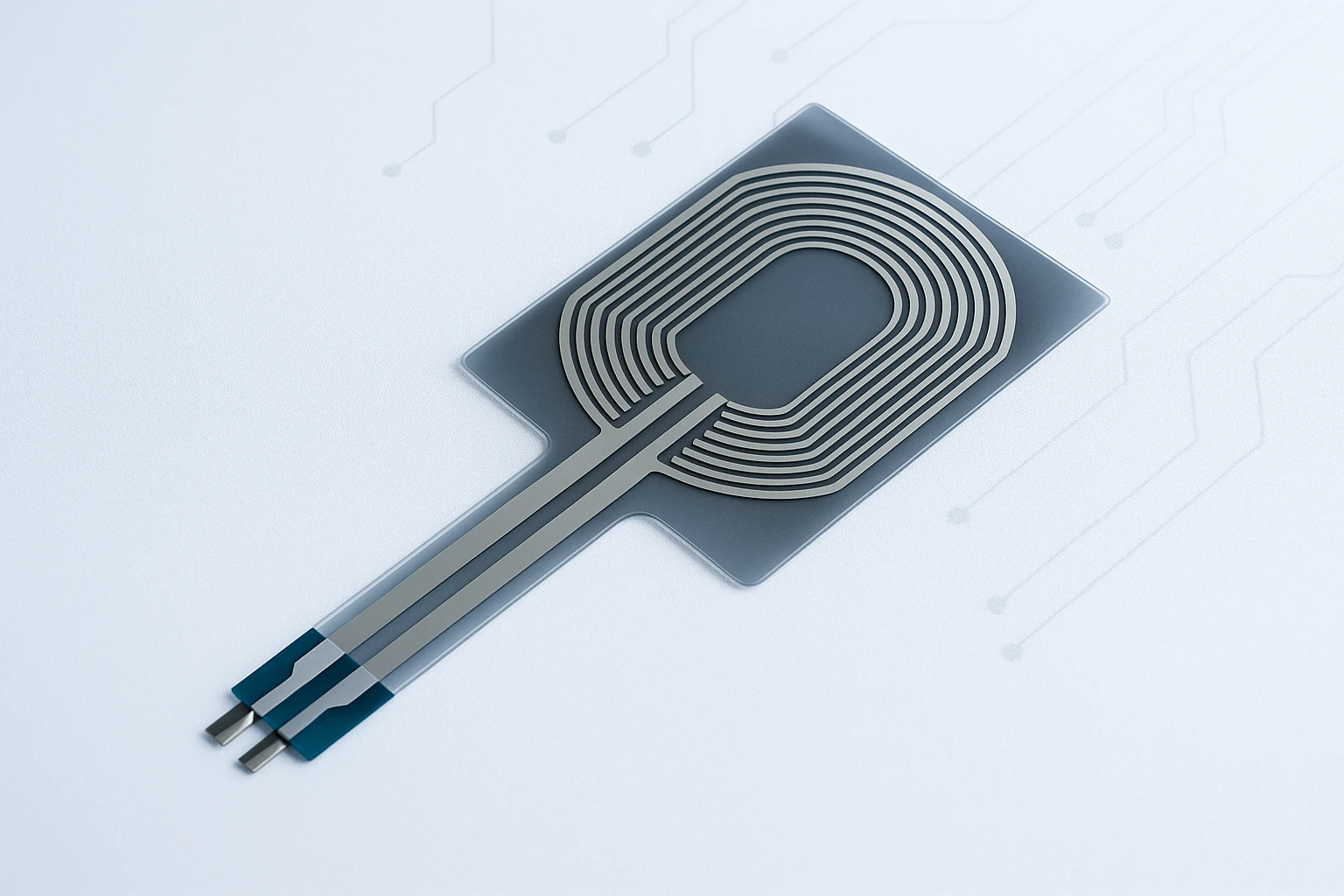

In the world of modern electronics and smart devices, Force Sensitive Resistors (FSRs) play an essential role in detecting pressure, force, and weight. From robotics and medical devices to automotive and consumer electronics, these thin, flexible sensors provide reliable, real-time tactile feedback that brings precision and intelligence to product design.
At SOUSHINE, we specialize in custom FSR design and OEM manufacturing, helping global brands develop tailored solutions that perfectly match their applications — whether you need a standard round FSR, a matrix-type sensor array, or a flexible force-sensing film designed to fit your unique product.
Table of Contents
What Is a Force Sensitive Resistor?
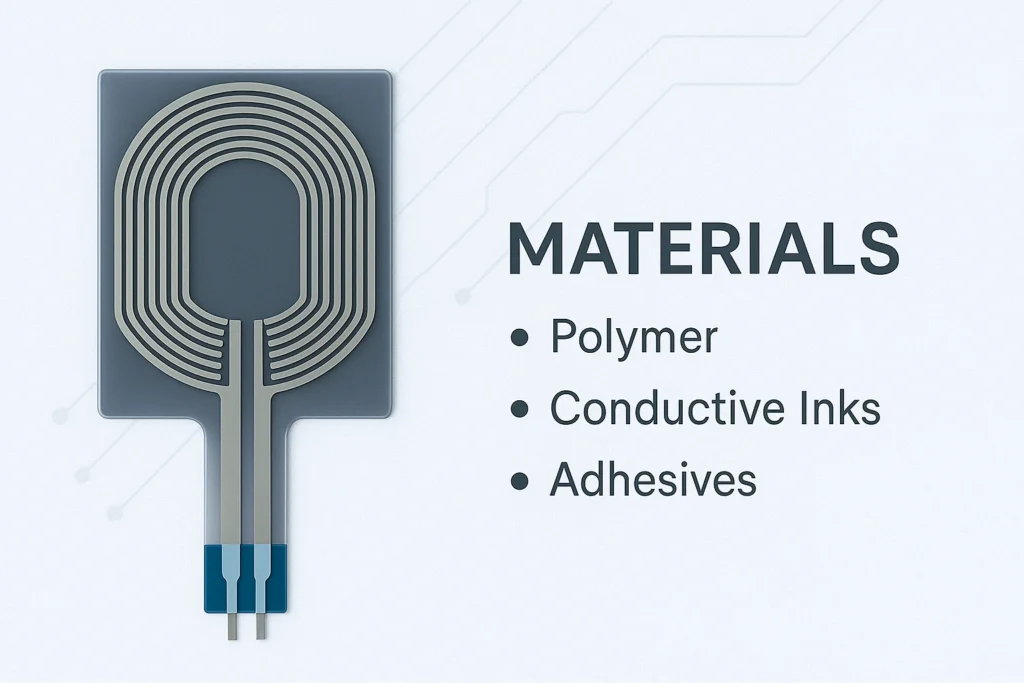
A Force Sensitive Resistor (FSR) is a polymer-thick-film device that changes its electrical resistance when pressure is applied. The harder the pressure, the lower the resistance — allowing the sensor to accurately measure applied force or touch.
Unlike traditional mechanical switches, FSRs are:
- Thin and flexible — ideal for integration into compact devices.
- Durable and cost-effective — suitable for high-volume applications.
- Responsive and reliable — offering analog feedback instead of binary signals.
👉 Learn more in our in-depth guide: What Is a Force Sensitive Resistor (FSR)? Working Principle, Structure, and Applications
Custom Design Options for Force Sensitive Resistors
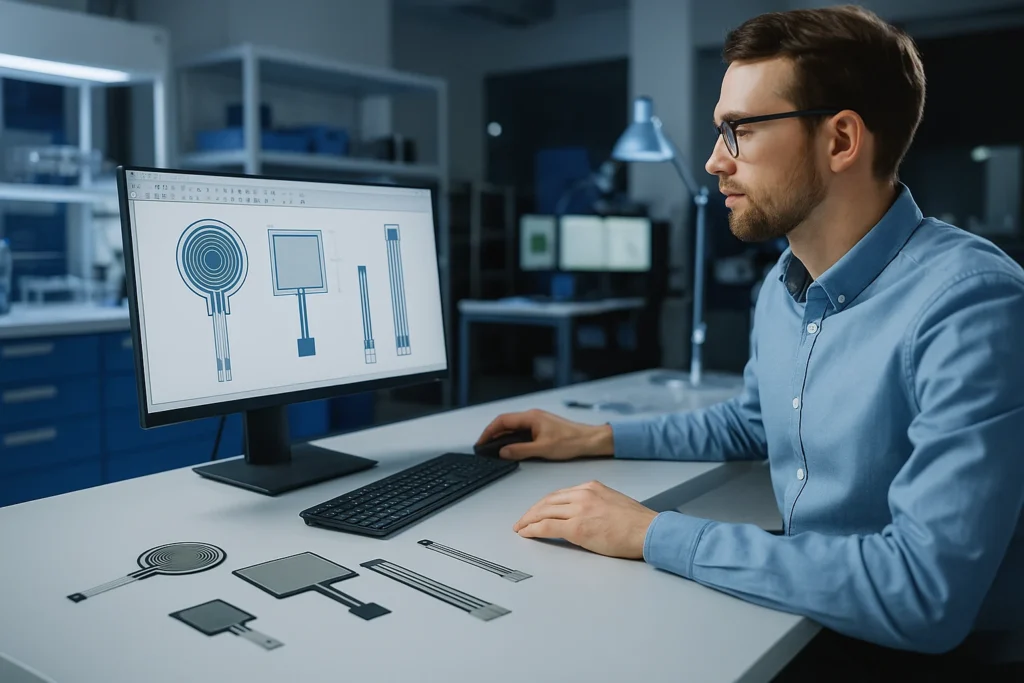
Every application has its own performance requirements. That’s why SOUSHINE provides full customization across mechanical, electrical, and aesthetic parameters.
🔹 Shape and Dimensions
Choose from round, square, strip, ring, or irregular geometries to match your product’s interface.
🔹 Force Range
Adjustable from 0.2N to over 100N, covering light touch detection to high-force measurement.
🔹 Output Type
Analog or digital signal output, compatible with Arduino, Raspberry Pi, or dedicated microcontroller circuits.
🔹 Connector Type
FPC, solder pads, or plug-in terminal options for seamless assembly integration.
🔹 Mounting Options
Adhesive backing, embedded structures, or laminated modules to simplify installation.
Whether you’re creating a wearable device, industrial control panel, or robotic gripper, we can engineer your FSR to meet specific design targets in sensitivity, response time, and environmental resistance.
Material Selection and Layer Structure
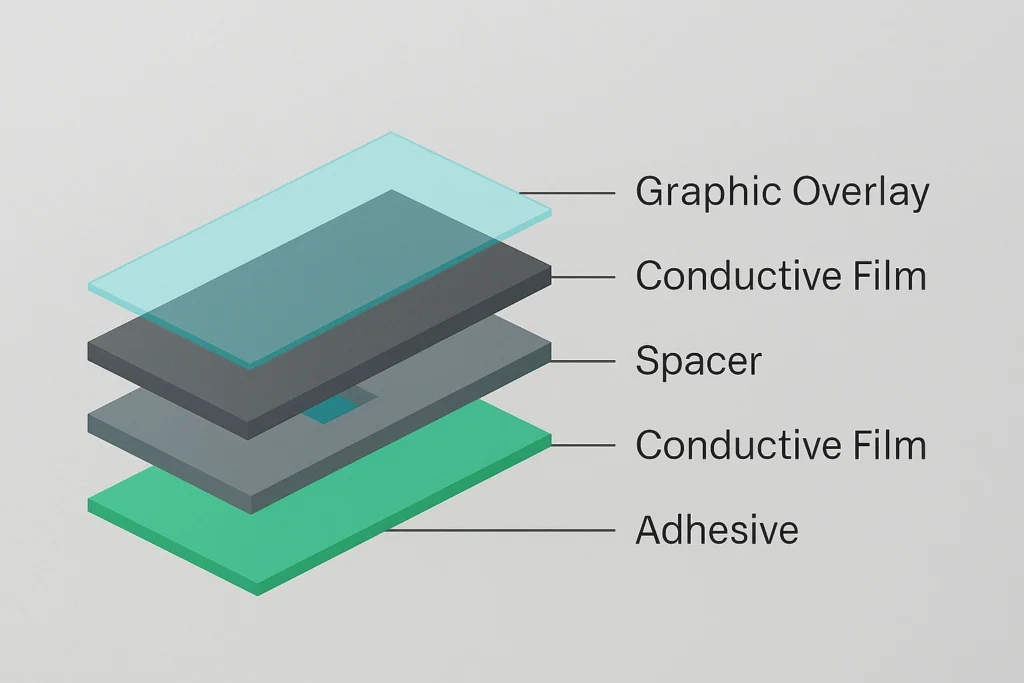
The core performance of a force sensor depends on material choice and layer design.
SOUSHINE utilizes high-precision conductive inks, PET film, and carbon-based polymer composites to ensure both sensitivity and durability.
A standard FSR typically includes:
- Top conductive layer (silver/carbon ink)
- Spacer adhesive layer
- Active sensing layer (semi-conductive polymer)
- Bottom substrate film
We also support custom laminations, such as:
- Waterproof coatings
- High-temperature resistance
- UV-stable encapsulation
- Anti-corrosion plating
By controlling each layer’s material and thickness, we optimize your sensor’s response curve, repeatability, and longevity under repeated use.
OEM / ODM Force Sensor Solutions

SOUSHINE offers end-to-end OEM and ODM services for international brands and device manufacturers.
Our one-stop production includes:
- Custom sensor design & prototyping
- Mass production with ISO9001 & RoHS standards
- Automated printing and assembly lines
- Confidential project development (NDA supported)
- OEM branding, labeling, and packaging options
We supply force sensing resistors for applications such as:
- Smart medical equipment (rehabilitation, prosthetics, diagnostic tools)
- Robotics and automation (grippers, tactile feedback systems)
- Consumer electronics (gaming controllers, touchpads)
- Automotive seating and pressure monitoring systems
- Industrial load measurement and smart tools
💡 Looking for a trusted OEM partner?
Contact us today to discuss your project → Get a Custom Quote
Why Choose SOUSHINE as Your FSR Partner
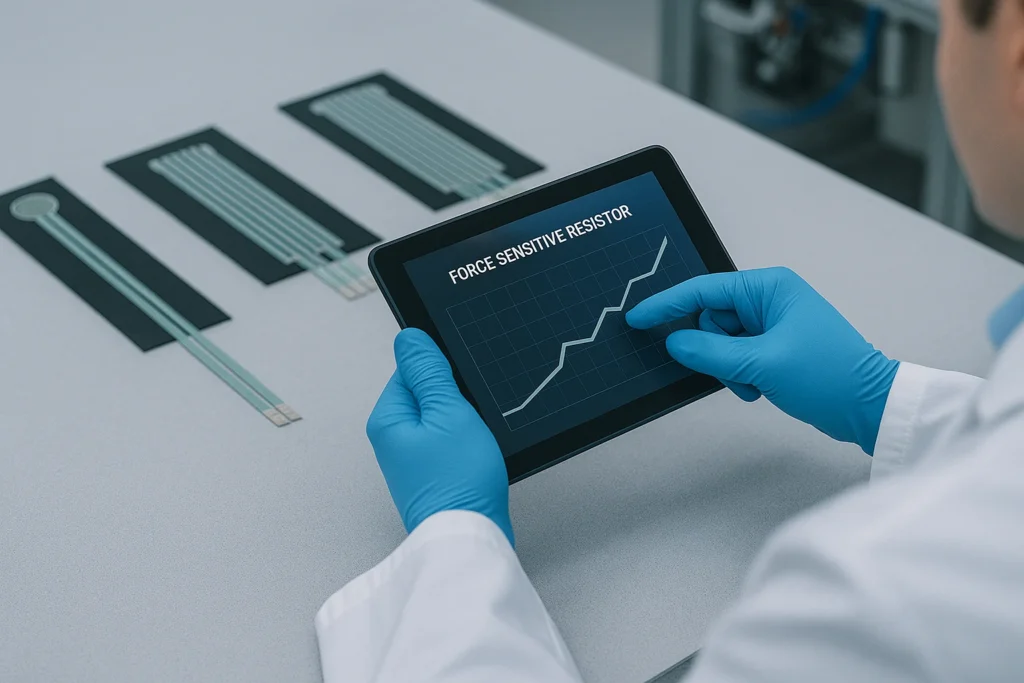
With over 15 years of experience in force sensor manufacturing, SOUSHINE has become a reliable OEM supplier for clients worldwide.
Here’s what makes us different:
| Advantage | Description |
|---|---|
| 🧠 Engineering Expertise | Experienced R&D team for customized FSR design and circuit integration. |
| 🏭 In-House Manufacturing | Complete process control from printing to assembly ensures stable quality. |
| 🌍 Global OEM Service | We support small to large-scale production for various industries. |
| 🔬 Material Innovation | Proprietary conductive ink formulations enhance performance and durability. |
| 🤝 Confidential Cooperation | We sign NDAs and offer private-label services to protect client IP. |
Explore our full range of Force Sensing Products including single-point FSRs, matrix sensor arrays, and flexible pressure films.
External Reference: Industry Use Cases
For engineers seeking deeper insights into real-world applications, ex:
- Interlink Electronics – FSR Integration Examples
- Tekscan – Pressure Mapping Solutions
These examples show how force sensing technology continues to expand across industries — and SOUSHINE stands ready to bring that innovation to your project.
Conclusion
Whether you need a custom FSR prototype, a mass-production solution, or OEM private labeling, SOUSHINE provides the technical expertise and production capability to turn your concept into reality.
📩 Discuss Your Project Now: Contact SOUSHINE Force Sensor Team →
FAQs
What is a Force Sensitive Resistor?
A Force Sensitive Resistor, or FSR, is a special kind of sensor that measures pressure or touch. When you press on it, the sensor changes its electrical resistance. This means it can tell how hard something is being pressed. Unlike regular buttons that just say ‘on’ or ‘off’, FSRs can give different levels of response depending on how much pressure is applied. This makes them useful in many devices, from toys to medical equipment!
What are the different shapes and sizes of FSRs?
Force Sensitive Resistors come in various shapes and sizes to fit different products. You can find them in round, square, strip, or even irregular shapes! This customization helps engineers choose the best fit for their designs, whether it’s a round button on a game controller or a long strip for a medical device.
How do I know what force range I need for my FSR?
The force range of an FSR tells you how light or heavy of a touch it can detect. For example, you might choose a sensor that can detect very light touches (around 0.2N) if it’s for something like a wearable device. On the other hand, if you need to measure heavy weight, you would choose one that can handle more than 100N. It all depends on how you plan to use it!
What types of connections do FSRs use?
FSRs can connect to devices in several ways. Common options include using FPC (Flexible Printed Circuit), solder pads that you can attach wires to, or plug-in terminals that allow for easy connections. This variety makes it simple to integrate FSRs into many different kinds of projects!
How are FSRs made and what materials are used?
Making a Force Sensitive Resistor involves using various materials. Usually, they have a top conductive layer made from special inks, a spacer layer, an active sensing layer made from semi-conductive materials, and a bottom substrate film. SOUSHINE can even customize materials to make them waterproof or resistant to heat and other tough conditions!
What are OEM and ODM services for force sensors?
OEM stands for Original Equipment Manufacturer, and ODM stands for Original Design Manufacturer. These services mean that SOUSHINE can help other companies design and make their force sensors. They provide full support, from creating custom designs to large-scale production while ensuring quality and confidentiality!
Why should I choose SOUSHINE for my FSR needs?
SOUSHINE has over 15 years of experience making force sensors and offers many benefits. They use advanced materials for better durability and performance, carefully control the manufacturing process for consistent quality, and can handle large orders for different industries. Plus, they respect your privacy with NDAs!
Can I create a custom design for my FSR?
Absolutely! SOUSHINE specializes in custom designs. You can choose the shape, force range, output type, and even the way it connects to your device. This means the FSR will be perfectly tailored to fit your specific needs in product design.
How can I get in touch with SOUSHINE for a custom quote?
If you’re interested in working with SOUSHINE to create a custom FSR or to learn more about their products and services, you can contact them through their website. They have a simple contact form where you can describe your project and request a custom quote!