

Call us: +86-137-2353-4866

Here are the main force sensing resistor models you can find:
| Brand | Model / Series | Typical Force Sensing Resistor Price Range (USD) | Notable Features |
|---|---|---|---|
| SOUSHINE | Force Sensing Resistors | $2–$10 (bulk discounts available) | Custom shapes, low power, easy to use |
| Interlink | FSR 402 | $5–$12 | Small size, bends easily |
| FlexiForce | A201, B201 | $10–$30 | Very accurate, works with many forces |
| SparkFun | FSR Series | $7–$15 | Easy to use, good for testing ideas |
| Adafruit | FSR Sensors | $7–$14 | Works well, great for beginners |
You should look at price, features, and fit for your project. The best one depends on what you need and how much you can spend. SOUSHINE is special because it has advanced force sensing technology and custom choices. This makes it a good choice for many projects.
Table of Contents
Key Takeaways
- Learn the cost of top force sensing resistors to find ones you can afford.
- Think about SOUSHINE FSRs because they can be customized and last a long time. They work well for many kinds of projects.
- Pick the best FSR for your needs. You might use it for cars, health, robots, or electronics at home.
- Check how sensitive the FSR is and how much force it can measure. Make sure it fits what your project needs.
- Buy more sensors at once to get a discount and save money.
- Read the datasheet closely to know the details and make sure it works with your project.
- Try one FSR first before buying a lot to see if it works for you.
- Find good stores and read what other buyers say to make sure you get a good sensor.
Force Sensitive Resistor Basics
How FSRs Work
Resistance Change Principle
When you press a force sensitive resistor, its resistance goes down. If you press harder, the resistance gets even lower. This change helps you know how much force you use. You can use this for many ways to measure force. SOUSHINE’s technology is special because it is very accurate and uses little power. The sensor reacts fast and works well in lots of places.
Construction and Materials
A force sensitive resistor has a bendable base. On top, there is a spacer and a special layer that carries electricity. When you press, these layers touch and let electricity flow. The path changes if you press harder or softer. SOUSHINE uses tough materials, so their sensors last longer and can handle more use. You can choose from many shapes and sizes for your project.
Tip: If you want a sensor that is easy to add, SOUSHINE’s FSRs make it simple.
Here is a quick chart showing how SOUSHINE’s technology compares:
| Feature | SOUSHINE’s Technology | Competitors |
|---|---|---|
| Accuracy | High | Lower |
| Durability | Long-lasting | Varies |
| Customization | Many choices | Fewer choices |
| Power Consumption | Low | Higher |
| Integration Ease | Simple | Harder |
Common Applications
Automotive
You find force sensitive resistors in car seats. They help tell if someone is sitting down. This helps with airbags and seatbelt reminders. FSRs also help with touch controls on dashboards.
Healthcare
In hospitals, force sensitive resistors help watch patients. They sense if a patient moves or leaves the bed. You also see them in pumps to check for blockages.
Robotics
Robots use force sensitive resistors to feel how hard they grip things. This helps robots pick up items without breaking them. FSRs also help robots know when they touch something.
Consumer Electronics
You use force sensitive resistors in game controllers, touchpads, and musical instruments. They let you control things by pressing harder or softer. This makes using devices more fun.
Here are other ways to use a force sensitive resistor:
- Telling if a touch is on purpose or by accident.
- Giving feedback based on how hard you press.
- Making tools safer by knowing a grip from a touch.
- Finding the center of force with many sensors.
- Sensing if someone is in a bed, chair, or medical device.
- Checking for liquid blockages in tubes or pumps.
Many industries use FSRs because they are small, simple, and work in lots of places where you need to measure force.
Leading FSR Models Overview
SOUSHINE FSRs
Features
SOUSHINE fsr models give you a lot for your money. These sensors work quickly and can be used in many ways. They work in hot or cold places and fit many projects. Here is what you get:
| Feature | Description |
|---|---|
| Flexibility | Can be shaped to fit different devices |
| Durability | Made to last and handle lots of use |
| Customization Options | Many shapes and sizes to pick from |
| Low Power Consumption | Uses little energy |
| Quick Response Times | Starts in less than 0.015ms, answers in under 10ms |
| Operating Temperature Range | Works from -40°C to +85°C |
| Force Measurement Range | Measures 10g up to 1000g |
| Sensitivity to Light Touches | Can feel very soft touches |
You can use a SOUSHINE force sensitive resistor in lots of places. It is good for robots, hospitals, and electronics at home. The sensor gives fast feedback and does not use much power.
Customization
SOUSHINE lets you make a force sensor just for your project. You can choose the size, shape, and how sensitive it is. You can also pick the material, how thick it is, the glue, and even the color. If you need a special shape, SOUSHINE can make it for you. This helps you fit the fsr into your product easily.
Here is how the choices change your sensor:
| Customization Option | Impact on Performance | Impact on Cost |
|---|---|---|
| Material Selection | Makes it more sensitive and stronger | Cost changes with material |
| Sensor Arrays | Helps it work with other parts | Makes it more complex and costly |
| Design Flexibility | Lets you get the shape you want | May need more work and money |
| System Compatibility | Works well with other tech | Can change the total cost |
Tip: You can ask for a sensor that fits your needs. This makes your design easier.
Durability
SOUSHINE fsr models last a very long time. You can press them over 10 million times. This is as good as or better than most other brands.
| Feature | SOUSHINE FSRs | Industry Standards |
|---|---|---|
| Typical Durability | Over 10 million presses | Usually about the same |
You can count on these sensors to work every day.
Price Range
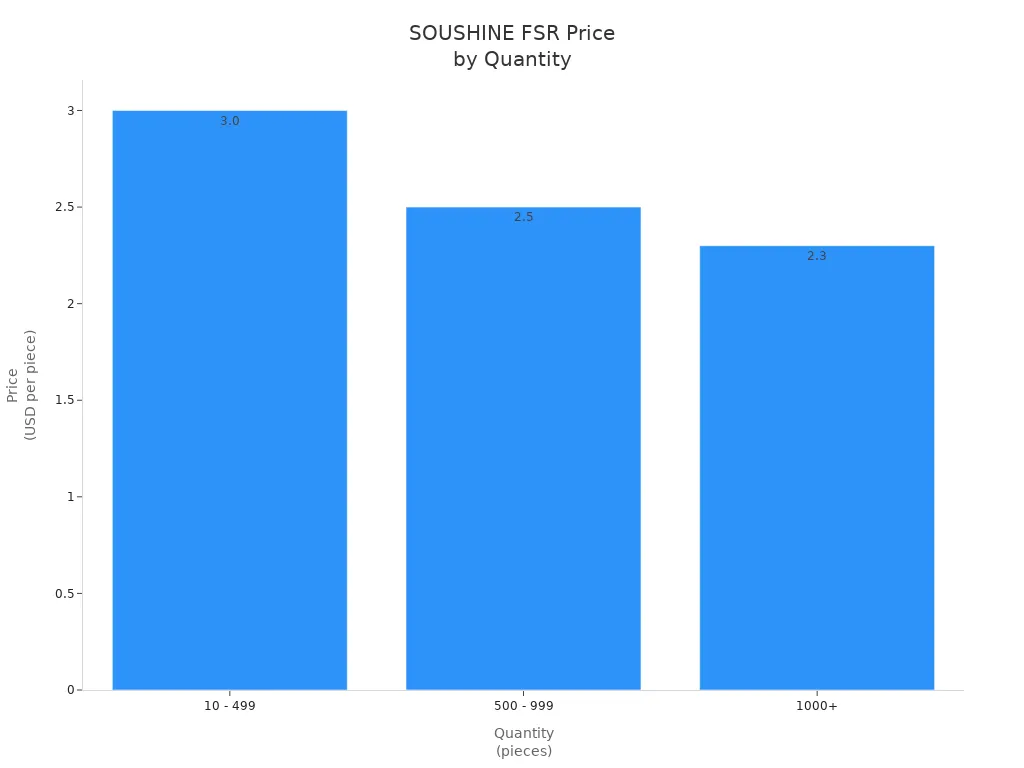
SOUSHINE has good prices, and you save more if you buy a lot. Here is a table to show the cost:
| Quantity (pieces) | Price (USD) |
|---|---|
| 10 – 99 | 3.20 |
| 100 – 499 | 3.50 |
| 1000 – 9999 | 2.70 |
| >= 1000 | 2.00 |
| Sample price | 1.00 |
You can also see the price trend in this chart:
Interlink FSR Series
Features
Interlink fsr models are easy to use and simple. You can bend them to fit small spots. They are good for basic touch and force sensing. Many people use them for simple projects and testing.
- Small and bendy
- Good for simple force checks
- Great for quick tests and first tries
Price Range
You can find Interlink force sensitive resistor models at these prices:
- FSR Model 402 (Bare tail): $2.99
- FSR Model 402 (Female contacts): $2.99
- Extra-long FSR (Interlink 408): $22.95
FlexiForce Sensors
Features
FlexiForce sensors are more accurate than some others. You can use them in things that need to measure many different forces. They work well in smart gadgets, game controllers, and medical tools. You can pick from many shapes and sizes.
| Feature | Description |
|---|---|
| Cost-Effective Manufacturing | Makes it cheaper to make many sensors |
| Customizable Shapes and Sizes | Lets you pick the shape and size you want |
| Durability and Reliability | Works well for a long time |
| Low Power Consumption | Good for things that use batteries |
| Ease of Integration | Easy to add to other electronics |
Price Range
FlexiForce sensors cost more than some other brands. Here is an example:
| Model | Price | Force Range |
|---|---|---|
| FlexiForce A201 | $153.16 | Low 4.4 N (0 – 1 lb), Medium 111 N (0 – 25 lb), High 445 N (0 – 100 lb) |
You pay more, but you get better accuracy and a bigger force range.
SparkFun FSRs
Features
You can use SparkFun fsr models for many projects. These sensors work well for testing ideas and building prototypes. You get a simple design that fits into different devices. The sensing area is large, so you can measure force over a wide space. You can see how the sensor reacts to different pressures. The resistance changes as you press harder, which helps you measure force.
Here is a table that shows the main features:
| Feature | Specification |
|---|---|
| Overall length | 3.5″ |
| Overall width | 1.75″ |
| Sensing area | 1.75 x 1.75″ |
| Resistance range | >1MΩ (no pressure) |
| Force sensitivity | 100g – 10kg |
You can use SparkFun fsr sensors in game controllers, musical instruments, and touchpads. You can also use them in robotics to help machines sense touch.
Tip: If you want to test a new idea, SparkFun fsr sensors make it easy to start.
Price Range
You can find SparkFun force sensitive resistor models at prices that fit most budgets. Here is a table with the main options:
| Model | Price |
|---|---|
| Force Sensitive Resistor 0.5″ | $10.95 |
| Force Sensitive Resistor – Small | $10.95 |
You can buy single sensors for small projects or order more for bigger builds.
Adafruit FSRs
Features
Adafruit fsr models work well for beginners and hobbyists. You get sensors that fit into many devices. You can use them in musical instruments, touch controls, and simple robots. The sensors respond to light and strong touches. You can pick from different force ranges and shapes.
You can use Adafruit fsr sensors to measure force in small spaces. You can add them to your project without much trouble. You get a sensor that helps you learn how force sensing works.
Note: Adafruit fsr sensors are a good choice if you want to start learning about force sensing.
Price Range
Adafruit offers force sensitive resistor models at prices that work for many budgets. You can save money if you buy more sensors. Here is a table with the main options:
| Model | Price | Discount (10-99) | Discount (100+) |
|---|---|---|---|
| Round High Force Sensitive Resistor (FSR) – 1 ~ 100 Newton | $4.95 | $4.46 | $3.96 |
| Round Force-Sensitive Resistor (FSR) – 0.3 ~ 10 Newton | $3.95 | $3.56 | $3.16 |
You can buy one sensor for a small project or order many for a bigger build.
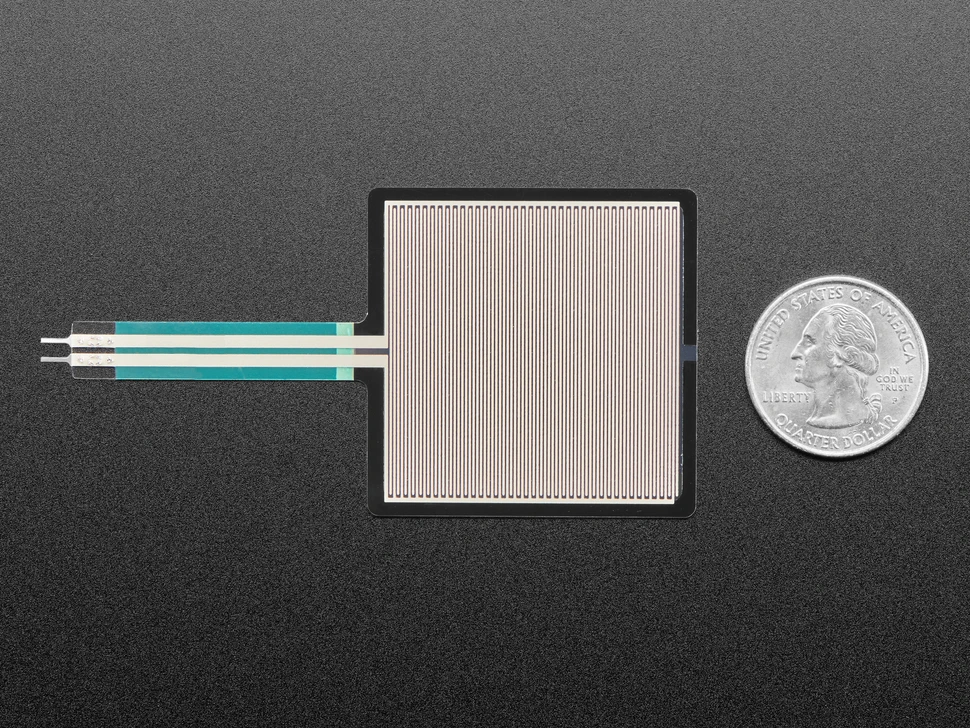
Force Sensing Resistor Price Comparison
Price Table by Brand
You probably want to see how the main brands stack up on price. Here’s a quick table that shows the force sensing resistor price for each popular model. This helps you spot the best deal for your project.
| Brand | Model / Series | Price Range (USD) | Notes |
|---|---|---|---|
| SOUSHINE | FSR | $2–$10 | Bulk discounts, custom options |
| Interlink | FSR 402 | $2.99–$12 | Simple, flexible, small size |
| FlexiForce | A201, B201 | $10–$30+ | High accuracy, wide force range |
| SparkFun | FSR Series | $7–$15 | Good for testing and prototyping |
| Adafruit | FSR Sensors | $3.95–$4.95+ | Beginner-friendly, discounts on bulk |
You can see that the force sensing resistor price changes a lot between brands and models. Some sensors cost more because they offer extra features or better performance.
Cost vs. Performance
When you look at price, you should also think about what you get for your money. Some fsr models cost more, but they give you better accuracy or last longer. Here’s a table that compares cost and performance for two well-known models:
| Model | Cost (Approx.) | Performance Characteristics |
|---|---|---|
| Interlink 402 | One-third of FlexiForce A201 | Two layers of flexible polymer, conductive carbon-based ink, interdigitating electrodes, thickness of 0.48 mm, sensing area diameter of 14.68 mm. |
| FlexiForce A201 | Higher than Interlink 402 | Higher accuracy and wider force range. |
If you need a sensor for a simple project, you might pick a lower-cost option. If you want more accuracy or a bigger force range, you may want to spend more.
💡 Tip: Think about what matters most for your project—cost, accuracy, or durability. Sometimes, paying a little more gives you much better results.
Factors Affecting Price
Size and Shape
The size and shape of a force sensitive resistor can change the price. Bigger sensors or special shapes usually cost more. If you need a sensor that fits a unique spot, you might pay extra.
Customization Options
Custom sensors let you pick the shape, size, and even the material. This helps you get exactly what you want. Customization often raises the force sensing resistor price, but it can make your project work better.
Bulk Purchase Discounts
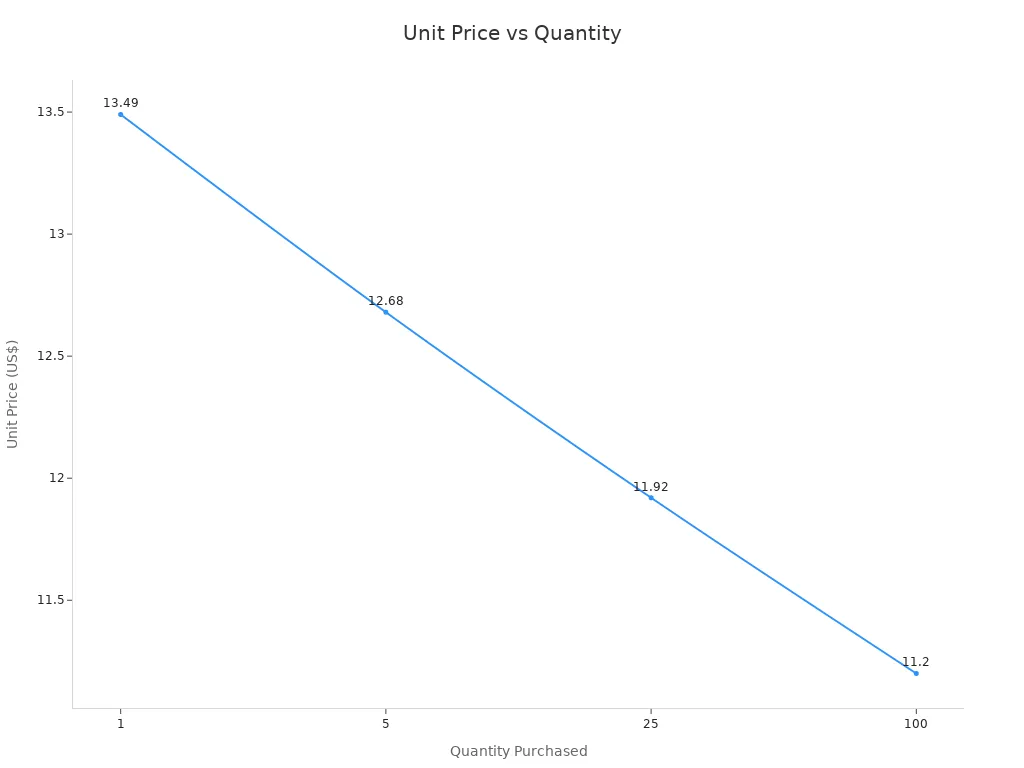
Buying more sensors at once can save you money. Here’s a table that shows how the price drops when you buy in bulk:
| Quantity | Unit Price (US$) |
|---|---|
| 1 | 13.49 |
| 5 | 12.68 |
| 25 | 11.92 |
| 100 | 11.20 |
You can see the trend in this chart:
If you plan to use a lot of sensors, ask about bulk pricing. This can help you keep your costs low.
If you want the best value, compare the force sensing resistor price for different brands, check if you need custom features, and see how many sensors you need. This way, you get the right fsr for your project without spending too much.
FSR Features and Selection Guide
Sensitivity and Range
When you choose a sensor, you want to know how well it senses force. Sensitivity means the sensor can notice even a small touch. Range tells you the smallest and biggest force the sensor can measure. Most top models, like SOUSHINE, Interlink, FlexiForce, SparkFun, and Adafruit, have a wide range. You can use them for gentle taps or strong pushes.
Here’s a simple look at the usual specs:
| Specification | Value |
|---|---|
| Resistance Range | Infinite/open circuit (no pressure), 100KΩ (light pressure) to 200Ω (max. pressure) |
| Force Range | 0 to 20 lb. (0 to 100 Newtons) applied evenly over a 0.125 sq in area |
If you need to sense a soft touch or a hard press, you can find an fsr that works. SOUSHINE models are special because you can pick custom shapes and ranges for your project.
Tip: Always check the force range before buying. Make sure it fits your project.
Durability and Reliability
You want a sensor that lasts and works every time. Durability means the sensor can handle lots of presses without breaking. Reliability means it gives the same results each time. Different brands have different strengths. SOUSHINE gives you many shapes and sizes for lots of projects. Interlink sensors last long and work well for steady results. FlexiForce sensors are thin and light, good for many uses. SparkFun and Adafruit sensors are easy to use and great for learning.
Here’s a table to help you compare:
| Brand | Durability and Reliability Features |
|---|---|
| SOUSHINE | Many shapes and sizes for different projects |
| Interlink | Sensitive and long-lasting, good for reliable projects |
| FlexiForce | Thin and light, works for many force measurements |
| SparkFun | User-friendly, best for beginners and hobbyists |
| Adafruit | Like SparkFun, easy for hobby projects |
If you need a sensor for tough jobs, look for high durability. For learning or testing, you can use a simple model.
Power Consumption
Power use is important, especially for battery-powered devices. Most top brands keep power use low. SOUSHINE, Interlink, and Ezweiji all make sensors that use little energy. This helps your device last longer and stay cool.
| Model | Power Consumption |
|---|---|
| SOUSHINE | Low |
| Interlink 408 | Low |
| Ezweiji | Low |
If you want your device to run longer, pick a sensor with low power use. This matters for portable gadgets and wireless tools.
Note: Low power sensors help you save energy and keep your project working longer.
Choosing the Right FSR
Application Needs
You should pick a sensor that fits your project. First, think about what you want the sensor to do. Do you need it to feel a soft touch or a hard press? Will it go in a small spot or a big one? Every project is different and needs its own sensor. Here is a table to help you see what matters:
| Characteristic | Description | Impact on Performance |
|---|---|---|
| Shape | Round, square, rectangle, or custom | Changes how and where you can mount it |
| Size | Length, width, or diameter | Affects sensing area and detail |
| Material Composition | Conductive polymer or ink on a base | Changes how sensitive and tough it is |
| Sensitivity | How much resistance changes with force | Higher sensitivity means better detection |
| Resistance Range | How much resistance changes when pressed | Affects how well you can measure force |
| Response Range | How much force the sensor can measure | Sets the limits for light or heavy presses |
| Performance Parameters | Linearity, repeatability, temperature effects | Impacts accuracy and reliability |
If you want a sensor for a robot hand, you might need a small and sensitive one. If you need one for a hospital bed, you may want a bigger sensor that can feel a person’s weight. SOUSHINE has many shapes and sizes, so you can find one that works for your idea.
Budget Considerations
How much money you have is important when picking a sensor. Some sensors cost more because they are more accurate or have special features. If you only need simple force sensing, you can choose a cheaper sensor. Buying a lot at once can make each sensor cost less. SOUSHINE gives lower prices if you buy many at the same time.
Think about which features you really need. It is smart to pay more if your project needs extra features. If not, a basic sensor can help you save money.
💡 Tip: Write down the features you must have before shopping. This way, you will not pay for things you do not need.
First-Time Buyer Tips
If you have never bought a sensor before, try a sample or a small pack first. This helps you test the sensor in your project before buying more. Look at the datasheet for size, force range, and wiring info. Ask the seller if you are not sure how to use the sensor.
Try to match the sensor’s force range to your project. If the range is too small, it might not work well. If the range is too big, it might not feel soft touches.
You can read reviews or ask other people what they think. Many sellers, like SOUSHINE, can help you pick the right fsr for your project.
🛠️ Note: Testing the sensor in your real project helps you avoid problems later.
Pros and Cons of Popular FSRs
SOUSHINE
SOUSHINE force sensitive resistors have many good points. You can use them in hospitals, cars, and robots. There are lots of shapes and sizes to pick from. This helps you find one that fits your project. These sensors react fast and are easy to add to your design. If you need a sensor for something you wear, it feels light. In robots, you get quick feedback and fast changes.
Here’s a table to show the main good and bad points for each use:
| Application Area | Pros | Cons |
|---|---|---|
| Medical Devices | High sensitivity | May need calibration |
| Automotive Sensors | Durable material | Limited to certain pressure ranges |
| Industrial Machinery | Customizable design | Higher cost for custom options |
| Consumer Electronics | Easy to fit in small spaces | Thin structure can be fragile |
| Robotics | Fast response time | Needs advanced integration |
| Wearable Tech | Lightweight | Not for heavy-duty use |
Tip: SOUSHINE gives you lots of choices if you need a sensor that fits your needs.
Interlink
Interlink FSRs are simple and easy to use. You can put them in thin or bent places. They cost less than some other brands. They also use little power, so you save energy. These sensors are good for measuring small forces. You can bend them to fit your design.
Here’s a table that shows the main good and bad points:
| Pros | Cons |
|---|---|
| Sensitive to small forces | Need careful reading to avoid mistakes |
| Flexible for many shapes | Repeatability can vary |
| Lower cost | Accuracy drops in some conditions |
| Energy efficient | Can wear out or break |
| Fit into thin or curved spaces | Slow reaction time |
| Environmental factors affect accuracy |
If you want a cheap sensor for a simple job, Interlink FSRs are a good start.
FlexiForce
FlexiForce sensors are known for being very accurate. You can use them when you need to measure force carefully. If you buy a lot, the price goes down. You can also change them to fit your project. These sensors bend easily, so they fit in many designs.
Here’s a table to show the main strong and weak points:
| Strengths | Weaknesses |
|---|---|
| Low cost | Need careful calibration |
| High accuracy | Accuracy drops in uncontrolled places |
| Flexible design | Some limits in durability |
| Easy to customize |
If you need a sensor for a project that must be accurate, FlexiForce is a good choice.
SparkFun
You might want to try SparkFun FSRs if you like to experiment. These sensors work well for quick projects and learning. You can use them in game controllers, musical instruments, or even simple robots. SparkFun FSRs give you a big sensing area, so you can measure force over a wide spot.
Here are some reasons you might pick SparkFun FSRs:
- You can set them up fast.
- They fit into many different projects.
- You get a clear change in resistance when you press.
- They help you see how force sensing works.
You do not need special tools to use these sensors. You can connect them to a breadboard or microcontroller with basic wires. If you want to test an idea, SparkFun FSRs make it easy.
But you should know about some limits. SparkFun FSRs do not give you the highest accuracy. If you need to measure exact force, you might want a different sensor. These sensors can wear out if you press them too hard or too often. They also do not work well in very hot or wet places.
Here’s a quick look at the main points:
| Pros | Cons |
|---|---|
| Easy to use | Lower accuracy |
| Good for learning and testing | Can wear out with heavy use |
| Fits many projects | Not for harsh environments |
| Large sensing area | Limited force range |
Tip: If you want to learn about force sensing or build a prototype, SparkFun FSRs give you a simple start.
Adafruit
Adafruit FSRs help you get started with force sensing. You can use them in small gadgets, touchpads, or even musical projects. These sensors are thin, so you can fit them in tight spaces. You do not need much skill to connect them to your circuit.
You might like Adafruit FSRs because they are tough and can handle water and shocks. You can use them in places where you need a sensor that will not break easily. They also cost less than some other brands, so you can try them without spending a lot.
But you should know that Adafruit FSRs do not give you perfect numbers. Sometimes, the reading can be off by up to 10%. The resistance might not go back to normal right away after you press it. You might also see something called hysteresis, where the sensor does not react the same way every time.
Here’s a table to help you see the main points:
| Advantages | Disadvantages |
|---|---|
| Thin (0.5 mm or less) | Low absolute accuracy |
| Tough, waterproof, shockproof, robust | Measurement errors up to 10% |
| Useful over a wide range of forces | Shows hysteresis |
| Relatively inexpensive | Resistance may not return quickly |
| Easy to interface |
You can use Adafruit FSRs for learning, testing, or simple projects. If you need high accuracy, you might want to look at other brands.
Note: Adafruit FSRs give you a good way to try force sensing without spending much or needing special skills.
Where to Buy FSRs
Trusted Retailers
You want to buy force sensitive resistors from places you can trust. Some sellers have a good name because they check their products and help customers. Here is a table to help you see your options:
| Retailer | Description | Customer Reviews |
|---|---|---|
| SOUSHINE | Trusted manufacturer of force sensitive resistors with comprehensive inspection and testing processes. | Positive feedback highlighting product quality and customer service. |
| Phidgets | Offers a range of force-sensitive resistors. | Not specified in the provided text. |
SOUSHINE stands out because it makes its own sensors and checks each one before shipping. Many customers say the products work well and the company answers questions fast. Phidgets also sells different types of FSRs. You can look at both if you want more choices.
Tip: Always check if the retailer tests their products before sending them out. This helps you get sensors that work right away.
Online Stores
You can find FSRs on many online stores. These sites let you compare prices and read what other buyers say. Here are some places you might want to check:
- SOUSHINE Official Website: You can order directly from the maker. This gives you access to custom options and bulk discounts.
- Phidgets Online Store: Offers a selection of FSRs for different uses.
- Amazon: Sells FSRs from many brands. You can read reviews and see ratings.
- Digi-Key: Stocks a wide range of electronic parts, including FSRs.
- SparkFun and Adafruit: Both sell their own FSR models and ship worldwide.
When you shop online, you can see the specs, prices, and shipping times. You can also ask questions before you buy.
🛒 Note: Buying from the official site or a trusted electronics store helps you avoid fake products.
Warranty and Support
Good support makes your buying experience better. Most top FSR suppliers give you a warranty and help if you have problems. Here is a quick look at what you can expect:
| Warranty Duration | Return Policy | Price per Unit |
|---|---|---|
| 1 Year | Easy Return | >= 50 sets US$3 |
You also get other support services:
- Fast answers to questions
- Easy-to-read guides and manuals
- Training for workers
- Help with setup and starting
- Quick repair or replacement
If you buy from SOUSHINE or another trusted seller, you can ask for help any time. You get guides to help you use the sensor. If something goes wrong, you can return the product or get a new one.
Tip: Always check the warranty and support before you buy. This helps you fix problems fast and keeps your project on track.
Buying Tips
When you shop for force sensing resistors, you want to get the best value and avoid problems. Here are some tips to help you buy with confidence:
- Check the Seller’s Reputation
Always look for sellers with good reviews. Trusted brands like SOUSHINE, SparkFun, and Adafruit have strong reputations. If you buy from a new seller, read what other buyers say. You can also check if the seller has a clear return policy. - Read the Datasheet
Before you buy, download the datasheet for the sensor. The datasheet tells you the size, force range, and wiring. Make sure the sensor matches your project. If you do not understand something, ask the seller for help. - Compare Prices and Features
Prices can change a lot between brands and stores. Make a quick table to compare your top choices:BrandPrice (USD)Custom OptionsSupport AvailableSOUSHINE$2–$10YesYesInterlink$3–$12NoYesFlexiForce$10–$30YesYesSparkFun$7–$15NoYesAdafruit$4–$5NoYesThis table helps you see which sensor fits your needs and budget. - Ask About Warranty and Support
Good support makes your project easier. Ask if the seller offers a warranty. Some brands, like SOUSHINE, give you help with setup and troubleshooting. If you have a problem, you want fast answers. - Watch for Fakes
Some online stores sell fake sensors. Buy from the official website or a trusted electronics store. If the price looks too low, it might not be real. - Start Small
If you are new to FSRs, buy a sample or a small pack first. Test the sensor in your project. If it works well, you can order more. - Check Shipping and Delivery
Look at shipping times and costs before you buy. Some stores ship fast, while others take longer. Make sure you get your sensors when you need them.
💡 Tip: Always test your sensor as soon as it arrives. This helps you find any problems early and gives you time to ask for a replacement if needed.
If you follow these tips, you can buy the right force sensing resistor for your project. You will save money, avoid trouble, and get the support you need.
You have many choices when picking a force sensitive resistor. SOUSHINE gives you custom options and good prices. FlexiForce works well if you need high accuracy. SparkFun and Adafruit help you start small or learn. Always compare features and prices before you buy. Check datasheets or talk to suppliers for bulk deals.
Tip: Try a sample first to see what fits your project best.
FAQ
What is a force sensing resistor (FSR)?
You use a force sensing resistor to measure how much force you apply. When you press on it, the resistance changes. This helps you detect touch or pressure in your project.
How do I connect an FSR to my circuit?
You connect one end of the FSR to a voltage source and the other to a resistor. Then, you read the voltage between them. Most microcontrollers can read this signal.
Can I cut or shape an FSR for my project?
You should not cut standard FSRs. If you need a special shape, order a custom FSR from a supplier like SOUSHINE. Custom options fit your design better.
How long does an FSR last?
Most FSRs last for millions of presses. You can use them in projects that need many cycles. Always check the datasheet for exact numbers.
What is the typical force range for FSRs?
Most FSRs sense forces from a few grams up to several kilograms. You can find the exact range in the product datasheet or ask the supplier.
Do FSRs work in hot or cold environments?
Many FSRs work in a wide temperature range. For example, SOUSHINE FSRs operate from -40°C to +85°C. Always check the specs before using them in extreme conditions.
Can I use FSRs for water or outdoor projects?
Some FSRs handle moisture, but not all. If you need water resistance, look for models with sealed designs. Ask the supplier if you are unsure.
Where can I buy FSRs?
You can buy FSRs from trusted brands like SOUSHINE, SparkFun, and Adafruit. Check their official websites or large electronics stores for the best options.