

Call us: +86-137-2353-4866

You want the top force measurement tools for 2025. SOUSHINE’s force sensing resistor is great for many jobs. It is used in many industries. The market for force measurement keeps growing. This shows people want better sensors. You will see trends like precision, miniaturization, wireless technology, smart sensors, and sustainability. Check this table to learn about these trends:
| Trend | Description |
|---|---|
| Precision | Accurate control for robotics and machines. |
| Miniaturization | Small sensors work in tough places. |
| Wireless Tech | Sensors work without wires for far-away jobs. |
| Smart Sensors | Give real-time data and help fix problems early. |
| Sustainability | Use eco-friendly materials and save energy. |
You get helpful tips on how to measure force. The tips focus on accuracy, easy use, and ways to connect.
Table of Contents
Key Takeaways
- SOUSHINE Force Sensing Resistors (FSRs) are flexible and can fit in small spaces. This makes them great for many uses like cars and healthcare.
- SOUSHINE FSRs are known for being precise and reliable. They give correct results even after many uses.
- Mechanical force gauges are strong and simple to use. They do not need batteries, so they work well in labs and factories.
- Digital force gauges are more accurate and help manage data. Users can save and send data with ease.
- Wireless technology in force tools gives more freedom. It lets people measure in hard places without messy wires.
- It is important to check and care for force tools often. This keeps readings correct and makes the tools last longer.
- Picking the best force tool depends on how you will use it. You should think about the range and the place where you will use it.
- Being eco-friendly is now important in force tools. Companies are using green materials and designs that save energy.
Top Force Measurement Tools of 2025
SOUSHINE Force Sensing Resistors (FSRs)
Flexible Design
You can use SOUSHINE Force Sensing Resistors (FSRs) in many ways. These sensors have a soft silicone body. They can bend and fit on curved or bumpy places. This helps you measure force where hard devices cannot go. The ribbed surface makes the sensor more sensitive. You get better pressure readings. There are many shapes and sizes to pick from. You can find the right one for your project. These work well in cars, hospitals, and robots.
Precision and Reliability
SOUSHINE FSRs give results you can trust. The sensors react fast to changes in force. You can believe the data you get. The metal leads are covered, so you can connect them easily. They work well even after many uses. This makes SOUSHINE FSRs a good pick for jobs that need precision and strength.
Tip: SOUSHINE FSRs are good for tough places. You can use them in cars, medical tools, and robots when you need to measure force well.
Customization Options
You can ask SOUSHINE to make special sensor shapes and sizes. You do not have to use just one kind. If you need a tiny sensor for a wearable or a big one for a factory, SOUSHINE can help. Custom sensors let you get what you need. This makes your devices work better.
Mechanical Force Gauges
Simplicity and Durability
Mechanical force gauges are easy to use. You do not need batteries or power. They use a spring and a dial to show force. These tools are strong and last a long time. Many people use them in labs and factories. They work well and do not break easily.
Here is a quick look at why people like mechanical force gauges:
| Feature | Description |
|---|---|
| Flexible Usage | Use by hand or put on a test stand |
| Enhanced Readability | Big dial is easy to read |
| Peak Load Switch | Catch and reset peak readings fast |
| Durable Construction | Tough plastic case and overload safety |
| Wide Range | Measure up to 500 lbf (2.5 kN) |
| Multiple Units | Read force in lbf, kgf, or Newtons |
Popular Models
Many trusted brands make mechanical force gauges. These often have big dials, peak switches, and strong cases. You can use them for push and pull tests. They are good for checking quality and simple force jobs.
Digital Force Gauges
Accuracy and Ease of Use
Digital force gauges give more exact readings than mechanical ones. You see the results on a clear digital screen. This makes it easy to read and write down data. You can save numbers and change units with one button. Digital force gauges help you avoid mistakes. You do not have to guess the number from a dial.
| Feature/Benefit | Digital Force Gauges | Mechanical Force Gauges |
|---|---|---|
| Accuracy | Very exact | Good for easy jobs |
| Data Management | Save and send data | Not much data handling |
| Consistency | Same results each time | May lose accuracy later |
| Error Reduction | Exact numbers | Dial can be hard to read |
| Readability | Clear digital screen | Needs more effort to read |
| Versatility | Many features | Basic measuring |
| Extra Features | Advanced options | Not many extra options |
Wireless and Smart Features
Many digital force gauges now have wireless tech. You can connect them to your phone or computer with Bluetooth. Some have color screens and many languages. You can set high and low limits and track top readings. You can even lock your settings with a password. These smart features make digital force gauges a great pick for advanced force measurement in 2025.
Note: Digital force gauges often come with a calibration certificate. This helps you trust your measurements.
Other Notable Brands
There are many brands that make force gauge devices. Some brands are known for making strong and useful tools. These companies help you measure force with great accuracy. You can use their sensors in labs and factories.
Mark-10
Mark-10 makes advanced force gauge tools. They have digital force gauges and custom testing systems. You can use these for quality control and research. Mark-10 cares about accuracy and easy use. Their gauges work in electronics and packaging.
Chatillon
Chatillon is part of Ametek Inc. They have many force gauge devices. You can find digital and mechanical gauges from them. Their tools give you reliable force measurement. Chatillon makes gauges for simple and hard jobs. You can use them in labs, on production lines, and for field tests.
Mecmesin
Mecmesin makes force and torque measurement tools. You can use their sensors in packaging, cars, and medical devices. Mecmesin builds tools to test strength and durability. Their force gauges help check product quality and safety. You get accurate results every time.
Shimpo
Shimpo Instruments makes digital and mechanical force gauges. You can use their devices in factories where strength matters. Shimpo focuses on high precision and strong build. Their gauges handle tough jobs and give accurate readings. You find them in manufacturing and engineering labs.
Imada
Imada has both mechanical and digital force gauges. You can use their tools in many industries and labs. Imada designs gauges that are easy to use and work well. Their devices help you measure force in production, research, and quality control. You get steady results with Imada sensors.
You can look at the table below to compare these brands. This helps you pick the best force gauge for your needs.
| Company | Focus Area | Application Suitability |
|---|---|---|
| Shimpo Instruments | Digital and mechanical force gauges | High precision and durability for industrial applications |
| Mark-10 Corporation | Advanced force measurement solutions | Strong focus on digital force gauges and custom testing systems |
| Mecmesin Ltd. | Force and torque measurement instruments | Serves packaging, automotive, and medical devices |
| Imada Inc. | Mechanical and digital force gauges | Diverse industrial and laboratory applications |
| Chatillon (Ametek Inc.) | Reliable force measurement instruments | Comprehensive portfolio including digital and mechanical gauges |
C.S.C. Force Measurement, Inc. is also important to mention. They care about quality, accuracy, and helping customers. With over fifty years of experience, C.S.C. Force Measurement, Inc. gives you tools you can trust. Their products use digital technology and wireless features. You can connect these devices to factory systems for better measurements.
You have lots of choices when picking force measurement tools. These brands help you find the right force gauge for your work. You get accuracy, precision, and trust with their sensors and devices.
Force Gauge Comparison and Features
Measurement Range
You should know how much force a device can measure. This helps you pick the right tool. Each force gauge type has its own range. Some are best for small touches. Others can handle heavy weights. Here is a table that shows the usual measurement range and where you use each type:
| Brand/Product | Technology | Typical Use Cases |
|---|---|---|
| SOUSHINE FSRs | Piezoresistive | Cars, hospitals, robots |
| Mark-10 Force Gauges | Strain Gauge | Lab, manufacturing |
| DWS Force Gauges | Mechanical/Digital | Quality control |
SOUSHINE FSRs are good for measuring light to medium pressure. You see them in cars, hospitals, and robots. Mark-10 force gauges use strain gauge technology. These tools help in labs and factories. They measure many different forces. DWS force gauges come as mechanical or digital. People use them for quality control in many jobs.
Accuracy and Resolution
You want your measurements to be right every time. Accuracy means how close your number is to the real answer. Resolution is the smallest change the device can show. SOUSHINE FSRs are very precise for small and quick changes. You can trust them for careful jobs, like touch sensing in robots or checking patients in hospitals.
Mechanical force gauges are accurate for simple tasks. They are not great for tiny changes. Digital force gauges are the most accurate and have the best resolution. You see exact numbers on the screen. This helps you avoid mistakes and get the same results each time. Digital force gauges are good for tests that need very fine measurements.
Tip: If you need to see very small changes in force, use a digital force gauge or a high-quality sensor like SOUSHINE FSRs.
Interface and Connectivity
Modern force gauges give you many ways to connect and share data. These options make your work easier and faster:
- USB ports let you move data to a computer
- Memory card slots help you save your results
- RS-232 lets you control the device from a computer
You can plug your force gauge into a computer with a USB cable. This helps you move your data quickly. Some devices have memory card slots. You can save your results and look at them later. The RS-232 port lets you control the device from a computer. These features help you keep track of your measurements and use them in reports or research.
Many new force gauges work with special software. You can see your results on a screen and make charts or graphs.
Wireless Technology
Wireless technology helps force gauge devices work better in many places. These force gauges send data without using cables. You do not have to worry about tangled wires or interference. You see results right away, so you can fix problems fast. This keeps your work safe and helps you find mistakes quickly. Wireless sensors fit into small spaces. You can put them in robots or machines that move a lot. Wires will not break or get in the way. Wireless load cells help you measure force in hard-to-reach spots. You save time and money because you do not need long cables. In big factories, wireless force gauges make setup faster and safer. You can move devices easily and change where you measure force. Wireless technology lets you control your process better. You can watch data from far away and make changes fast. This keeps machines working well and helps you stop mistakes before they cause trouble. Many companies use wireless force gauges to improve quality and keep workers safe.
Data Logging and Export
You need to keep track of your measurements. Data logging lets you save force readings over time. Many digital force gauges have software to help you record and store data. You can look at your results later and see how things change. Exporting data is easy with modern force gauges. You can send your results to a computer with one click. This helps you make charts and reports. Some devices let you export data to Excel. You can use this to study your measurements and share them with others.
Here is a table that shows how data logging and export work in top force measurement tools:
| Feature | Description |
|---|---|
| Data Acquisition Software | MESUR® Lite lets you log data continuously or one at a time. |
| Export Capability | You can export data to Excel with one click. |
You can use these features to check your work and make your process better. Data logging and export help you keep good records and make smart choices.
Build Quality
You want your force gauge to last a long time. Build quality is important for every device. Manufacturers use strong materials to make force gauges tough. They pick materials that can handle stress, bending, and heavy use. Engineers study how materials work and choose the best ones for each part. Advanced force gauges use metals and plastics that resist damage. You get a device that works well even after many tests. Companies keep material information in digital catalogs. This helps them pick the right materials fast and make better sensors. Good build quality means your force gauge stays accurate and reliable. You can trust your measurements and use the device in many places. Strong construction helps you avoid problems and keeps your work safe.
How to Measure Force: Tools and Techniques
FSR Technology Explained
You can use Force Sensing Resistors (FSRs) to measure force. These sensors work because of the piezoresistive effect. When you press on the sensor, its resistance goes down. This change helps you know how much force you use. FSRs have a bendy base, a spacer, and a layer of special ink. The ink reacts to pressure, so you get a steady reading, not just on or off. FSRs fit in small spaces and can bend, so you can use them in many devices.
Here is a table that shows how FSRs work:
| Principle/Impact | Description |
|---|---|
| Piezoresistive Effect | Resistance changes with force, giving you a steady measurement. |
| Construction | Flexible layers and conductive ink detect force changes accurately. |
| Measurement Accuracy | You get precise force readings because the output matches the pressure. |
| Calibration | You must calibrate the sensor to turn resistance changes into force values. |
FSRs give a straight response. You can check voltage changes to find the force. You need to calibrate the sensor for the best results. This step helps you get the right numbers every time.
Tip: FSRs are good for touch and pressure sensing in robots, healthcare, and cars.
Mechanical Gauge Principles
Mechanical force gauges help you measure force with simple tools. You see a dial and a needle move when you push or pull. These gauges use springs inside to show the force amount. You do not need batteries or power. You can use them anywhere, even if the power goes out.
Here is a table that compares mechanical and digital gauges:
| Feature | Mechanical Gauges | Digital Gauges |
|---|---|---|
| Power Source | No batteries needed | Needs battery or DC power |
| Measurement Clarity | You read a dial and needle | Large digital display |
| Durability | Moving parts can wear out | No moving parts, lasts longer |
| Reliability in Power Outage | Works without electricity | Needs power to operate |
| Cost | Usually less expensive | Costs more for extra features |
Mechanical gauges cost less and are good for easy jobs. You need to know how to read the dial right. These gauges last long, but the moving parts can wear out.
Digital Gauge Operation
Digital force gauges show numbers on a screen fast and clear. This helps you avoid mistakes when reading. You should pick the right gauge for your job. Always check if your gauge is calibrated. Push or pull at a steady speed and keep the gauge straight. Take a few readings and use the average for better accuracy.
Follow these steps for best results:
- Choose the right digital force gauge for your job.
- Calibrate the gauge before you start.
- Push or pull slowly and evenly.
- Keep the gauge straight with the object.
- Write down a few readings and use the average.
Use digital force gauges only in safe places. Stay away from water, oil, dust, and strong shaking. Do not use them outside or near strong magnets. High humidity can hurt the electronic parts. You get good results if you follow these rules.
Note: Digital force gauges work best in clean labs and factories. You get fast, correct data for your reports.
Application-Based Selection
You need to pick the right force measurement tool for your job. Each application has special needs. You should look at the measurement range, the environment, and how the tool fits with your system. If you work in a lab, you may need high accuracy. If you work in a factory, you may need a tool that can handle dust and vibration. You must also think about how the tool connects to your machines.
Here is a table to help you choose:
| Criteria | Description |
|---|---|
| Measurement Range | Pick a tool that matches the force you want to measure. Higher accuracy is needed for small changes. |
| Environmental Conditions | Make sure your tool works in your setting. Some tools handle heat, dust, or shaking better than others. |
| Integration Capabilities | Check if the tool fits with your machines and meets testing standards. |
You should ask yourself these questions:
- What is the smallest and largest force you need to measure?
- Where will you use the tool? Is it hot, cold, dusty, or wet?
- Does the tool connect to your computer or other devices?
If you need to measure tiny forces in a robot, you can use sensors like SOUSHINE FSRs. If you need to test heavy loads in a factory, you may want a digital force gauge. Always match the tool to your job for the best results.
Tip: You get better data when you choose a tool that fits your application. This helps you avoid mistakes and keeps your work safe.
Calibration and Maintenance
You must keep your force measurement tools in good shape. Calibration and maintenance help you get correct readings every time. You should follow a regular schedule to check and fix your tools. This keeps your equipment working well and helps you avoid problems.
Here is a table with best practices:
| Best Practice | Description |
|---|---|
| Preventive Maintenance | Clean and check your tools often. This stops problems before they start. |
| Regular Calibration | Test your tools to make sure they measure force correctly. Follow industry standards for calibration. |
| Structured Maintenance Schedule | Make a plan to check and fix your tools. This keeps your work on track. |
| Employee Training | Learn how to use and care for your tools. This helps everyone stay safe and do good work. |
| Compliance with Standards | Use calibration services to meet rules and keep your products trusted. |
You should clean your tools after each use. Store them in a safe place. Train your team to handle tools the right way. If you follow these steps, your force measurement devices will last longer and give you reliable results.
Note: Calibration is key when you want to know how to measure force with accuracy. You should never skip this step.
Real-World Applications
Automotive Industry
Force measurement tools are used a lot in car making. These tools help test car parts for safety and quality. Engineers check how strong seatbelts are. They also test how much force door latches can take. Cars must pass strict safety tests. If a part breaks, it can be dangerous. Force and torque tests show if parts work well on the road. You can measure bumpers, airbags, and steering systems. Using these tools gives you data to build safer cars. SOUSHINE Force Sensing Resistors (FSRs) fit in small spaces. They give quick feedback. You can use them in crash tests or smart seats to sense pressure. These sensors help make better designs and keep drivers safe.
Tip: Force measurement tools can check every car part. You can test small switches and big frames. This helps you avoid mistakes and build safer cars.
Healthcare Devices
Force measurement devices are found in many hospital tools. Hospitals use sensors to watch patients and keep them safe. Smart beds use force sensors to know if a patient moves. This helps nurses stop falls and adjust beds for comfort. Infusion pumps use force sensors to control medicine flow. Ventilators use sensors to keep air pressure steady. Blood pressure monitors use force sensors for correct readings. Prosthetic limbs use sensors so users can grip things naturally.
- Smart beds track patient movement and position.
- Infusion pumps use force sensors for safe medicine flow.
- Ventilators use sensors for steady airflow.
- Blood pressure monitors use sensors for correct readings.
- Prosthetics use sensors for natural grip and feedback.
- Sensors help doctors see health data in real time.
- Surgical tools use sensors to check pressure during surgery.
- Elderly care uses sensors in clothes or chairs to watch activity.
SOUSHINE FSRs work well in patient monitoring and rehab devices. You can use them in wearable health tech to track movement and pressure. These sensors help doctors and nurses give better care.
Robotics and Automation
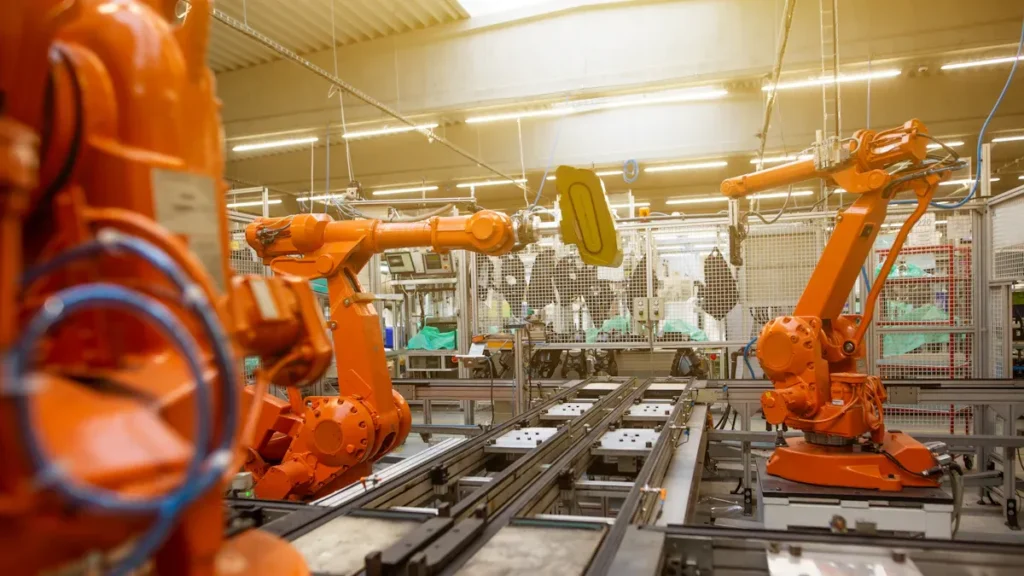
Force measurement tools are used in robots and automation every day. Robots need sensors to know how hard they grip or push. In factories, robots use force sensors to handle parts gently. Strain gages help check gripping force in electronics making. Packaging robots use force sensors to keep products safe. Robot hands use capacitive sensors to sense touch and pressure. These sensors help robots pick up fragile items and work safely with people.
| Application Area | Tool Used | Benefit |
|---|---|---|
| Electronics Manufacturing | Strain Gages | Checks gripping force for precision |
| Packaging | Strain Gages | Makes sure products are safe |
| Robotics (robot hands) | Capacitive Sensors | Lets robots sense force |
| Surgical Applications | Capacitive Sensors | Gives strong, low-cost sensing |
You can find cheap force-torque sensors in robot hands and drones. These sensors use printed circuit boards and silicone pillars for strength. SOUSHINE FSRs give robots a sense of touch. This makes robots smarter and safer. If you want to measure force in automation, you need the right sensors for each job.
Note: Force measurement tools help robots work better and safer. You can use them to improve automation in many industries.
Aerospace Solutions
Force measurement tools are very important in aerospace engineering. Engineers use them to test airplanes and spaceships. You need good data to keep every part safe in flight. These tools help check how wings and engines work. You can use them in wind tunnels to see how air moves around planes. You also test jet and rocket engines for thrust and stress.
Here is a table that shows how force measurement helps in aerospace:
| Application | Description |
|---|---|
| Aerodynamic Performance Measurement | You check how well planes and engines work. |
| Wind Tunnel Testing | You measure forces on models in wind tunnels. |
| Propulsion Tests | You test jet and rocket engines for thrust and safety. |
| Compliance with Standards | You make sure parts follow safety and industry rules. |
| Design and Testing Improvements | You make better designs using advanced force measurement. |
You must follow strict rules like AS9100 for quality. You use special systems to test every part. These tests help you build safer airplanes. Accurate force, torque, and stress checks help you fix problems early. SOUSHINE FSRs let you test small or curved places. You can use these sensors in tight spots inside planes or satellites.
Tip: Force measurement helps keep flights safe and parts strong.
Consumer Electronics
Force measurement tools are used in many electronics. Companies use them to test products from start to finish. You need to check if devices work well and last long. These tools help test buttons, screens, and cases. You can measure how hard you need to press a button or how strong a phone case is.
Here is a table that shows how force measurement helps in electronics:
| Application Area | Description |
|---|---|
| Product Development Lifecycle | You test products during design, making, and shipping. |
| Equipment Testing | You check machines and tools for quality. |
| Accuracy and Reliability | You use the right sensors for exact results. |
| Weight Measurement | You measure product weight with small load cells. |
| Material Strength Assessment | You test how strong materials are to keep devices safe. |
| Usability Testing | You make sure products are easy to use. |
| Safety Testing | You test furniture and toys to prevent injuries. |
You use small load cells to check weight and strength. You test if a device is easy to use. You also check if products follow safety rules. SOUSHINE FSRs help test touchscreens and smart gadgets. These sensors give quick and correct feedback during product testing.
Note: Force measurement makes electronics safe, strong, and simple to use.
Education and Research
Force measurement devices are used in schools and labs. These tools help you learn about science and engineering. You can measure tension, compression, and other forces in experiments. You test materials to see how strong they are. You study how muscles and bones work in biomechanics. You also test how products hold up under stress.
Here are some ways you use force measurement in education and research:
- Physics experiments let you measure forces like tension and compression.
- Materials testing helps you find out how strong and stretchy materials are.
- Biomechanics lets you study forces in muscles and bones.
- Product testing checks if items are durable.
- Adhesion studies measure how well surfaces stick together.
- Tensile testing shows how much materials can stretch before breaking.
- Fluid dynamics lets you measure forces from moving liquids.
- Astronomy and space research uses force measurement for spacecraft.
You use these tools to design safe and strong buildings. You make sure medical devices work right. You also help cars and planes work better. SOUSHINE FSRs give you flexible and exact choices for class and research projects.
Tip: Force measurement helps you learn, discover, and build better things in science and engineering.
Essential Features for Modern Force Measurement
Digital Interfaces
Digital interfaces make measuring force simple and clear. Modern force gauges have screens that show numbers you can read easily. You see your results right away. Many tools change pressure into electronic signals. This gives you fast and steady data. You can connect these tools to your computer. Special software helps you look at and study your data. Some models let you add new features to help with your work.
- Digital force gauges always give steady results.
- You can save your results with memory functions.
- Many devices let you set pass or fail tests.
- Some tools help you keep track of when you measure.
Hydraulic force transducers often have digital screens. These devices show changes in force quickly. You can trust the numbers you see. Digital interfaces help you avoid mistakes. They make your work easier and smoother.
Tip: Use digital interfaces to keep your data neat and easy to read.
Wireless Capabilities
Wireless technology makes force measurement tools easier to use. You do not have to deal with messy wires. Many devices connect to your computer or phone without cables. This lets you move your tools anywhere you need. You can collect data from far away or hard places.
- Wireless connections let you move data fast.
- You can use force sensors where wires would be a problem.
- Some devices are shaped to fit your hand comfortably.
- Wireless tools help you work faster and safer.
You can see your results as they happen. This helps you fix problems quickly. Wireless features make your job easier. You get more freedom to measure force anywhere.
Note: Wireless force measurement tools help you save time and work better.
Smart Sensor Integration
Smart sensor integration is important in new force measurement tools. You can use sensors that talk to other machines and systems. These smart sensors send data to your computer or control system. You can set alerts if something is wrong. Smart sensors help you watch for changes and find problems early.
- Smart sensors work with robots, machines, and computers.
- You can use them to run tests and collect data automatically.
- Some sensors let you change settings from your computer.
- You can use smart sensors to make your work safer and more exact.
Smart sensor integration helps your process run smoothly. You can trust your data and make good choices. This feature is great for anyone who wants the newest technology in force measurement.
Tip: Pick tools with smart sensor integration to stay ahead in your work.
Traceability and Data Management
You should keep track of every measurement you make. Traceability means you can follow each step from start to finish. Modern force measurement tools help with this. They have data management features built in. You can store, organize, and look at your results easily. Many devices let you save data on the tool or send it to a computer. This helps you check your work and spot mistakes fast.
Special software lets you sort and search your records. Some tools let you add notes or tags to each test. This makes it easy to find what you need later. You can set up alerts if something is wrong. Good data management helps you follow industry rules and pass audits. You can show proof of your work anytime.
Many companies use cloud storage for their data. This means you can see your results from anywhere. You can share data with your team or customers. Cloud systems keep your information safe and backed up. You do not have to worry about losing your records.
Tip: Always back up your measurement data. This keeps your work safe and helps you fix problems faster.
Sustainability
You help make force measurement more sustainable. Companies now design tools to be better for the environment. They use new ways and materials to lower harm to the planet. Here are some ways the industry works toward sustainability:
- Companies check how their products affect the environment.
- Automation helps save energy and cuts down on waste.
- Predictive analytics helps you plan and use fewer resources.
- Many factories use renewable energy like solar and wind.
- IoT technology tracks how much energy and material each tool uses.
- 3D printing makes parts with less waste and fewer materials.
- Blockchain keeps the supply chain clear and honest.
You can pick tools that support these ideas. When you choose force measurement devices made with care, you help the planet. Many sensors now use less energy and last longer. This means you get good results and help the earth at the same time.
Note: Sustainable choices in force measurement help you save money and resources while supporting a cleaner world.
Picking the right force measurement tool helps you get good results. New technology gives you more choices, like smart sensors and wireless features. You can use these tools in cars, healthcare, and robotics. SOUSHINE FSRs work well for many different jobs. You can watch product demos or ask experts for help to find the best tool for you.
Tip: Test a few force measurement tools to see which one works best for your project.
FAQ
What is a force measurement tool?
A force measurement tool helps you find out how much push or pull happens in an object. You use it to test strength, pressure, or weight in many jobs.
How do SOUSHINE FSRs work?
SOUSHINE FSRs change their electrical resistance when you press on them. You get a signal that tells you how much force you use. These sensors help you measure pressure in real time.
Where can I use force measurement tools?
You can use these tools in cars, hospitals, robots, factories, and schools. They help you test safety, quality, and performance in many products.
Why should I choose a digital force gauge?
You get fast, accurate readings with a digital force gauge. The screen shows numbers clearly. You can save and share your data easily.
How do I keep my force measurement tool accurate?
You should calibrate your tool often. Clean it after each use. Store it in a safe place. Regular checks help you get the best results.
Can I use force sensors in small devices?
Yes! Many force sensors, like SOUSHINE FSRs, come in small sizes. You can fit them into tiny spaces, such as wearables or smart gadgets.
What is the difference between mechanical and digital force gauges?
Mechanical gauges use a spring and dial. You read the force by looking at the needle. Digital gauges show numbers on a screen and often have more features.
Do force measurement tools need special software?
Some digital force gauges work with special software. You can use it to record, view, and export your data. This helps you study your results and make reports.