

Call us: +86-137-2353-4866
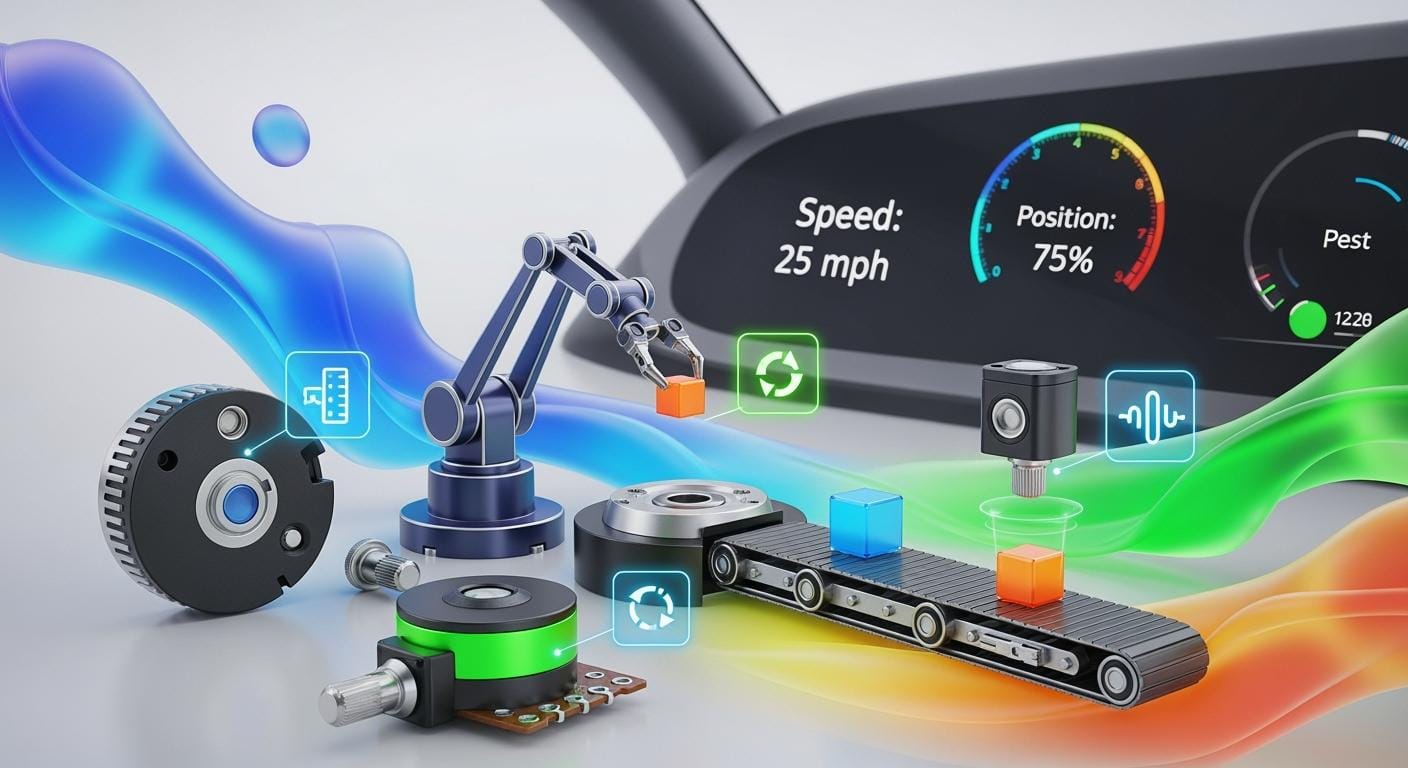

You can find position sensors in many places. Some types are force sensing resistor, potentiometric, magnetic, optical, capacitive, inductive, ultrasonic, Hall effect, MEMS, and special sensors. These sensor position devices help many industries. Position sensors make cars safer. They help robots move better. They also make games more exciting. The market for these sensors is growing very fast. It is now worth billions of dollars. Companies use position sensors in healthcare and aerospace. SOUSHINE is a leader in force sensing ideas. They always give the best quality. You will learn how each position sensor works. You will also see where you can use it.
Table of Contents
Key Takeaways
- Position sensors help many industries like cars, hospitals, and robots. They make things safer and work better.
- There are different position sensors. Some are inductive, capacitive, or optical. Each type uses its own way to find movement and position.
- Non-contact sensors, like ultrasonic and optical, give exact feedback. They do not touch objects. This makes them good for delicate jobs.
- Potentiometric sensors show position right away. People use them in things like volume controls and joysticks.
- Magnetic position sensors work well in tough places. They are good for cars and factories.
- Capacitive sensors find metal and non-metal things without touching. This helps them last longer and stay strong.
- New position sensor technology is making them smaller and smarter. They also use less energy. This helps smart systems get better.
- SOUSHINE’s FSR sensors can be changed to fit needs. They are strong and give exact force and position readings in many uses.
Position Sensors Overview
Sensor Position Principles
Sensor position technology is all around us. These devices show where something is or how far it moved. The main idea behind sensor position is easy to understand. Most position detection sensors check changes in distance, turning, or pressure. They give you feedback about where an object is or how it moved. Some position detection sensors need to touch things. Others can work without touching anything.
Did you know? Position sensors can tell if a robot arm moved an inch or if a car seat is empty. They help smart systems by giving real-time information.
Here’s a simple look at how some position detection sensors work:
| Type of Position Sensor | Working Principle |
|---|---|
| Inductive Position Sensors | Find position by changes in magnetic fields in a sensor coil. |
| Capacitive Position Sensors | Check changes in capacitance to find where an object is. |
| Hall Effect Position Sensors | Use the Hall effect, where a magnetic field changes charge movement in a conductor. |
| Ultrasonic Position Sensors | Use sound waves to measure distance and find position. |
Position Sensor Types
There are many position sensor types in smart systems. Each type uses its own way to find position. Some position detection sensors must touch the object. Others work from far away. Here are the main groups:
- Contact position sensor: These position detection sensors touch the object. When something moves or presses, the sensor position changes and sends a signal. Limit switches and matrix position sensors are examples.
- Proximity position sensor: These position detection sensors work without touching. They sense when something is close. You find them where speed and tough conditions are important.
You use position sensor types in smart systems to track movement, measure distance, or check turning. Some position detection sensors use light, sound, or magnetic fields. Others use pressure or force. You choose the right sensor position for your needs.
Uses of Position Sensors
Position sensors help in many fields. You see position detection sensors in cars, factories, hospitals, and airplanes. Smart systems need sensor position feedback to work safely and well. Here are some common uses:
| Industry | Typical Applications |
|---|---|
| Aerospace | Checking control surface positions, bleed valves, and landing gear status. |
| Power Generation | Watching and controlling turbine positions and other important parts. |
| Automotive | Checking throttle position, suspension, and steering. |
| Industrial Automation | Making sure control and measurement are exact in factories. |
| Medical Devices | Used in imaging systems and other precise machines. |
| Robotics | Giving exact position feedback for robot arms and machines. |
You see position detection sensors in smart systems that control robots, watch medical devices, and keep cars safe. Sensor position feedback helps you make fast choices. You get better safety, more accuracy, and smoother work. Position sensor types help smart systems do better in every area.
Potentiometric Sensor Position
Potentiometric Position Detection Sensors
Have you ever used a volume knob or a joystick? You probably used potentiometric position detection sensors. These sensors work by changing resistance when you move a slider or shaft. When you move the shaft, the resistance changes between the slider and the ends. This change makes an electrical signal. The signal shows where the slider is. You can see the shaft’s position right away.
A potentiometric position detection sensor is simple. You put a DC voltage across a resistive strip. The output comes from a sliding contact. This makes a voltage divider. The output voltage goes from zero to the full voltage. You can see exactly where the slider or shaft is. These sensors give you feedback in real time. You always know the exact position.
You find potentiometric position sensors in many devices. They help you control machines and change settings. You get accurate position readings. These sensors are reliable and easy to use. You can trust them for simple or hard jobs.
Tip: Potentiometric position detection sensors are great for smooth and precise control. You can use them for both straight and turning movements.
Potentiometric Sensor Uses
You see potentiometric position detection sensors in many places. They help you control sound, play games, and run machines. These sensors make life easier by giving you control and feedback. Here are some common uses:
| Application Type | Description |
|---|---|
| Volume Controls | Changes audio levels in equipment. |
| Joysticks and Game Controllers | Turns movement into signals for games. |
| Motor Control Systems | Gives feedback for motor shaft position. |
| Linear Position Sensing | Finds actuator stroke, valve position, or part alignment. |
| Rotary Control Feedback | Watches shaft angle, gear movement, or rotation. |
| User Interface Control | Used in knobs, dials, and manual controls for people to use. |
You can find these sensors in audio mixers, game consoles, and factory machines. They help you change sound, move game characters, and control motors. You also see them in valves and actuators. These sensors make sure things move to the right spot.
- Volume controls let you set the sound how you want.
- Joysticks and game controllers turn your hand moves into game actions.
- Motor control systems use sensors to keep motors working well.
- Linear position sensing helps machines know where parts are.
- Rotary feedback lets you see how far something turns.
- User interface controls give you easy ways to use devices.
Position sensors like potentiometric types help you control and watch many systems. You get fast and accurate feedback. These sensors help you work smarter and play better.
Magnetic Position Sensor Types
Magnetic Position Detection Sensors
Magnetic position detection sensors are used in many smart systems. These sensors use magnets to find where something is or how far it moved. When a magnet gets close, the sensor’s signal changes. You get quick feedback about the object’s position. Magnetic position sensors can track straight or turning movements.
Here are reasons to pick magnetic position detection sensors instead of others:
- Accuracy: Magnetic position sensors give very exact readings for rotary and linear movement.
- Reliability: These sensors work well even in tough places like factories or cars.
- Energy Efficiency: Magnetic position detection sensors use little power and help save energy.
- Durability: Magnets make these sensors strong and last a long time.
- Versatile Applications: You find magnetic position sensors in cars, robots, and machines.
Note: Magnetic position detection sensors with PWM output handle noise better than analog sensors. You can send signals farther without losing quality. Many microcontrollers and ECUs work well with PWM, so you can add these sensors easily.
Here is a table that shows what makes magnetic position detection sensors special:
| Feature | Benefit |
|---|---|
| High Accuracy | Tracks small movements |
| Strong Reliability | Works in harsh environments |
| Low Power Use | Saves battery life |
| Long Transmission | Sends signals over long distances |
| Easy Integration | Fits with many control systems |
Uses of Magnetic Position Sensors
Magnetic position detection sensors are used in many industries. These sensors help control machines, keep cars safe, and make robots smarter. Here are ways you use magnetic position sensors:
- Electric vehicles need small and reliable position detection sensors. These sensors help control motors and keep things running well.
- Cars use magnetic position sensors for active suspension and brake-by-wire systems. You get safer rides and better control.
- Factories use magnetic position detection sensors to track moving parts. You can see where each part is, even if it moves fast or slow.
- Robots use magnetic position sensors to know where their arms or wheels are. You get better movement and smarter actions.
- Magnetic position detection sensors work well in places with dust, heat, or vibration. You do not need expensive shielding.
- You can use these sensors in steer-by-wire systems. This makes driving safer and more fun.
- In industrial automation, magnetic position detection sensors help run machines with less downtime. You get more work done and fewer mistakes.
Tip: If you need a sensor that works in small spaces and tough conditions, magnetic position detection sensors are a good choice. They give fast and accurate feedback, which is important for smart systems.
Magnetic position sensors help build better cars, smarter robots, and more efficient factories. You get strong performance, easy setup, and reliable feedback every time.
Optical Position Sensors
Optical Sensor Position Detection
Optical position sensors are used in many smart systems. These sensors use light to find where something is or how far it moved. You can see them in barcode scanners, cameras, and phone touchscreens. Optical position sensors send out light from an LED or laser. When the light hits an object, it bounces back to a detector. The sensor checks the reflection and tells you the position.
Some sensors use a simple light beam. Others use special ways like triangulation or image processing. You get quick and accurate feedback. These sensors can track movement and measure distance. They can also spot tiny changes in position. You do not need to touch the object. This helps when touching could break parts or slow things down.
Tip: Optical position sensors are very precise. You can use them for jobs that need exact measurements, like robot arms or checking quality in factories.
Here is a table to show how optical position sensors compare to other types:
| Sensor Type | Detection Method | Contact Needed | Typical Accuracy |
|---|---|---|---|
| Optical Position Sensors | Light reflection | No | High (micron level) |
| Magnetic Position Sensors | Magnetic fields | No | Medium to High |
| Potentiometric Sensors | Resistance change | Yes | Medium |
Uses of Optical Position Sensors
Optical position sensors are used in many industries. These sensors help robots, machines, and medical devices work better. You get good feedback for movement and location. Here are some common uses:
- Factory robots use optical position sensors for welding and checking quality. You get better control and results.
- Warehouse robots use these sensors to track where they are. This helps them move faster and manage items smarter.
- Surgical robots need optical position sensors for careful motion control. This helps doctors do delicate work safely.
- Farm machines use these sensors for planting and row tracking. You get more crops and less waste.
- Inspection robots use optical position sensors to check hard-to-reach spots. This keeps workers safe and finds problems early.
You also see optical position sensors on assembly lines. These sensors make sure every part fits just right. In aerospace and car factories, you use them for very tiny measurements. Medical devices use optical position sensors to track things during surgery. This helps patients and makes surgery safer.
Note: If you need fast, non-contact, and exact feedback, optical position sensors are a good choice. You can trust them for hard jobs in robots, healthcare, and factories.
There are many types of position sensors in smart systems. Optical position sensors are special because they are fast and accurate. You can use them where other sensors might not work well. These sensors help you build safer and smarter machines.
Capacitive Position Sensors
Capacitive Position Detection Sensors
Capacitive position detection sensors work by sensing changes in capacitance. When something gets close, the sensor notices the change. You do not have to touch the sensor for it to work. The electric field changes when an object is near. This makes these sensors good for gentle tasks.
Here are some things that make these sensors special:
| Feature | Description |
|---|---|
| Detection Method | Finds changes in capacitance when something is close. |
| Material Compatibility | Can sense many materials, even ones that are not metal. |
| Contact Requirement | Works without touching, so it lasts longer and does not wear out. |
| Sensitivity Adjustment | You can change how sensitive the sensor is for different things. |
Capacitive position detection sensors can find both metal and non-metal objects. They last longer because nothing rubs or wears out. You can make the sensor more or less sensitive. This helps you find big or small things easily.
Tip: If you want to track movement without touching, these sensors are a good pick. They give you good feedback and need less fixing.
Here are some reasons to use these sensors:
- They can sense many kinds of things, metal or not.
- They last longer because nothing touches or wears out.
- You can change how sensitive they are for better results.
You see capacitive position sensors where you need gentle and careful control. These sensors help you stop damage and keep things working well.
Uses of Capacitive Position Sensors
Many industries use capacitive position detection sensors. Factories and machines use them to measure small changes. Science labs use them for tests that need exact results. You get good control in every job.
Here are some ways people use these sensors:
- You can measure where machine parts move in factories.
- You can check how much liquid is in a tank without touching it.
- You can use them in touchscreens to sense your finger.
- You can watch where a robot arm is to help it move smoothly.
- You can make sure parts line up right when building things.
Capacitive position sensors work well in clean places or where dust and water are a problem for other sensors. They give you good results even in hard places.
Note: These sensors help you get fast and correct feedback. They are good for gentle jobs or when you do not want things to wear out.
If you want your system to be more accurate and last longer, these sensors are a smart choice. They are easy to set up and work for a long time. Capacitive position detection sensors help your machines work better and make your job easier.
Inductive Position Sensor Types
Inductive Position Detection Sensors
Inductive position detection sensors are used in many machines. These sensors use coils and magnetic fields to find position. When metal moves close, the magnetic field changes. The sensor notices this change and tells you the position. You get quick and exact feedback.
Inductive position detection sensors do not need to touch the object. This helps them last longer and need less fixing. You can use them in dirty or wet places. The sensor works even if there is dust or oil. You do not need to worry about damage.
Here are some reasons to pick inductive position detection sensors:
- They work well with metal objects.
- They give feedback right away.
- They last long in tough places.
- You can use them for straight or turning moves.
Tip: Inductive position detection sensors are good for jobs that need strong and steady feedback. You can trust them where other sensors might not work.
Uses of Inductive Position Sensors
Inductive position sensors are used in many industries. These sensors help control machines, keep cars safe, and guide robots. You get clear feedback for every move. Here are some main uses:
| Application Area | Description |
|---|---|
| Automotive Systems | You use them to check gear, throttle, camshaft, and brake positions. They help cars run safely. |
| Industrial Automation | Smart factories use these sensors for fast and exact control. They help machines work better. |
| Robotics | Robots need these sensors for precise arm and wheel movement. You get smooth and smart actions. |
| Aerospace | Planes use them for stable controls. They resist electrical noise and keep systems safe. |
| Medical Devices | Small and stable sensors help in surgical robots. You get careful and steady movement. |
You see position detection sensors in car engines and brakes. They help you know if a part moved or stopped. In factories, position detection sensors watch machines and keep things running well. Robots use position detection sensors to move arms and wheels to the right spot. Planes need position detection sensors for safe flying. Medical devices use position detection sensors for tiny and careful moves.
- Inductive position sensors help you get better safety and control.
- You can use them in places with lots of noise or heat.
- They work well for jobs that need exact feedback.
Note: If you want sensors that last and work in tough places, inductive position detection sensors are a smart choice. You get strong feedback and better results.
Inductive position sensors help machines work smarter and safer. You get fast feedback and fewer problems. These position sensors help you build better cars, robots, and medical devices.
Ultrasonic Position Sensors
Ultrasonic Sensor Position Detection
Have you ever thought about how machines find things in the dark or fog? Ultrasonic position detection sensors use sound waves to find objects. The sensor sends out a sound you cannot hear. When the sound hits something, it bounces back. The sensor checks how long the sound takes to return. This helps you know how far away something is.
Ultrasonic position sensors work where other sensors might not. They do well in places with dust, smoke, or lots of water in the air. You do not have to worry about light or color. These sensors can find glass, metal, liquid, or even grains. You get good results every time.
Here are the main technical benefits of ultrasonic position detection sensors:
| Advantage | Description |
|---|---|
| Superior Accuracy and Precision | You can measure distances down to millimeters. |
| Versatility Across Different Materials | You detect solids, liquids, transparent, and granular substances. |
| Resistance to Harsh Conditions | You get accurate readings in dusty, humid, or smoky places. |
| Temperature and Weather Tolerance | You use them indoors or outdoors, even in extreme temperatures. |
| Economic Installation and Setup | You save money and time with easy installation. |
| Minimal Maintenance Requirements | You spend less time fixing sensors because they have no moving parts. |
Tip: If you need sensors that work in tough places and give exact feedback, ultrasonic position sensors are a smart pick.
Uses of Ultrasonic Position Sensors
You see ultrasonic position detection sensors in many jobs. These sensors help robots, cars, and machines work safely and smartly. You can measure things without touching them. This is good for clean places like food factories or hospitals.
Here are some common ways to use ultrasonic position detection sensors:
| Use Case | Description |
|---|---|
| Keeping Humans Safe in Automated Environments | You use sensors to stop robots from bumping into people. |
| Smart Navigation in Changing Conditions | Robots use sensors to find obstacles, even in fog or low light. |
| Enabling Contactless Measurement and Quality Control | You measure distances without touching, perfect for clean industries. |
| Rapid Adoption Across Diverse Sectors | You find sensors in cars, warehouses, farms, and hospitals. |
- In cars, ultrasonic position sensors help stop crashes. You get a warning when something is too close.
- In warehouses, robots use sensors to pick items and move safely.
- On farms, you use sensors to check how tall crops are and how far apart they grow.
- In hospitals, sensors help keep equipment in the right place and support patients.
Note: Ultrasonic position detection sensors are great when you need fast, correct, and touch-free feedback. You can trust them where other sensors might not work.
You can count on ultrasonic position detection sensors for smart machines, safety, and quality control. These sensors help you build better machines and safer places.
Hall Effect Position Sensors
Hall Effect Position Detection Sensors
Have you ever wondered how machines know where a part is? Hall effect position detection sensors help with this. These sensors use a magnetic field to check movement and position. When a magnet comes close, the sensor makes a small voltage. This voltage shows the exact spot or angle.
Hall effect position detection sensors do not need to touch moving parts. This means they last longer and do not wear out fast. They keep working well in hot or cold places. You can trust them even when things get tough.
Here are reasons to pick Hall effect position detection sensors:
- They are small and fit in tight spaces.
- You get good readings even in very hot or cold places.
- They do not wear out because they do not touch parts.
- Hall effect position detection sensors can check straight or turning moves.
- You can use them to find angles or straight positions.
Tip: If you need a sensor that lasts and works in hard places, Hall effect position detection sensors are a good choice.
| Feature | Benefit |
|---|---|
| Non-contact operation | Lasts longer and does not wear out fast |
| Magnetic field measurement | Gives exact position feedback |
| Linear signal output | Tracks moves and angles easily |
| Small size | Fits in small devices |
Uses of Hall Effect Position Sensors
You can find Hall effect position sensors in many things you use. These position detection sensors help cars, washing machines, and computers work better. They give quick and correct feedback about movement and position.
Here are some ways people use Hall effect position detection sensors:
- Cars use them to check crankshaft position, airbags, and wheel speed.
- Washing machines use them to keep the drum balanced.
- Current transducers use Hall effect position detection sensors to measure electricity in homes and factories.
- Windmills use Hall effect proximity sensors to track blade position.
- Computers, tachometers, and anti-lock brakes use Hall effect position detection sensors for smooth work.
You see these position detection sensors where fast and steady feedback is needed. They help keep cars safe and washing machines running well. They also help smart energy systems and robots work right.
Note: Hall effect position detection sensors work well in dirty, wet, or hot places. You do not have to worry about them breaking down fast.
If you want a sensor that gives correct position feedback and lasts long, Hall effect position sensors are a great pick. You get strong results, easy setup, and sensors you can trust.
MEMS Position Sensors
MEMS Sensor Position Detection
MEMS position detection sensors are found in many small gadgets. MEMS means Micro-Electro-Mechanical Systems. These sensors have tiny moving parts inside them. They measure position, movement, and orientation. You find MEMS position sensors in chips inside phones, watches, and headphones. The sensor notices changes in acceleration, rotation, or tilt. When you move a device, the sensor senses it and sends a signal.
MEMS position detection sensors are very small and use little power. You can put them where bigger sensors cannot fit. They give sensitive and accurate readings. You get quick feedback about movement or position. This helps smart devices work better.
Here is a table that shows what makes MEMS position detection sensors special:
| Feature | Description |
|---|---|
| Miniature Size | Ranges from 1 to 100 micrometres, fits in compact devices |
| Low Power Consumption | Uses only μW to mW, perfect for battery-powered gadgets |
| High Sensitivity | Measures tiny changes, great for precise position detection |
Tip: MEMS position detection sensors help devices stay small and smart. They save energy and give fast, accurate feedback when you move or tilt something.
Uses of MEMS Position Sensors
You use MEMS position detection sensors every day. You may not notice them, but they help your phone know when you turn it. They help your smartwatch count steps. MEMS position sensors are in cars, robots, and gaming devices. They make gadgets smarter and safer.
Here is a table that shows where MEMS position detection sensors work best:
| Application Area | Specific Functionality |
|---|---|
| Smartphones | Image stabilization, power management |
| Hearables | Multi-tap detection, head tracking for 3D audio |
| Wearables | Fitness tracking, activity recognition |
| AR/VR Devices | Real-time motion detection, head movement tracking |
| Laptops/Tablets | Screen orientation, freefall detection |
| Robotics/Drones | Flight control, mapping spaces, stabilizing altitude |
| Gaming/TV Applications | Gesture recognition, real-time movement |
| Smart Home Devices | Measuring air quality, automatic wake-up/sleep mode |
Smartwatches use MEMS position sensors to count steps and track sleep. Phones use these sensors to flip the screen when you turn it. Robots use MEMS position sensors to move smoothly and avoid things. Drones use MEMS position sensors to stay steady in the air. Gaming systems use these sensors to follow your movements and make games more fun.
Note: MEMS position detection sensors help devices react fast and work smarter. You get better safety, more features, and smoother use.
MEMS position sensors make life easier. You get accurate feedback right away. These sensors help devices learn, adjust, and keep up with you. You can trust MEMS position sensors in phones, cars, and more.
Force Sensing Resistor (FSR) Position Sensors
SOUSHINE FSR Sensor Position
If you need position sensors you can trust, Force Sensing Resistor (FSR) technology is a great choice. SOUSHINE makes FSR sensors that measure force and pressure very well. These sensors use a thin, bendable film. When you press on the film, resistance goes down. The sensor sends a signal right away. You know the force and position instantly.
FSR position sensors from SOUSHINE have many good points. You can see how they stack up against other brands in this table:
| Feature | SOUSHINE’s Technology | Competitors |
|---|---|---|
| Accuracy | High | Lower |
| Durability | Long-lasting | Varies |
| Customization | Many choices | Fewer choices |
| Power Consumption | Low | Higher |
| Integration Ease | Simple | Harder |
You can choose the shape and size you need. SOUSHINE makes sure every sensor works in tough places. These sensors last a long time and keep working. You can use them in cars, medical tools, or robots.
Here are the main features and benefits of SOUSHINE FSR position sensors:
| Feature/Benefit | Description |
|---|---|
| Cost-Effective Manufacturing | You save money when making lots of sensors. |
| Customizable Shapes and Sizes | You pick the design that fits your project. |
| Durability and Reliability | Sensors work well even in hard places. |
| Low Power Consumption | Good for devices that use batteries. |
| Ease of Integration | You can add them to your system easily. |
FSR position sensors help you make smart systems. You get quick and correct feedback every time.
SOUSHINE FSR Sensor Uses
SOUSHINE FSR position sensors work in many ways. You find these sensors in cars, sports gear, health devices, and more. Here are some top uses.
Automotive Seat Occupancy Sensors
Seat occupancy sensors in cars help keep people safe. SOUSHINE’s FSR sensors know if someone sits in the seat. The sensor sends info to the car’s computer. The car turns on airbags or reminds you to buckle up. Passengers get better safety. These sensors also save money by turning off safety systems when seats are empty.
Tip: SOUSHINE’s seat sensors fit inside the seat. You do not feel them, but they help keep you safe every time you drive.
Sports and Health Applications
FSR position sensors help track movement and force in sports and health gear. You see them in smart shoes, fitness bands, and posture trackers. When you move, the sensor records pressure and position. You get feedback to help you do better or heal faster. Coaches and doctors use these sensors to watch progress and stop injuries.
- FSR sensors work in rehab equipment.
- Athletes use them to check force and balance.
- Trainers get instant data to help you train better.
Medical Device Integration
FSR position sensors work well in medical devices. You find them in patient monitors, prosthetic limbs, and surgery tools. The sensor measures pressure and movement. Doctors use this data to keep patients safe and comfy. In prosthetics, FSR sensors help make movement feel natural and easy to control.
Here is a table with key uses for SOUSHINE FSR sensors:
| Industry | Application Areas |
|---|---|
| Automotive | Seat sensors, brake pressure, haptic controls |
| Medical Devices | Patient monitors, rehab gear, surgery tools, prosthetic limbs |
FSR position sensors from SOUSHINE help solve many problems. You get strong results in every field. As technology grows, people find more ways to use position sensors.
Specialized Position Detection Sensors
Some position sensors do more than just basic jobs. These special sensors help with hard problems in science and engineering. They are also used in big industries. Two important types are Linear Variable Differential Transformers (LVDT) and Laser Doppler Vibrometers.
Linear Variable Differential Transformers (LVDT)
LVDT position sensors are used to measure very small moves. They are very accurate. These sensors have a metal core that slides inside a coil. When the core moves, the sensor makes an AC voltage. The voltage changes with the movement. This gives a clear signal that shows how far something moved.
You can find LVDT position sensors in many places. They are used to watch for landslides and ground shifts. Marine engineers use them to track ships and things underwater. Power plants use LVDTs to check turbines and generators. Factories use them to measure conveyor belts and machine parts. Civil engineers use them to check bridges and buildings. LVDTs are also in medical devices for patient position and surgery robots.
Here is a table that shows where LVDT position sensors are used:
| Industry/Application | What You Measure |
|---|---|
| Geotechnical Instrumentation | Ground movement, landslides, stability |
| Marine and Offshore | Ship and underwater structure positions |
| Power Generation | Turbine and generator components |
| Automation and Robotics | Robotic arm feedback, moving parts |
| Material Testing | Strain and deformation in materials |
| Aerospace and Aviation | Control surfaces, landing gear |
| Civil Engineering | Building and bridge health |
| Factory Automation | Conveyor belts, industrial equipment |
| Automotive Industry | Suspension, engine components |
| Medical Devices | Patient positioning, surgical tools |
| Research and Development | Precise displacement experiments |
Tip: LVDT position sensors are good if you need the same results every time. They give you very exact measurements.
Laser Doppler Vibrometers
Laser Doppler Vibrometers (LDVs) are high-tech sensors. They measure vibration and movement without touching anything. LDVs shine a laser on a surface. They use special light tricks to see how fast or how far something vibrates. You get very accurate results, even for tiny shakes.
LDVs are used to test car parts and make cars quieter. Aerospace engineers use them to check airplane parts and keep flights safe. Civil engineers use LDVs to watch bridges and buildings. This helps make sure they are strong. In medical labs, LDVs help doctors study how tissues move. This can help find health problems. Electronics makers use LDVs to check how much devices vibrate.
Here are some ways LDVs help in different jobs:
- Test car parts for better work and less noise.
- Check airplane parts to keep flying safe.
- Watch bridges and buildings for safety and strength.
- Measure tissue vibrations in medical research.
- Make electronics better by checking for shaking.
Note: LDVs measure movement without touching. This means you do not damage the object and get better data.
Special position sensors like LVDTs and LDVs help with hard measurement jobs. They give you the accuracy and trust you need for science, engineering, and medicine.
Trends in Position Sensors
Sensor Position Technology Advances
Position sensors are changing quickly. New designs make them smaller and smarter. They are also easier to use. Many companies now make sensors for tough places. These sensors give better data. Some fit in very small spaces and use less power. This helps in cars, robots, and smart gadgets.
Here are some new position sensor technologies:
| Company | Product/Technology | Key Features |
|---|---|---|
| Allegro Microsystems | A17802 and A17803 Inductive Sensors | Programmable linearity, digital compensation, extreme temperature range, great for cars. |
| Melexis | MLX90384 Angular Encoder IC | 18-bit resolution, Arcminaxis tech, fits many magnet designs, easy to assemble. |
| CambridgeIC | CAM622 Resonant Inductive Encoder IC | Uses standard PCB making, faster sample rate, simple assembly and alignment. |
Some sensors work in hot or cold places. Others use digital tricks to fix mistakes. New ways help measure angles and movement. These changes help make machines and cars safer.
Emerging Position Sensor Types
Every year, new position sensors appear. Many work without touching anything. Non-contact sensors are very precise and last longer. Digital sensors give fast and clear data. Advanced inductive sensors work in more places and handle hard jobs.
Here are some trends to know:
- Non-contact sensors are popular because they work in many jobs and give good results.
- Digital sensors are growing fast as more robots and factories use them.
- The market for position sensors could reach $9.8 billion by 2030. More sensors are used in factories, cars, and planes.
- Non-contact sensors grew over 9% each year from 2023 to 2032. Smart cars and driver systems use them more.
- Digital sensors help robots and machines work better in factories.
You see these new sensors in smart cars, robots, and medical tools. They help make things safer and add more features.
SOUSHINE Innovations
SOUSHINE is a leader in new position sensor ideas. They make thin and bendy sensors for many products. You can put these sensors in car seats or medical tools. When you press the sensor, its resistance changes. The device reads this and turns it into digital data. A microcontroller uses the signal to do things, like move a seat or turn on a safety feature.
Here’s how SOUSHINE’s new sensors help you:
- You put flexible sensors where people touch products.
- The sensor changes resistance when you press it.
- The device reads the signal and makes digital data.
- The system uses this data to make smart changes, like moving a seat or changing the temperature.
SOUSHINE’s seat sensors can tell how you sit. You get automatic seat moves, temperature control, and media settings. In the future, these sensors might check your heart rate or stress. You could get alerts if you feel sick, making driving safer.
Tip: SOUSHINE keeps making position sensors better so you get smarter, safer, and more comfortable products.
Position sensors are getting smaller, smarter, and easier to use. SOUSHINE helps you stay ahead with new technology and better solutions.
You have learned how position sensors help in cars and factories. They are also used in sports. When you know about each sensor type, you can choose the right one. SOUSHINE’s FSR solutions help keep things safe and working well in many fields. You get quick updates and feedback you can trust. If you want your systems to be smarter, look at SOUSHINE’s products. You will find advanced position detection for any project you have.
FAQ
What is a position sensor?
A position sensor shows where something is. It also tells how far it moved. You use it to track things or measure distance. It helps check angles in machines, cars, and gadgets.
How do Force Sensing Resistors (FSR) work?
FSRs change resistance when you press on them. You get a signal that shows the force you use. SOUSHINE’s FSRs give quick and correct feedback.
Where can you use position sensors?
Position sensors are found in cars and robots. You also see them in medical devices and sports gear. They help control machines and keep people safe. They also track movement.
Why should you choose SOUSHINE FSR sensors?
SOUSHINE FSR sensors last for a long time. You can pick the shape and size you want. They work well in hard places and give steady results.
Can position sensors work without touching objects?
Yes! Some sensors do not need to touch things. Optical, ultrasonic, and capacitive sensors work this way. You get fast and clean feedback.
Are position sensors easy to install?
Most position sensors are easy to set up. You follow the steps and connect the wires. SOUSHINE sensors fit into many systems.
How do seat occupancy sensors improve car safety?
Seat occupancy sensors tell your car if a seat is used. The car uses this to control airbags and seatbelt reminders. You get better safety every time you ride.
Do position sensors need a lot of power?
No, most position sensors use little power. SOUSHINE FSR sensors work well with batteries. They help you save energy.